Vino Nobile di Montepulciano — Tuscany's Quietest Great Appellation
Vino Nobile di Montepulciano — Tuscany's Quietest Great Appellation
Vino Nobile was among the first Italian wines promoted to DOCG in 1980, alongside Barolo, Barbaresco and Brunello. Four decades later, it is the one of the four that most people cannot place. Squeezed between Montalcino to the west and Chianti Classico to the north, it has never found the international profile of its neighbours — which is unfair to the wine and useful to the buyer, because good Vino Nobile is one of the best-value serious Sangiovese in Tuscany.
First, the name confusion
Vino Nobile di Montepulciano is not made from the Montepulciano grape. It is made from Sangiovese, in the town of Montepulciano in Tuscany.
Montepulciano d'Abruzzo is an entirely different wine — made from the Montepulciano grape, in Abruzzo, several hundred kilometres away on the Adriatic coast. See our Abruzzo guide for that one.
The two have nothing to do with each other beyond the shared word, and the confusion is so common that it is worth stating plainly on any wine list.
Geography
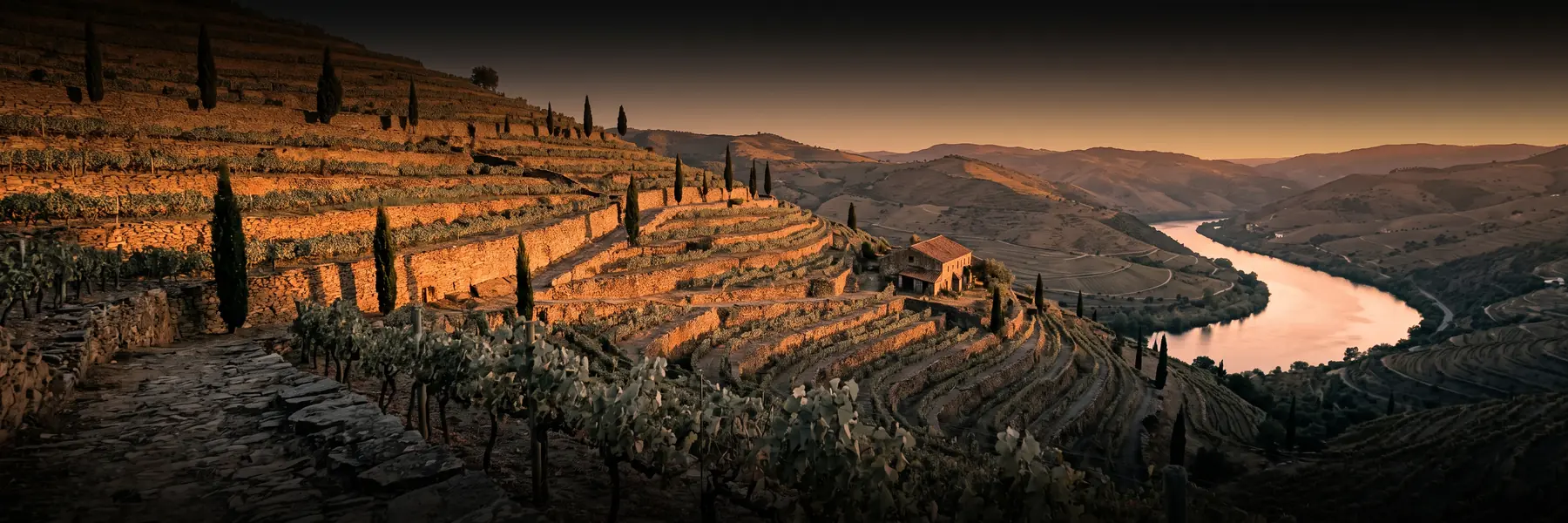
Montepulciano is a spectacular medieval hill town in south-eastern Tuscany, sitting high on a ridge between the Val di Chiana and the Val d'Orcia, with the vineyards on the slopes below it, generally between about 250 m and 600 m.
The soils are varied — sandy and clay-rich marine deposits, with pockets of galestro-type marl and some fossil-bearing sands — and generally deeper and more fertile than Montalcino's. That, plus a slightly cooler and wetter setting than Montalcino, is why the wines are typically plumper and less austere than Brunello.
The rules
Sangiovese, known locally as Prugnolo Gentile, must make up a minimum of 70% of the blend. The permitted balance includes the traditional Tuscan varieties Canaiolo Nero and Mammolo, plus other authorised local and international varieties. Many of the best wines are effectively pure Sangiovese.
The wine must be aged for a minimum of two years before release, and three for Riserva. In recent years the appellation has introduced a new top tier, Pieve, based on single sub-zones (the historic parish districts) with a higher Sangiovese requirement — Montepulciano's equivalent of Chianti Classico's Gran Selezione, and an attempt to establish site identity.
Vin Santo di Montepulciano
The appellation also produces one of Tuscany's finest Vin Santo — a sweet wine made from grapes (chiefly Trebbiano and Malvasia) dried on racks in a well-ventilated loft over the winter, then fermented and aged for years in small, partly filled barrels called caratelli, often in a warm attic where the wine passes through seasonal temperature cycles. The result is amber, oxidative, nutty and intensely sweet.
Avignonesi's Vin Santo, and its very rare Occhio di Pernice made from Sangiovese rather than white grapes, are among Italy's most celebrated sweet wines.
Climate
Mediterranean with continental influence, cooler and slightly wetter than Montalcino, with the altitude of the ridge giving good diurnal swings. Ripening is generally reliable; autumn rain is the main risk.
Producers
- Avignonesi — biodynamic; the Vin Santo is legendary
- Poliziano — the Asinone single vineyard is the appellation's most consistently acclaimed wine
- Boscarelli — traditional, refined; the Riserva rivals good Brunello
- Dei, Salcheto, Contucci, Icario — the depth of the zone
Style
Ruby to garnet, generally a little deeper than Chianti Classico. Red and black cherry, plum, violet, dried herbs, tobacco and a soft earthiness. Compared with Brunello it is plummier, rounder and less austere; compared with Chianti Classico it is fuller and less overtly acidic. Annata wines drink from three to eight years; good Riserva runs ten to twenty.
What Vino Nobile teaches your winemaking
The same grape, a different result — and the reason is site
Prugnolo Gentile is Sangiovese. Brunello is Sangiovese. Chianti Classico is Sangiovese. Three appellations within an hour's drive, one grape, three recognisably different wines. The differences come from altitude, soil depth, water availability and picking date — not from anything mysterious.
For a home winemaker the practical version is that your fruit source dictates the ceiling of your wine. If you have deeper, more fertile ground, expect a plumper, rounder, earlier-drinking Sangiovese and make that wine well rather than trying to force austerity into it.
Vin Santo is the most home-scale-friendly great sweet wine
Unlike Sauternes, which depends on botrytis and a specific climate, Vin Santo depends on a dry, airy space and patience. Drying grapes on racks concentrates sugar, acid and flavour together; the long, semi-oxidative ageing in partly filled small barrels does the rest.
The hazards are real and worth knowing:
- Drying needs good airflow and low humidity, or you get grey rot rather than raisins. Sort ruthlessly.
- Fermenting a very high-sugar must is difficult: osmotic stress stalls the yeast, and a stuck ferment with high sugar and rising VA is the classic failure. Choose a high-alcohol-tolerant strain, stage your nutrients, and expect it to be slow. See choosing your yeast and volatile acidity.
- The deliberate oxidative ageing is a feature, not a fault — but it needs stable, protective handling, and the finished wine must be microbially stable before bottling. See back-sweetening for stabilisation options and the Amarone guide for drying-grape technique in detail.
Blending Sangiovese: Canaiolo and Mammolo
Canaiolo softens the texture; Mammolo, as its name suggests, contributes a violet perfume. Neither adds much colour. If your Sangiovese is pale as well as hard, Colorino is the pigment answer — see Chianti Classico and blending theory.
The rest is Sangiovese technique
Gentle extraction, moderate fermentation temperature, MLF always, large neutral wood in preference to new barriques. See Brunello di Montalcino for the detail and tannin management for the underlying principles.
For the wider region see the Tuscany guide.
Food pairing
Pici pasta with meat ragù, roast pork, guinea fowl, pecorino di Pienza (made just down the road), and grilled meats. Vin Santo goes with cantucci biscuits, and traditionally nothing else.
Tip: If you have ever wanted to make a great sweet wine and lack the climate for botrytis, Vin Santo is the model to copy. All it requires is a dry airy space, a few weeks of patience, and the discipline to sort out every mouldy berry before it goes on the rack.