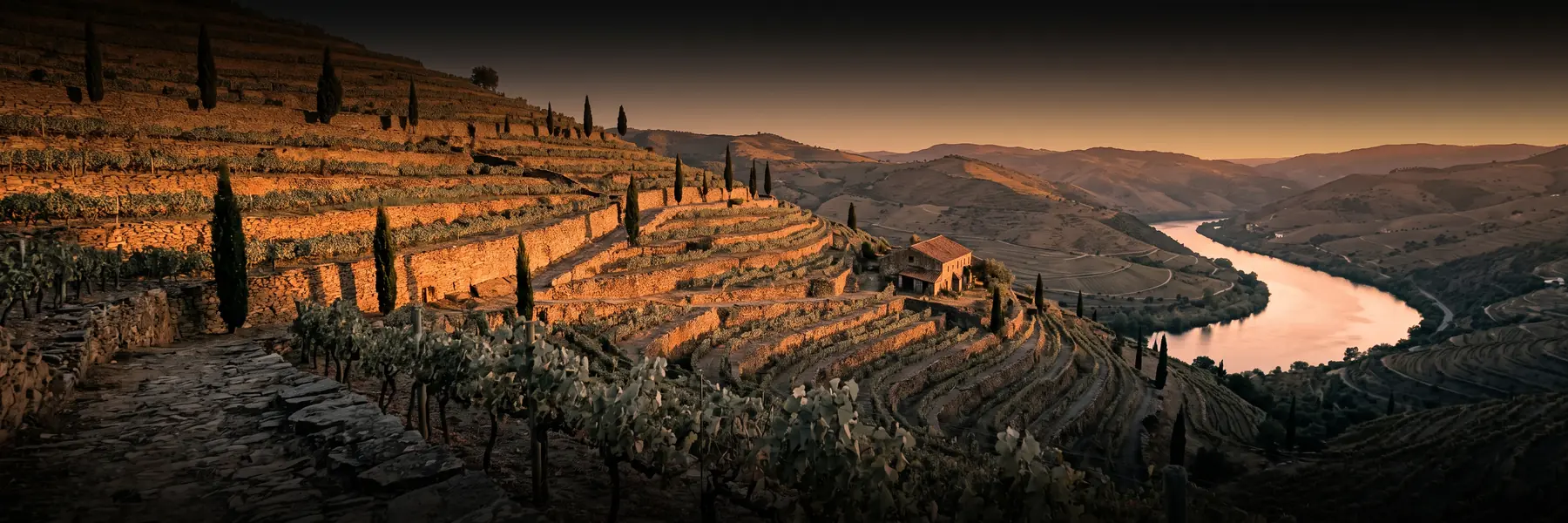
Alsace Grand Cru — Fifty-One Crus and Four Noble Grapes
Alsace Grand Cru — Fifty-One Crus and Four Noble Grapes
Alsace is the one part of France where the label leads with the grape variety rather than the place — an inheritance from the region's long periods under German rule. But at the top of the hierarchy, place reasserts itself. The 51 Alsace Grand Cru vineyards are individually named and individually delimited, and the geological variety between them is greater than in any other French wine region.
Geography
The vineyards run in a narrow ribbon along the eastern foothills of the Vosges mountains, facing east and south-east across the Rhine plain. The Grand Crus occupy the best of those foothill slopes.
The startling thing about Alsace is the geology. The Vosges fault zone has thrown up an extraordinary mixture of rock in a very small area: granite, sandstone, limestone, marl, schist, and — at the Rangen de Thann — volcanic. Each Grand Cru is defined around a distinct geological unit, which is why the wines differ so radically from one to the next even from the same grower and the same variety.
Climate — the rain shadow
The Vosges do something remarkable: they block the prevailing westerly weather, and Alsace sits in their rain shadow. Colmar, in the middle of the vineyard, is one of the driest places in France.
The consequences run right through the wines. Sunshine hours are high, disease pressure is low, ripening is reliable and late-harvest wines are possible in most years. It is also a continental climate — cold winters, warm summers, wide diurnal range — which is what preserves the aromatics and acidity that would be lost at the same ripeness in a warmer, more humid place.
The varieties
Grand Cru production is restricted to the four "noble" varieties:
- Riesling — the most highly regarded; dry, mineral, taut, extremely long-lived
- Gewurztraminer — lychee, rose, ginger; low acid, high alcohol, often with residual sugar
- Pinot Gris — rich, smoky, honeyed, weighty
- Muscat — grapey, floral, delicate; the rarest of the four
There are a small number of named exceptions where the rules permit other varieties or blends — the Zotzenberg cru is permitted Sylvaner, and one or two crus permit a traditional field blend. In recent years the rules have also been extended to allow Pinot Noir in a small number of specified crus, making red Alsace Grand Cru possible for the first time.
Two sweetness designations
Alsace has two legally defined late-harvest categories, both of which apply at Grand Cru level:
- Vendanges Tardives (VT) — late-harvested fruit, off-dry to sweet
- Sélection de Grains Nobles (SGN) — botrytis-affected fruit, selected berry by berry; intensely sweet
Both carry minimum must-weight requirements and both may only be made in suitable years.
Producers
- Domaine Zind-Humbrecht — biodynamic; the Rangen de Thann Clos Saint-Urbain from volcanic soil is one of France's most distinctive whites
- Trimbach — the dry-Riesling standard-bearer; Clos Sainte-Hune, from within the Rosacker Grand Cru, is arguably France's greatest Riesling
- Domaine Weinbach — a range across several crus, of exceptional refinement
- Domaine Marcel Deiss — a long campaigner for terroir over variety, and for traditional cru field blends
- Hugel, Josmeyer, Domaine Ostertag, Albert Mann — the depth of the region
Style
Riesling: lime, green apple, petrol with age, wet stone, high acid, bone dry at the best addresses. Gewurztraminer: overwhelming lychee and rose, spicy, broad, oily-textured, often sweet. Pinot Gris: pear, smoke, honey, mushroom with age, weighty. Muscat: fresh grape and orange blossom.
Grand Cru Riesling and Pinot Gris are seriously long-lived — twenty years is unremarkable, and mature Alsace Riesling is one of wine's underrated pleasures.
What Alsace teaches your winemaking
The residual sugar problem — and how to handle it honestly
Alsace's great modern difficulty is that a label often does not tell you whether the wine is dry or sweet. Two bottles of Pinot Gris Grand Cru from the same vintage may be bone dry and noticeably sweet, and there is no reliable indicator on the front label. Consumers have found it maddening for decades, and some producers now print a dryness scale on the back label voluntarily.
The lesson for anyone selling wine: if your wine has residual sugar, say so where the buyer will see it. A dryness indication, a sugar figure in grams per litre, or a simple scale costs you nothing and prevents a disappointed customer. If you are already producing an e-label QR code for compliance, that is the natural place for it — see wine QR codes.
Aromatic varieties run to high pH
Gewurztraminer and Pinot Gris in particular can arrive with low acid and a pH above 3.6. That matters practically: at high pH a given free-SO₂ reading provides far less molecular SO₂ protection, so the wine is more vulnerable to spoilage than the number suggests. Measure pH, not just free SO₂, and set your target from both. See pH and TA and understanding SO₂.
Any residual sugar needs microbial stabilisation
A sweet or off-dry wine with viable yeast will referment in bottle. Sterile filtration, or sorbate plus adequate SO₂ — not SO₂ alone. See back-sweetening and bottling guide.
Aromatic whites want cool, reductive handling and no oak
Alsace is made almost entirely in stainless steel or in very old, neutral foudres. New oak destroys the varietal aromatics that are the entire point. Ferment cool, protect from oxygen, and leave the wood alone. See fermentation temperature.
Phenolic bitterness is the hidden fault
Gewurztraminer and Pinot Gris have pink-tinged, phenolic skins. Extended skin contact or hard pressing gives an astringent bitterness that a low-acid wine cannot balance. Press gently and keep the hard fraction separate.
Botrytis: sort, don't hope
For a VT or SGN-style wine, noble rot is a gift and grey rot is a disaster — the latter brings laccase, which will oxidise your wine no matter how much SO₂ you add. Pick in passes and sort ruthlessly.
For the wider region see the Alsace guide; for Riesling across the Rhine, the German Riesling guide and Rheingau guide.
Food pairing
Riesling: choucroute, trout, oysters, roast pork. Gewurztraminer: Munster cheese (the local classic), foie gras, aromatic Asian dishes. Pinot Gris: roast chicken, mushrooms, smoked ham. SGN: on its own, or with blue cheese.
Tip: If you make an off-dry aromatic white, put the residual sugar figure on your tasting note and your label. Alsace has spent forty years demonstrating that ambiguity about sweetness is the fastest way to lose a customer who would otherwise have loved the wine.