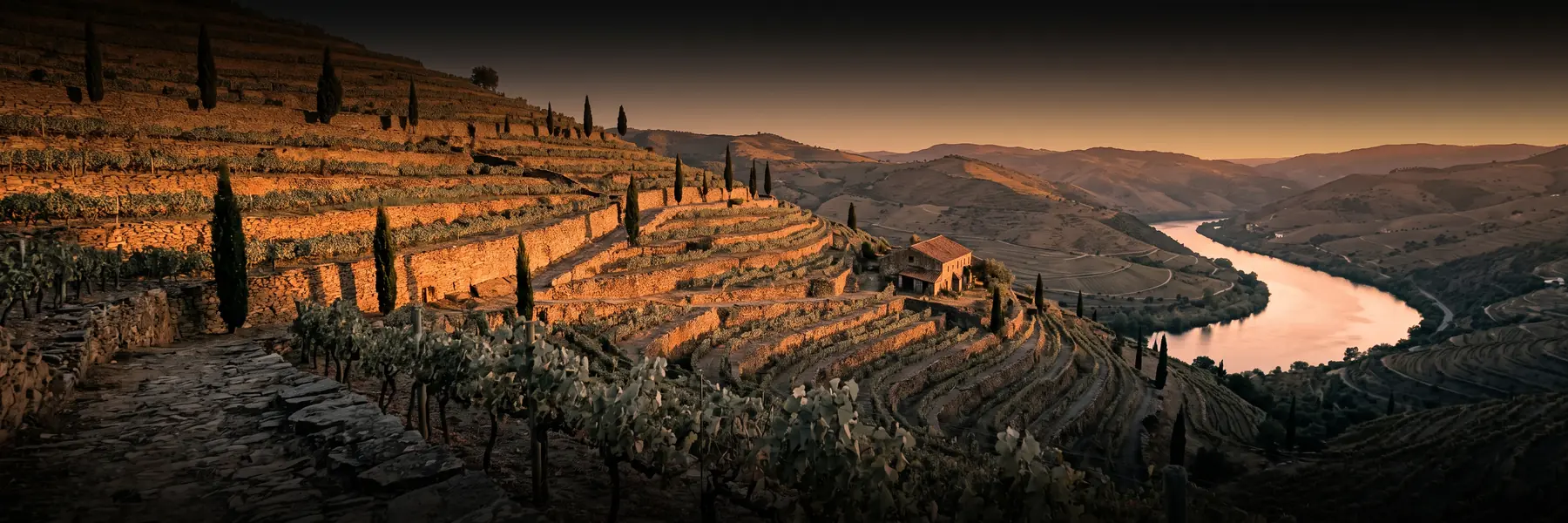
Alsace — Aromatic Whites on the Rhine Plain
Alsace — Aromatic Whites on the Rhine Plain
Alsace is France's most idiosyncratic wine region: tucked along the east slope of the Vosges Mountains, protected from Atlantic rain, and producing wines closer in character to neighbouring Alsace's German past than to any other French region. Yet the wines remain distinctly French — dry, food-driven, and complex.
Geography
Alsace is a long, narrow strip running 170km north–south between the Vosges Mountains to the west and the Rhine Valley to the east. The mountains intercept Atlantic rain, creating one of France's driest climates. The vineyards face east to southeast on slopes of varied geology: granite, limestone, clay, sandstone, and volcanic basalt create dramatically different terroirs within short distances.
Climate
Semi-continental with strong rain shadow. Colmar, in the centre of Alsace, is one of France's driest cities. Long, sunny autumns allow full ripeness and late harvest. Winters are cold, springs can be frosty, summers are warm and dry.
Key Grapes
| Grape | Style | Character |
|---|---|---|
| Riesling | Dry to late harvest | Petrol, lime, slate, flowers — the region's finest |
| Gewurztraminer | Off-dry to late harvest | Lychee, rose petal, ginger, Turkish Delight. Very aromatic. |
| Pinot Gris | Dry to late harvest | Smoke, apricot, honey, full body |
| Muscat Blanc | Dry | Grape juice perfume; delicate, light |
| Pinot Noir | Red | Light, elegant; Burgundy-adjacent |
| Auxerrois | White | Blended into Pinot Blanc; fat, soft |
| Sylvaner | White | Fresh, neutral, everyday drinking |
Noble grapes (the four that dominate Grand Cru): Riesling, Gewurztraminer, Pinot Gris, Muscat. There are named exceptions — Sylvaner in Zotzenberg (since 2006), field blends in Altenberg de Bergheim and Kaefferkopf, and Pinot Noir in Kirchberg de Barr and Hengst (2022) and Vorbourg (2024) — see the Grand Cru guide.
Sweetness Levels
Alsace wines range from bone dry to lusciously sweet, sometimes from the same variety and producer:
| Designation | Description |
|---|---|
| Alsace AOC | Standard dry wines |
| Grand Cru | 51 classified sites; noble grapes with a handful of named exceptions; stricter yields |
| Vendanges Tardives (VT) | Late harvest; off-dry to sweet; concentrated |
| Sélection de Grains Nobles (SGN) | Botrytis-affected berries; very sweet; rare and expensive |
| Crémant d'Alsace | Traditional method sparkling from Pinot Blanc, Auxerrois, Pinot Gris |
Note: Alsace labels rarely state sweetness level — you must know the producer's style or ask. This is a long-running consumer frustration.
Grand Cru Vineyards
51 Grand Cru sites are recognised. The most famous:
- Schlossberg (Kaysersberg) — granite; finest Riesling
- Rangen de Thann — volcanic (volcano-sedimentary greywacke and tuff); unique smoky intensity
- Brand — granite; Riesling and Gewurztraminer of great finesse
- Hengst — clay-limestone; powerful Gewurztraminer
- Muenchberg — sandstone; silky Riesling
Famous Producers
- Domaine Weinbach — benchmark producer for all noble varieties; biodynamic
- Zind-Humbrecht — the most celebrated estate; extraordinary single-vineyard wines
- Trimbach — benchmark dry Riesling; "Clos Sainte Hune" is a Riesling legend
- Hugel & Fils — large reliable producer; instrumental in VT/SGN classification
- Marcel Deiss — controversial champion of field blends and vineyard-name labelling for its top crus, alongside a varietal range
Wine Styles
Riesling: Bone dry, high acidity, petrol character develops with 5–10+ years of age. Alsace Riesling is the most food-friendly, versatile expression of the variety.
Gewurztraminer: Heady aromatics (lychee, rose water, ginger spice) and a low-acid, rich palate. Even dry versions can feel almost sweet. Best with rich, spiced food.
Pinot Gris: Full-bodied, smoky, spiced. Far more texture than Italian Pinot Grigio, the same grape picked earlier and stainless-fermented. VT versions are among the world's great dessert wines.
Crémant d'Alsace: The best French sparkling outside Champagne. Crisp, fresh, good value.
Making Alsace-Style Aromatic Whites
Riesling
- Harvest at lower Brix for style (21–24°Bx) — high acidity is the goal.
- Press gently; settle cold for 24–48h; rack off gross lees before inoculation.
- Ferment at 14–16°C to preserve varietal aroma. Cool fermentation is critical for Riesling.
- Yeast: QA23 or VL3 — both are aromatic yeast strains enhancing terpene release.
- Avoid MLF — Riesling needs malic acidity for structure and longevity.
- Age on fine lees with occasional bâtonnage; bottle with some CO₂ to preserve freshness.
Gewurztraminer
- Yeast: D47 (ferment cool, max 20°C, or produces fusel alcohols); VL3 for intense aromatics.
- Very aromatic — cold fermentation is essential (13–16°C).
- Often fermented off-dry intentionally (leave ~10–25 g/L residual sugar) to balance its naturally low acidity.
Food Pairing
Riesling: choucroute garnie, smoked salmon, Asian cuisine, goat cheese.
Gewurztraminer: Munster cheese, foie gras, Thai curry, roast duck with spices.
Pinot Gris: pork tenderloin, cream sauces, mushroom dishes.
Muscat: asparagus (the classic pairing), fresh soft cheeses.
Tip: For an Alsace-style Riesling, resist the urge to push residual sugar for palatability. The discipline of a true dry Riesling — all that acidity exposed — is exactly what makes it so food-versatile and age-worthy.