Germany — Riesling, the Mosel, and the World's Greatest Sweet Wines
Germany — Riesling, the Mosel, and the World's Greatest Sweet Wines
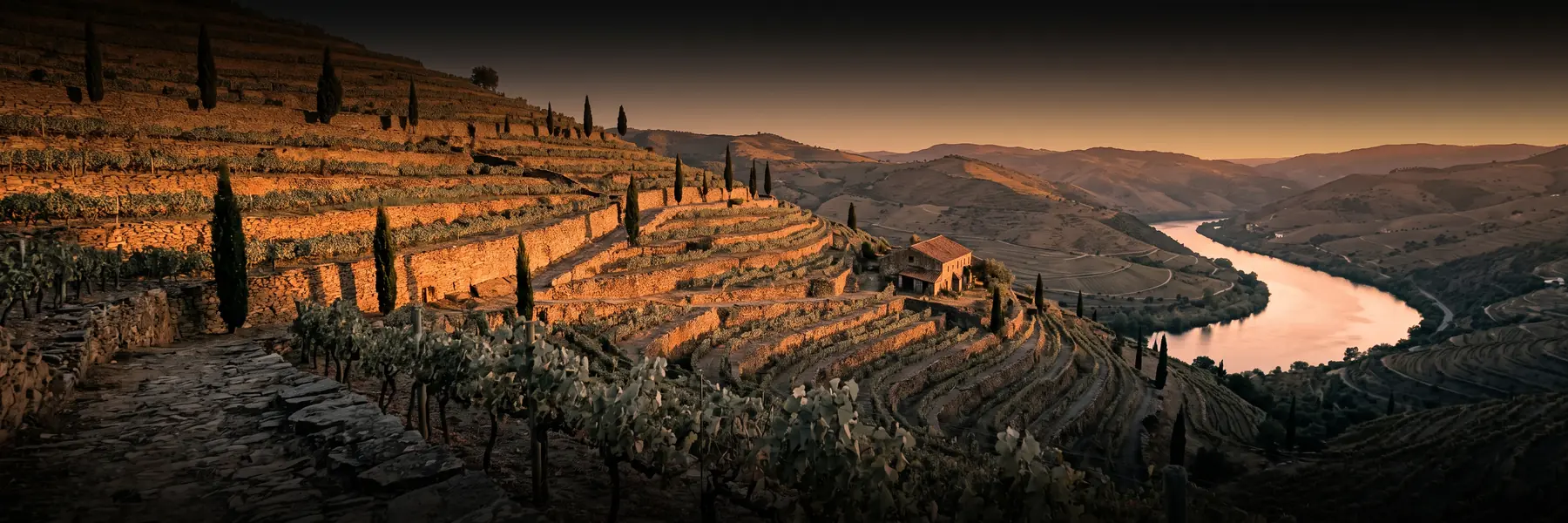
Germany produces the world's finest Riesling — wines of extraordinary precision, the most complex expression of the grape from dry Spätlese to the impossibly concentrated Trockenbeerenauslese. The Mosel, with its dramatic slate river bends and pencil-thin rows of vines clinging to near-vertical slopes, is one of the most visually stunning and historically significant wine regions on earth.
Geography
Germany's 13 wine-growing regions (Anbaugebiete) are all in the country's warmer south and west. The major zones:
- Mosel — the most famous; the Mosel River and its tributaries Saar and Ruwer; slate soils; the benchmark for light, delicate Riesling
- Rheingau — the bend of the Rhine; south-facing slope on the Rhine's north bank, west of Wiesbaden; more powerful, drier Riesling style; see separate article
- Rheinhessen — Germany's largest region; diverse; source of Liebfraumilch (historic) and some excellent Riesling and Spätburgunder
- Pfalz — warm, diverse; excellent Riesling and increasingly important Spätburgunder (Pinot Noir)
- Nahe — small, diverse; excellent quality, underrated
- Baden — Germany's warmest zone; strong Spätburgunder tradition; southernmost
The Praedikat System
Germany's wine classification is based on the ripeness (sugar content) of the grapes at harvest, measured in degrees Oechsle. This is the Praedikatswein system:
| Praedikat | Oechsle at harvest | Style |
|---|---|---|
| Kabinett | 67–82°Oe | Lightest; delicate, low alcohol (7–9%); usually off-dry |
| Spätlese | 76–90°Oe | "Late harvest"; more body and ripeness; dry to off-dry |
| Auslese | 83–100°Oe | Selected bunches; rich, often sweet; can be dry (trocken) |
| Beerenauslese (BA) | 110–128°Oe | Individual botrytised berries; always sweet; rare |
| Eiswein | 110°Oe+ | Ice wine; grapes frozen on vine; concentrated, high acid |
| Trockenbeerenauslese (TBA) | 150–154°Oe | Individual shrivelled botrytised berries; the pinnacle; nectar |
Trocken / Halbtrocken / Feinherb: Modern German wine also uses dryness level labels: Trocken (dry, max 9 g/L RS), Halbtrocken (medium-dry, 9–18 g/L), Feinherb (a looser term for gently off-dry). Many top Riesling producers now produce fully dry expressions.
GG (Grosses Gewächs): The VDP (a producer association) designation for dry wines from classified single vineyards — Germany's equivalent of Grand Cru for dry wines.
The Mosel
The Mosel (and its tributaries Saar and Ruwer) is Germany's most famous wine region. The unique combination:
- Blue Devonian slate soils that retain heat and reflect light onto vines
- Extreme southerly-facing slopes (some at 65–70°) that maximise sun exposure
- The river's thermal moderating effect
- The cool continental climate that preserves acidity even in ripe grapes
The result: Riesling of extraordinary delicacy and precision — the lowest alcohol of any fine wine region (7–9% for Kabinett), combined with the highest natural acidity. The tension between sweetness and acidity is the Mosel's signature.
Key villages: Bernkastel (Bernkasteler Doctor), Piesport (Goldtröpfchen), Wehlen (Wehlener Sonnenuhr), Erden (Erdener Treppchen), Ürziger Würzgarten, Brauneberger Juffer.
Famous Producers
Mosel:
- J.J. Prüm — the most revered Mosel estate; Wehlener Sonnenuhr; ethereal Spätlese and Auslese
- Egon Müller — Scharzhofberg (Saar); TBA prices match Pétrus; the world's most expensive Riesling
- Fritz Haag — Brauneberger Juffer and Juffer-Sonnenuhr; excellent across all levels
- Willi Schaefer — small, meticulous; Graacher Domprobst and Himmelreich; consistently extraordinary
- Dr. Loosen — reliable quality; good international distribution; excellent value
Rhine:
- Georg Breuer — Rheingau; benchmark dry Riesling
- Robert Weil — Rheingau; remarkable Auslese and above from Kiedricher Gräfenberg
Wine Styles
Mosel Kabinett/Spätlese: The most ethereal expressions in world wine. As light as 7.5% ABV, yet with extraordinary complexity from the tension of grape-sugar sweetness and piercing slate-mineral acidity. Peach, apricot, lemon, floral, slate. Drink 5–30 years from top estates.
Auslese: Richer, more concentrated. Begin to show botrytis influence. Honey, apricot, lemon curd, ginger.
TBA and BA: Among the world's greatest sweet wines. Honey, marmalade, saffron, incredible complexity. Decades of ageing ahead. Produced only in finest years.
Making German-Style Riesling
Approach
German Riesling can be made dry (Trocken) or with residual sugar from any Riesling clone. The goal is maximum aromatic precision and minerality.
Harvest
- For Kabinett style: harvest at 16.5–19°Bx (67–82°Oe); target pH 2.9–3.1; TA 9–12 g/L.
- For Spätlese: 19–21.5°Bx (76–90°Oe).
- Cool nights and meticulous vineyard selection are essential.
Fermentation
- Cool (12–14°C) is mandatory for Riesling. Warm fermentation destroys the delicate aroma.
- Yeast: Oenoferm Cool or VL3 — both designed for aromatic preservation at low temperatures.
- For off-dry styles: arrest fermentation when desired RS is reached by dropping temperature to 0–4°C, then filter and cold stabilise.
- For dry styles: ferment to dryness; the balance then comes from the natural high acidity.
Ageing
- Stainless steel or large neutral oak (traditional Fuder — 1,000L oval casks) for best examples.
- No malolactic fermentation — ever. Malic acidity is structural and essential to Riesling's character.
- Bottle to ~30–40 mg/L free SO₂ (enough for roughly 0.8 mg/L molecular SO₂ at Riesling's low pH). Wines with residual sugar need more — total SO₂ is commonly 100–150 mg/L — to guard against refermentation and oxidation over long ageing.
Food Pairing
Mosel Kabinett: Asian cuisine (Thai, Vietnamese), sushi, delicate white fish, fresh cheeses.
Spätlese/Auslese (off-dry): rich pâtés, blue cheese, spiced pork dishes.
TBA/BA: alone as a meditation; or with aged hard cheeses and bitter dark chocolate.
Tip: The petrol/kerosene note that develops in aged Riesling (from TDN — trimethyl-dihydronaphthalene) is a mark of quality, not a fault. It develops after 5–10 years and integrates beautifully with the wine's fruit character. Don't try to avoid it.