Sagrantino di Montefalco — Italy's Most Tannic Wine
Sagrantino di Montefalco — Italy's Most Tannic Wine
Sagrantino holds a record nobody particularly wants: measured by total polyphenol content, it is generally reckoned the most tannic wine grape in Italy and one of the most tannic in the world. A young Sagrantino is an experience closer to chewing than drinking. Given fifteen years, it becomes one of the most remarkable reds in Italy — dense, savoury, spiced, and completely unlike anything else.
It is also a variety that came within a generation of disappearing entirely.
Geography
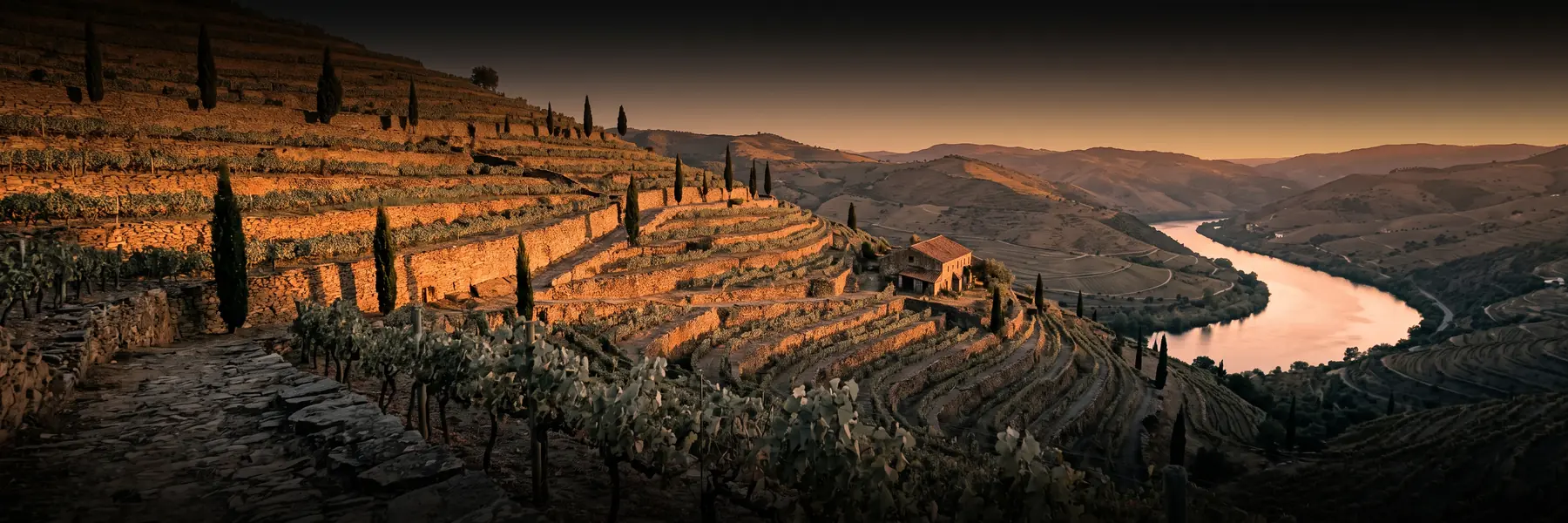
Sagrantino is grown in a small zone around the hill town of Montefalco in Umbria, in central Italy — the green, landlocked heart of the country, south-east of Tuscany. Montefalco sits high enough to be called la ringhiera dell'Umbria, the balcony of Umbria, looking out over the Spoleto valley.
The vineyards occupy hillsides at roughly 250–450 m on clay and sandy-clay soils with limestone. The zone is genuinely tiny — a few hundred hectares of Sagrantino in total — and it is grown almost nowhere else in the world.
Near-extinction and revival
By the mid-twentieth century Sagrantino was nearly gone. It had survived mainly as a small-scale passito wine made for Easter — the name is generally linked to sacramento, the sacrament — and its low yields, difficult tannins and lack of any market made it commercially pointless.
From 1971, when Arnaldo Caprai bought the Val di Maggio estate — and especially from the late 1980s under his son Marco, working with clonal research at the University of Milan — the family systematically selected better material, replanted, and — critically — worked out how to make a dry version that was drinkable. DOCG status followed in 1992. It is one of the clearest modern examples of a variety saved by a single family's stubbornness.
The rules
100% Sagrantino. The wine must be aged for a period in wood and a further period in bottle before release, with the rules requiring at least a year in barrel — the intention being to force the tannin to resolve before the wine reaches anyone.
Two styles are permitted:
- Montefalco Sagrantino DOCG — the dry red
- Montefalco Sagrantino Passito DOCG — the historic sweet version, from grapes dried after harvest
Alongside it, Montefalco Rosso DOC is a Sangiovese-based blend with a small proportion of Sagrantino — typically around 10–15% — added for colour and structure. It is far more approachable, much cheaper, and one of central Italy's best-value reds. It also demonstrates the most practical use of Sagrantino: as a blending component.
Climate
Continental with Mediterranean influence. Warm, dry summers; cool nights from the altitude; a long autumn. Sagrantino ripens late — late October is normal — and needs every day of it, because its tannins only become tolerable when the fruit is fully ripe.
Producers
- Arnaldo Caprai — the revival estate; the 25 Anni cuvée is the appellation's flagship
- Paolo Bea — natural, uncompromising, cult; long macerations and minimal intervention
- Tabarrini — single-vineyard bottlings that show real site differences within a tiny zone
- Còlpetrone, Antonelli San Marco, Scacciadiavoli, Adanti — the depth of a very small appellation
Style
Deep, opaque purple-black — Sagrantino has both high tannin and high anthocyanin, which is unusual and important. Blackberry, black plum, blueberry, liquorice, cocoa, cinnamon and dried herbs, with a bitter-edged, mouth-coating tannic finish. High acid, full body, considerable alcohol.
Young, it is genuinely difficult. At ten to twenty years the tannin resolves into something velvety and the wine develops tar, leather and dried-fruit complexity. The Passito version is intense, sweet and grippy at the same time — a rare combination.
What Sagrantino teaches your winemaking
Sagrantino is the ultimate case study in tannin management. Everything below applies to any high-tannin variety — Tannat, Nebbiolo, Petit Verdot, Baga, aged Cabernet Franc from a hot site.
Pick on tannin ripeness, not sugar
This is the first and most important rule. Sagrantino's tannins are only bearable when fully ripe, and it needs a long, late season to get there. Chew the skins and crack the pips: brown, nutty seeds mean ready; pale green, bitter, woody seeds mean not. If you pick on Brix and ignore the pips you will make an undrinkable wine. See harvest timing.
High tannin plus high colour is an advantage
Here is where Sagrantino differs from Sangiovese and Nebbiolo. It has plenty of anthocyanin, and anthocyanins bind with tannins to form polymeric pigments that are perceived as softer and rounder than free tannin. That is why Sagrantino can be tamed at all, and it is why a colour-rich, tannin-rich grape ages into velvet while a colour-poor, tannin-rich grape ages into drying austerity.
The transferable lesson: if you have a very tannic wine, the most effective softener is pigment, not fining and not oak. Blend in a deeply coloured lot and taste the finish.
Extract gently — you have plenty already
Long, hot, vigorously worked macerations on Sagrantino produce something close to undrinkable. Moderate fermentation temperature, gentle cap management, and press before you pull seed tannin. Taste twice daily. Keep the hard press fraction separate and treat it as a separate wine unless it earns its way back in. See tannin management and punch-down vs pump-over.
Long élevage with gentle oxygen
Time in a large wooden vessel does the real work: tannins polymerise into longer, softer chains in the presence of controlled, slow oxygen exposure. This is the same principle behind micro-oxygenation, which was invented in Madiran for exactly this problem — see our Tannat guide. At home: age in wood if you can, and splash-rack once or twice during élevage rather than racking gently. See barrel ageing basics and racking guide.
Blend it, like Montefalco Rosso does
The local answer to Sagrantino's tannin is to use only 10–15% of it in a Sangiovese-based wine. If you have a variety you cannot make drinkable on its own, using it as a structural component in something softer is not a defeat — it is what the region that grows it actually does with most of its crop. See blending theory.
Fining as a last resort
Gelatin or egg-white fining removes harsh tannin selectively and can rescue an over-extracted wine — but it also strips body. Always bench-trial at several rates before treating the batch. See our fining agents article.
For a similar problem in south-west France and Uruguay, see the Tannat guide; for high-tannin, low-colour Nebbiolo, see Barolo and our Nebbiolo guide.
Food pairing
Umbrian roast pork, wild boar, grilled meats over wood, lentil and sausage dishes, and aged pecorino. Sagrantino needs fat and salt in quantity; there is no point opening it with anything light. The Passito is traditionally drunk with hard biscuits and dried fruit.
Tip: If you make a wine that is simply too tannic, try this before anything else: blend 10% of it into a softer, fruitier wine and taste both. Very often the tannic wine is a brilliant blending component and a poor standalone bottle — and Montefalco has built an entire second appellation on exactly that observation.