Barolo — Nebbiolo, Long Maceration, and the King of Italian Wine
Barolo — Nebbiolo, Long Maceration, and the King of Italian Wine
Barolo is a wine of contradictions. It is pale — often no darker than a Pinot Noir, and browning at the rim within a few years. It smells of roses and tar. And it has more tannin and more acid than almost any other fine wine on earth. Nothing about it makes sense on first acquaintance, and then at fifteen or twenty years it becomes one of the greatest wines in the world.
Geography
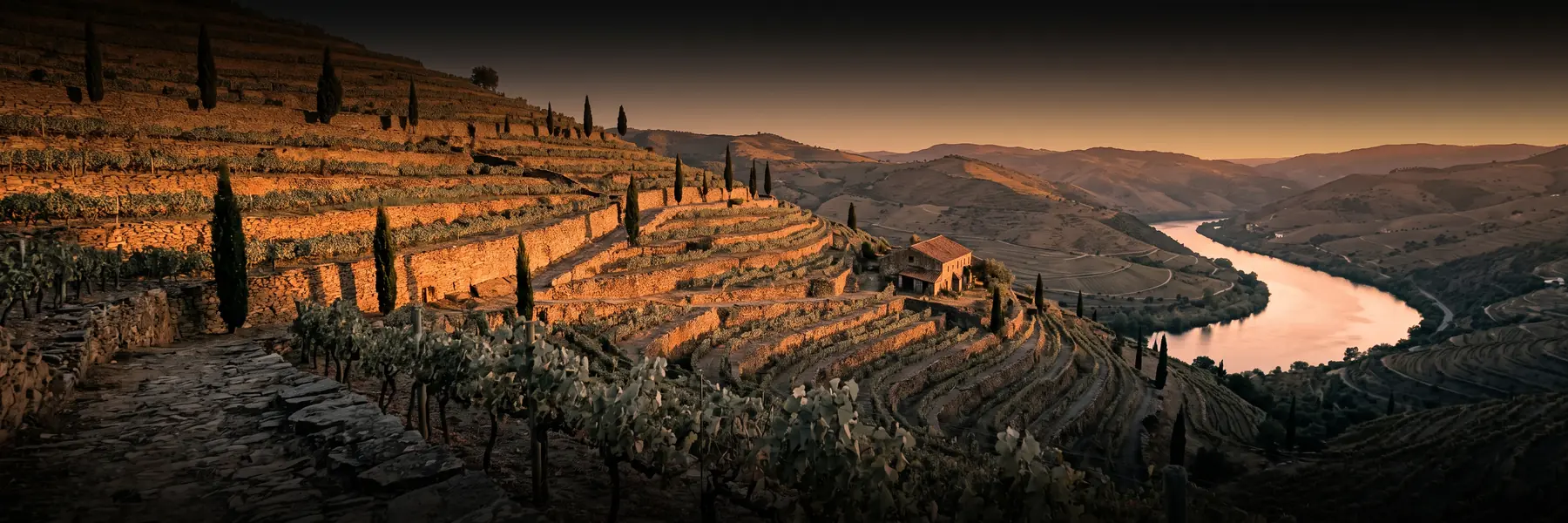
Barolo is made in the Langhe hills of Piedmont, south-west of Alba. The zone covers eleven communes, of which five hold the great majority of the vineyard: Barolo, La Morra, Castiglione Falletto, Serralunga d'Alba and Monforte d'Alba. Verduno, Novello, Grinzane Cavour, Diano d'Alba, Cherasco and Roddi make up the rest.
The soils divide along a geological line running roughly north–south through Castiglione Falletto, and the split is the single most useful thing to know about Barolo:
| Formation | Communes | Character |
|---|---|---|
| Tortonian (Sant'Agata Fossili marl) — bluish-grey, more compact clay-marl | Barolo, La Morra | More perfumed, softer, earlier-maturing |
| Serravallian / Helvetian (Lequio formation) — sandier, more compact, lighter-coloured | Serralunga, Monforte | More structured, more tannic, slower-maturing, longer-lived |
Castiglione Falletto sits on the boundary and produces wines with elements of both.
Since 2010 the appellation has formally recognised named vineyard sites — MGA (menzioni geografiche aggiuntive) — of which there are well over 150. A Barolo labelled with an MGA such as Cannubi, Brunate, Rocche dell'Annunziata, Vigna Rionda or Bussia is a single-site wine, and the names have become as meaningful to collectors as Burgundy's climats.
Climate
Continental, with cold winters, hot summers and the autumn fog — nebbia — from which Nebbiolo takes its name. Nebbiolo is the last variety picked in Piedmont, often well into October, so the wine depends entirely on a long, dry autumn. Hail and the risk of autumn rain are the appellation's great enemies.
The rules
Barolo is 100% Nebbiolo, and its ageing requirements are among the strictest in Italy:
- Barolo: minimum 38 months of ageing from 1 November of the harvest year, of which at least 18 months in wood
- Barolo Riserva: minimum 62 months total
That means no Barolo may be released before its fourth year, and no Riserva before its sixth. It is a mandated apprenticeship in patience.
The Barolo wars
Through the 1980s and 1990s the region tore itself apart over technique.
Traditionalists — Bartolo Mascarello, Giuseppe Rinaldi, Giacomo Conterno — fermented with very long macerations, sometimes a month or more with a submerged cap, and aged in large old Slavonian oak botti that added no flavour. The wines were pale, austere, unapproachable young and magnificent at twenty.
Modernists — led by consultants and by producers such as Elio Altare and Domenico Clerico — used shorter macerations with rotary fermenters, and aged in new French barriques. The wines were darker, softer, more accessible young and more internationally styled.
The argument has largely settled into a middle ground: moderate macerations, mostly large neutral wood, better fruit than either camp had in 1985. But the two poles are still recognisable and both still have brilliant exponents.
Producers
- Giacomo Conterno — Monfortino, the traditionalist monument
- Bartolo Mascarello and Giuseppe Rinaldi — uncompromising traditional houses, both cult
- Bruno Giacosa — Falletto and Le Rocche del Falletto; classical but immaculate
- Vietti, Elvio Cogno, Giuseppe Mascarello (Monprivato), Roagna, Luciano Sandrone — the depth of the modern zone
Style
Pale garnet, going brick at the rim early. Rose petal, tar, dried cherry, liquorice, truffle, leather, dried herbs — an aromatic complexity out of all proportion to the colour. On the palate: high acid, formidable drying tannin, medium body, and a very long savoury finish. Village-level Barolo wants eight to twelve years; the great sites want fifteen to twenty and can run fifty.
What Barolo teaches your winemaking
Nebbiolo is the hardest red grape to make well, for reasons that are specific and instructive. See our Nebbiolo guide for the variety in full; here is what the appellation itself teaches.
Pale is correct
Nebbiolo has low anthocyanin content and unstable pigments, and it turns garnet young. Fighting this — longer extraction, hotter fermentation, harder pressing — costs you the perfume and gains you nothing but tannin. Barolo's greatest producers make pale wine on purpose.
Long maceration softens tannin; it does not only extract it
This is the counter-intuitive part. In the later stages of a long maceration, tannins begin to polymerise and to bind with anthocyanins and with grape polysaccharides, and the wine gets softer rather than harsher. That is why a traditional 30-day submerged-cap maceration can produce a less astringent wine than a hard 10-day one.
But it only works if you do it gently and keep the cap submerged and protected. If you are attempting a long maceration at home: keep the cap under the liquid, stop active cap work once fermentation is over, maintain a CO₂ blanket, and watch closely for volatile acidity. See tannin management and volatile acidity.
Big neutral wood, not small new barrels
An 18-month minimum in wood is not an invitation to use new barriques. Large old botti provide the slow oxygen exposure that resolves Nebbiolo's tannin without adding vanillin and toast on top of a delicate, floral wine. If you only have small barrels, use old ones. See barrel ageing basics.
Acid is an asset, not a problem
Barolo's high tartaric and malic acidity is a huge part of its ageing capacity. Complete MLF, but do not acidify downward, and be prepared for tartrate instability — see cold stabilisation and MLF explained.
The judgement lesson: do not taste too early
A young Nebbiolo in barrel is a genuinely unpleasant drink, and every year some ambitious home winemaker concludes their wine has failed and blends or sweetens it. Barolo's ageing rules exist because the region learned this the hard way. Bottle enough to open one a year for five years before forming a verdict.
For the wider region see the Piedmont guide; for the earlier-drinking sibling, Barbaresco.
Food pairing
White truffle with egg pasta — the local pairing, and one of the great matches in gastronomy. Also brasato al Barolo, game, braised beef cheek, and aged Castelmagno or Parmigiano.
Tip: If you want to try a long maceration, split the lot. Press half at the end of fermentation and leave half on skins for another two weeks with the cap submerged and a CO₂ blanket. Taste them side by side at six months. The extended-maceration lot is frequently the softer of the two — which is the whole argument of traditional Barolo, demonstrated in your own cellar.