Punching Down vs Pumping Over: Extraction Techniques for Red Wine
Punching Down vs Pumping Over: Extraction Techniques for Red Wine
During red wine fermentation, grape skins, seeds, and pulp rise to the surface of the fermenting juice as CO₂ lifts them, forming a dense "cap" (or pomace). This cap must be managed. Left unmixed, it dries out, provides an ideal environment for acetic-acid bacteria, and — because extraction needs skin–juice contact — leaves the wine under-extracted in colour, tannin and flavour. The two classic techniques for cap management produce fundamentally different results.
The Cap: What and Why
As fermentation generates CO₂, the gas bubbles attach to grape skins and float them upward. The cap:
- Contains the majority of anthocyanins (colour), tannins, aromatic compounds, and polyphenols
- Generates heat internally — can be 5–10°C warmer than surrounding juice
- Dries out on top if left unsubmerged — providing oxygen and an acidic, dry environment for acetobacter
Cap management achieves several goals simultaneously:
- Extracts colour, tannin, and aromatic compounds from skins into juice
- Cools the cap (preventing stuck fermentation and reducing volatile acidity)
- Prevents acetobacter colonisation of the dry surface
- Homogenises the fermentation temperature
Punch Down (Pigeage)
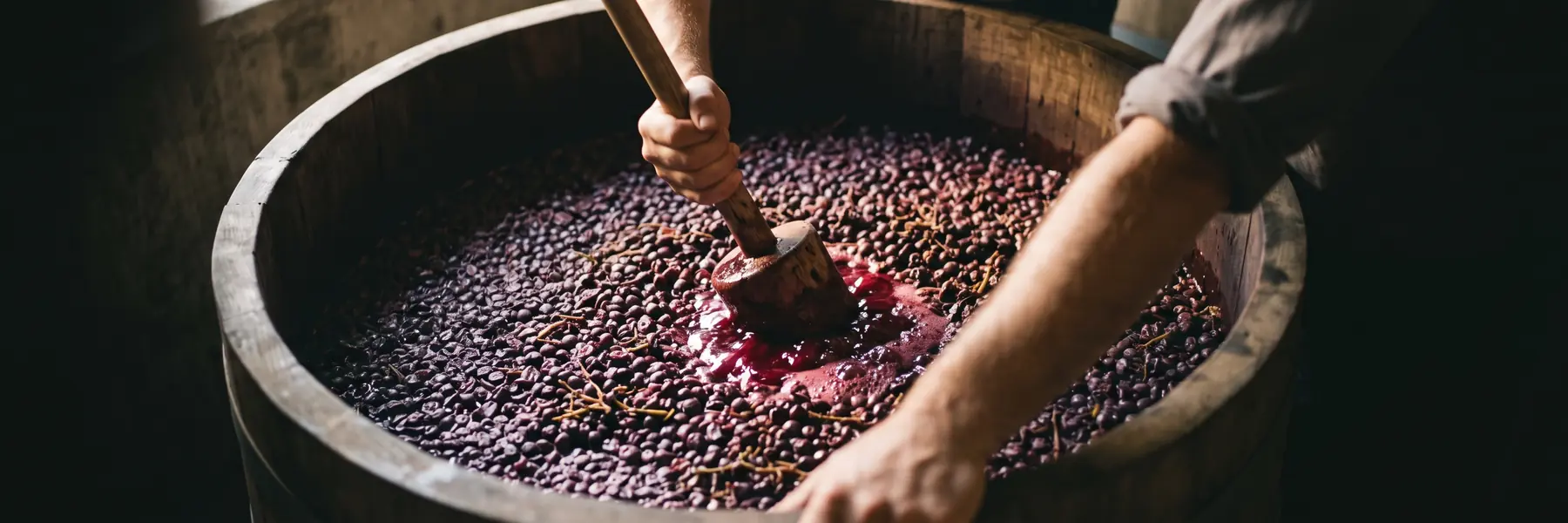
Pigeage is the traditional Burgundian technique. The cap is physically broken and submerged using a paddle, punch-down tool, or in large-scale operations, a mechanical punch-down system.
How it works:
- Using a stainless or wooden punch-down tool, break the cap surface and push it through into the juice below
- Work across the entire surface until the cap has been fully broken and submerged
- In a typical open-top fermenter, this takes 5–10 minutes
- Repeat 2–3 times per day during active fermentation
What it produces:
- Gentle extraction: pigeage is often gentler than mechanical circulation. It submerges the cap by hand rather than drawing juice through a pump — in a pump-over only the juice is pumped, while the cap of skins stays in place at the top of the tank.
- Fine-textured tannins: associated with Pinot Noir and Burgundy-style reds
- More colour preservation: less mechanical disruption of skin cells
- Richer texture in many winemakers' experience
Best for:
- Pinot Noir, Gamay, Syrah, and lighter reds
- Aromatic wines where delicacy is a priority
- Open-top fermenters
- Smaller batches where manual pigeage is practical
Practical note for home winemakers: A simple stainless tube or even a sanitised rolling pin works for small fermenters. Commercial pigeage tools are available for 20–50L vessels.
Pump Over (Remontage)
Remontage draws juice from the bottom of the tank via a valve and pumps it over the top of the cap through a spray head.
How it works:
- A pump is connected to the drain valve at the bottom of the tank
- Juice is pumped to a spray manifold above the cap and distributed over the surface
- The volume pumped over varies: 50–200% of the tank volume per day is common
- Duration: typically 15–30 minutes per cycle, 1–3 times per day
What it produces:
- More vigorous extraction: juice flowing over the cap extracts more tannin and colour per cycle than gentle pigeage
- More oxygen exposure: the flowing juice picks up oxygen, which can polymerise tannins (soften them) and support yeast health
- Greater temperature homogenisation: the pump cycle mixes the entire volume
- Bolder, more tannic wines: higher extraction typically
Best for:
- Cabernet Sauvignon, Merlot, Malbec, and full-bodied reds
- Large tanks where manual pigeage is impractical
- Wines requiring structure and tannin
Practical note for home winemakers: True pump-overs require a pump and spray system. For home scale, a simplified version — drawing juice from the bottom with an auto-siphon and pouring over the cap — achieves a similar (if less efficient) result.
Délestage (Rack and Return)
A third technique, less common but increasingly used: the entire tank is drained of juice, the cap falls to the bottom, and the juice is then pumped back over the collapsed cap. This provides very vigorous extraction and significant aeration. It also allows seed removal (seeds fall through a screen when the cap collapses), reducing harsh seed tannins. Used for structured reds that need full extraction.
Choosing Between Techniques
| Wine style | Recommended approach | Frequency |
|---|---|---|
| Pinot Noir, Gamay | Pigeage only | 2–3× daily |
| Syrah | Pigeage or gentle pump-over | 2× daily |
| Cabernet, Merlot, full reds | Pump-over | 2× daily |
| Maximum extraction (big, dark reds and dessert wines) | Délestage or pump-over 3× daily | 3× daily |
| Carbonic maceration / whole cluster | No cap management or very gentle pigeage only | Minimal |
Over-Extraction: The Risk
The most common mistake with cap management is over-extracting. More pigeage or pump-overs is not always better:
- Excessive extraction produces harsh, astringent tannins
- Very vigorous pump-overs can emulsify seeds, releasing harsh seed tannins and oils
- Bitterness and harshness in young red wine is often a sign of over-extraction
Guide: Taste the fermenting wine daily. As tannins become firm but not harsh, reduce cap management intensity. If tannins start tasting harsh or green, reduce immediately.
During Extended Maceration
After fermentation is complete but before pressing, continuing cap management (typically once daily) during extended maceration extracts further phenolics and allows the tannins to polymerise, becoming softer and more complex. Extended maceration of 2–4 weeks post-fermentation is common for premium reds.
Tip: Log each cap management event in MakeWine's additions log with the technique and frequency. Reviewing this data alongside tasting notes over multiple vintages helps you identify the extraction regime that consistently produces the style you want.