Bairrada — Baga, Atlantic Clay, and Portugal's Most Difficult Grape
Bairrada — Baga, Atlantic Clay, and Portugal's Most Difficult Grape
Bairrada is where you go to find out how much punishment you are willing to take from a grape. Baga carries small, thick-skinned berries in compact bunches in a wet climate, and ripens late in a region with an early autumn, and arrives in the cellar with the acidity of a Riesling and the tannin of a Nebbiolo. It produces, in good hands and after a decade in bottle, some of the most individual red wine in Europe. It also produces more disappointing wine than almost any other noble variety, and understanding why is a genuine education.
Geography
Bairrada sits between Coimbra and Aveiro on Portugal's Atlantic coast, only a few kilometres from the sea, west of Dão and south of Vinho Verde. The name comes from barro — clay.
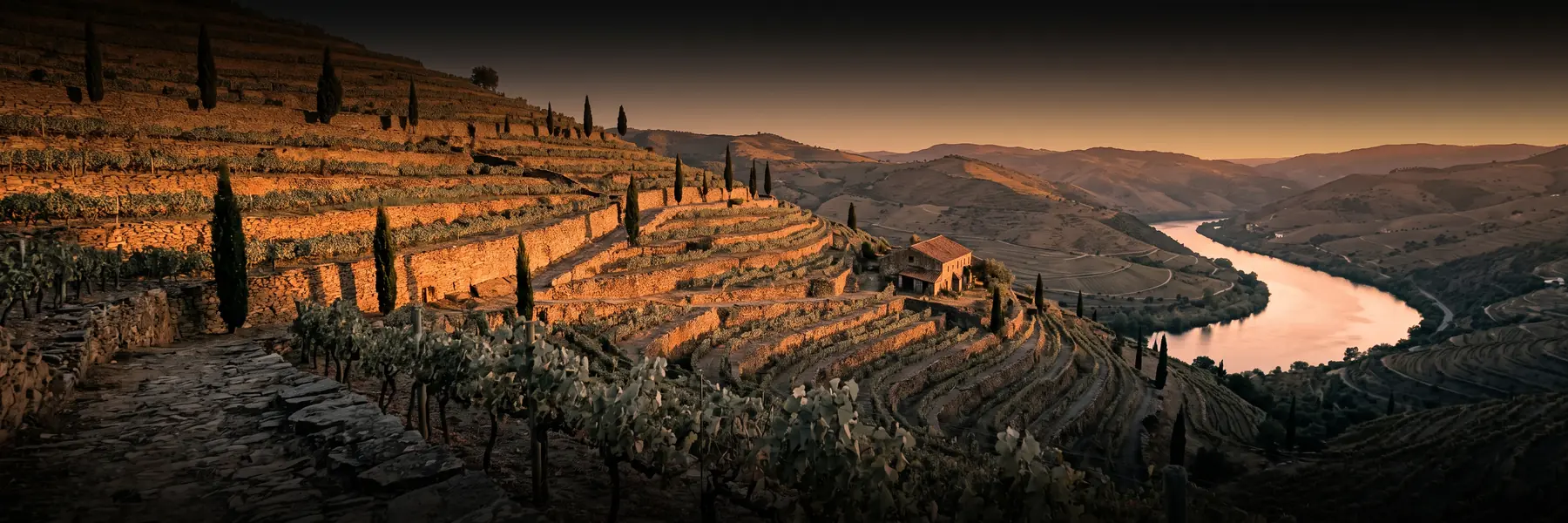
The soils are the region's defining feature: heavy clay over limestone, with sandier patches nearer the coast. Clay-limestone holds water, runs cool, and delays ripening — which in a marginal, late-ripening variety is either the source of the wine's structure or the reason it never ripens, depending on the year.
Climate
Maritime Atlantic. Mild, wet, humid, with rain a serious risk at harvest. Bairrada has all the disease pressure of Vinho Verde and, in Baga, a variety with small berries packed into tight bunches — the worst possible combination for botrytis and sour rot.
This is why Bairrada is a genuinely vintage-dependent region in a way that most of southern Europe is not. In a dry autumn, Baga ripens and the wines are extraordinary. In a wet one, they are lean, green and hard.
Key Grapes
Red
| Grape | Character |
|---|---|
| Baga | Very high acidity, very high tannin, moderate colour, thick skins, late ripening. Red cherry, cranberry, tomato leaf, tobacco; with age, dried cherry, leather, forest floor |
| Touriga Nacional, Alfrocheiro | Permitted, increasingly used to soften and colour Baga blends |
White
| Grape | Character |
|---|---|
| Bical | High acid, citrus and stone fruit; excellent for both still and sparkling |
| Maria Gomes (Fernão Pires) | Aromatic, floral; the volume white |
| Arinto | Steely acidity; the sparkling backbone |
| Cercial, Sercialinho | Acid and structure |
The Sparkling Tradition
Bairrada is Portugal's historic heartland for traditional-method sparkling wine, dating to the late nineteenth century, and it deserves to be much better known. The logic is obvious once stated: a cool Atlantic region with naturally high-acid, low-alcohol base wine is exactly the raw material a bottle-fermented sparkling wine needs.
Both white (Bical, Arinto, Maria Gomes) and — more unusually — Baga rosé and blanc de noirs are made. Baga's high acid and modest colour make it a surprisingly good sparkling grape. If you want to make sparkling wine yourself, the method is set out step by step in the Cava guide and the Champagne guide.
The Destemming Argument
For most of Bairrada's history, Baga was fermented whole-bunch in open granite or concrete lagares, stems and all, with the fruit trodden or trodden by machine. Given Baga's already ferocious tannin, adding stem tannin made wines that were undrinkable for fifteen years and magnificent afterwards — if you waited.
The modern argument, led by Luís Pato from the 1980s, was that destemming, gentler extraction and shorter maceration could give Baga a shape people would actually buy without stripping its identity. The traditionalists, including producers making superb old-style wine at Quinta das Bágeiras, disagreed.
The relevant point for your own cellar is that this is the same choice you make with any high-tannin variety, and the answer depends on ripeness: ripe, brown, lignified stems add lift and structure; green stems add bitterness that never leaves. Read whole cluster fermentation before you decide, and in a marginal year assume the stems are not ripe.
Wine Styles
Traditional Baga: pale-to-medium ruby that browns at the rim early. Sour cherry, cranberry, dried tomato, tobacco leaf, iron. Ferocious acidity and firm, drying tannin in youth. At fifteen to twenty-five years it becomes savoury, complex and remarkable, and it does not so much soften as resolve.
Modern Baga: destemmed, shorter maceration, more careful oak. Approachable at four or five years; less confrontational, and less singular.
Bairrada Branco: crisp, mineral, underrated; Bical is capable of ageing.
Bairrada Espumante: the region's most consistently good-value wine.
Producers
- Luís Pato — the region's most important figure for forty years; Vinha Pan and Vinha Barrosa
- Filipa Pato — his daughter; "wines with no make-up"; low intervention, superb Baga and Bical
- Quinta das Bágeiras — the great traditionalist; foot-trodden, long-aged, exceptional sparkling
- Sidónio de Sousa — old-vine Baga, classical style
- Niepoort (Poeirinho) — Dirk Niepoort's Bairrada project
What Bairrada Teaches: High Acid, High Tannin
Baga's combination — high acid and high tannin — is the hardest thing to make palatable in red wine, because the two amplify each other on the palate.
MLF is not optional. It is the single most effective softening tool available and it costs nothing. Complete it fully and warm; a partially finished MLF in a low-pH red is a persistent problem. See MLF explained.
Extract for texture, not power. Gentle cap management, moderate maceration, and press before the tannin hardens. See tannin management and punch-down vs pump-over.
Sort ruthlessly. In a humid climate with tight-bunched fruit, rot is the main quality variable and no cellar technique compensates. Botrytis-affected red fruit brings laccase, colour loss and mouldy aromas.
Oxygen, in small doses, over a long time. Very tannic reds need micro-oxygenation to polymerise their tannins, which is why the traditional answer is years in large old wood. See barrel ageing basics.
Blend if you need to. Even a modest fraction of a rounder, riper variety can turn an austere Baga into a wine people will drink — which is what many producers now do. See blending theory, and check your acid figures in the calculators before considering any deacidification.
Food Pairing
Leitão à Bairrada — the region's spit-roast suckling pig — and it is not a coincidence: Baga's acidity and tannin were made for crackling and fat. Otherwise: roast duck, game, cured sausage, aged cheeses. The sparkling wine goes with all of it too.
Tip: If you have a very tannic, very acidic young red that seems hopeless, do not fine it into blandness. Bottle a third of it, put it away for five years, and adjust the rest. Wines like Baga taste worst at eighteen months, and a great many promising reds have been ruined by decisions made at exactly that point.