Cava — Traditional Method Sparkling on Spanish Terms
Cava — Traditional Method Sparkling on Spanish Terms
Cava is the world's second-largest source of traditional-method sparkling wine after Champagne (roughly 250M bottles a year to Champagne's ~270–300M, as of 2023–24) and, for a long time, the least respected. That reputation was earned honestly — decades of very large volumes at very low prices — and it is now badly out of date. The top of the appellation, and the producers who have deliberately left it, are making bottle-fermented wine that stands comparison with Champagne on complexity while tasting nothing like it.
Geography
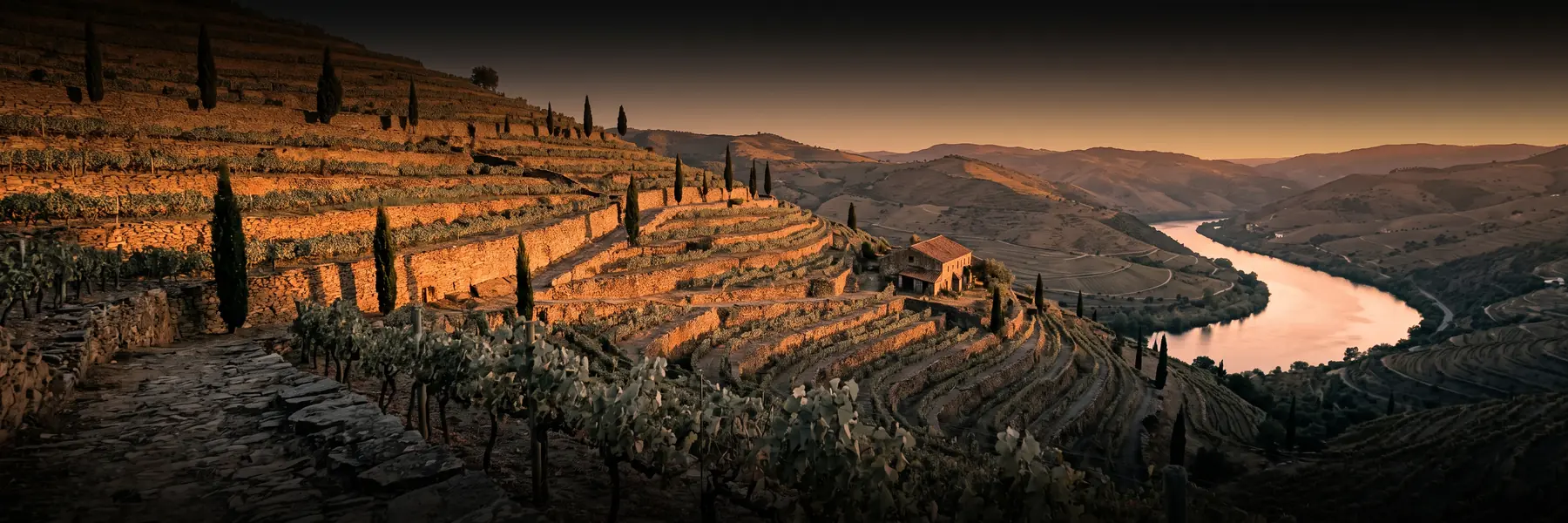
Cava is a method-and-quality denomination rather than a single place — it may legally be produced in several areas of Spain — but in practice around nine-tenths of it comes from Penedès in Catalonia, centred on the town of Sant Sadurní d'Anoia. Penedès rises from the Mediterranean coast to hills at 500–800 m, and the altitude bands matter: the coastal plain gives ripeness and volume, the higher zones give the acidity a sparkling base wine needs.
Soils are predominantly limestone-rich clay, with deep cellars cut into the rock for ageing.
Climate
Mediterranean, warm and dry at the coast, moderating with altitude. The central challenge is the opposite of Champagne's: not achieving ripeness, but preserving acid. Base wines are picked early — earlier than for still wine — precisely to keep total acidity high and potential alcohol low.
The Grapes
| Grape | Role |
|---|---|
| Xarel·lo | Cava's defining variety. Structure, body, a distinctive earthy-nutty character, good acidity, and the ageing capacity that makes long-lees Cava possible |
| Macabeo (Viura) | Floral, softer, gives freshness and finesse; the most planted |
| Parellada | Delicate, high-acid, lower alcohol; grown at altitude; supplies lift |
| Chardonnay / Pinot Noir | Permitted; used by many houses for body and, in Pinot's case, rosé |
| Trepat | Light, fresh, red-fruited; authorised for rosé Cava only, where it is a prized variety |
| Monastrell, Garnacha | Permitted for rosé |
If you want to understand Cava as something other than "Spanish Champagne", drink a Xarel·lo-dominant wine. The variety's savoury, faintly bitter, almost fennel-and-almond character is what distinguishes the appellation.
The Ageing Tiers
Cava's quality pyramid is built on minimum time on the lees in bottle:
| Tier | Minimum lees ageing |
|---|---|
| Cava de Guarda | 9 months |
| Cava de Guarda Superior — Reserva | 18 months |
| Cava de Guarda Superior — Gran Reserva | 30 months |
| Cava de Paraje Calificado | 36 months, from a single delimited site with low yields and hand harvesting |
The Guarda Superior tier also carries additional requirements around vineyard age and organic production — the DO has been moving this tier towards mandatory organic viticulture. Check the current regulation for the applicable vintage rather than relying on any summary.
The Corpinnat Question
Several of the most respected producers — Gramona, Recaredo, Llopart and others — left the Cava DO in 2019 to form Corpinnat, a private mark with stricter rules: organic grapes, hand harvest, all production on the estate, longer minimum ageing, and a minimum price paid to growers. Clàssic Penedès is a separate, similarly strict route within the Penedès DO.
That matters practically: some of the best bottle-fermented wine from Penedès no longer says "Cava" anywhere on it. If you are shopping by appellation alone, you will miss it.
Producers
- Gramona — extraordinarily long-aged wines; III Lustros is a benchmark (now Corpinnat)
- Recaredo — biodynamic, hand-disgorged, zero sugar addition (now Corpinnat)
- Raventós i Blanc — long-standing estate, left the DO for Conca del Riu Anoia
- Codorníu — the historic house; traditional method in Spain effectively starts here
- Freixenet — the volume giant; the wine most people mean by "Cava"
- Pere Ventura, Juvé y Camps — solid, widely available quality
Making Traditional Method at Small Scale
Cava is a good model for a small producer because it is built on ordinary, high-acid, low-alcohol base wine rather than on rare fruit.
1. The base wine. Pick early: aim for a base of roughly 10–11% potential alcohol with high total acidity. Ferment cool and clean, press gently and split fractions, and — critically — do not put it through MLF unless you specifically want a softer style. Read MLF explained. Keep free SO₂ modest; you need viable yeast later.
2. Blend and stabilise. Assemble the cuvée, cold stabilise it (cold stabilisation) and get it clear. Tartrates thrown after the second fermentation are a nuisance you cannot fix.
3. Tirage. Add sugar plus a rehydrated yeast culture and bottle into pressure-rated glass with crown caps. The rule of thumb is that roughly 4 g/L of sugar yields about 1 bar of pressure; a target of 5–6 bar therefore needs somewhere around 20–24 g/L. Do the arithmetic for your own volume with the calculators, and do not guess — over-sugaring bursts bottles.
4. Second fermentation and lees ageing. Lay the bottles down somewhere cool and stable, 12–15 °C. Fermentation finishes in weeks; the flavour comes from the months and years afterwards, as yeast cells autolyse and give up the bready, nutty, creamy compounds that define the style. Nine months is a minimum; two years is where it gets interesting.
5. Riddling and disgorging. Gradually tip and turn the bottles to move the lees into the neck. Freeze the neck (a salt-and-ice bath works), open, let the pressure expel the plug, top up, and close. Expect to lose bottles the first time.
6. Dosage. Top up with wine plus whatever sugar you want. Brut Nature means nothing added — a legitimate choice if the base wine is ripe enough. Then cork and cage; see bottling.
Food Pairing
Xarel·lo-led Cava's savoury edge suits food better than most sparkling wine: jamón, croquetas, grilled prawns, calçots, fried artichokes, tortilla. Long-aged Gran Reserva handles roast chicken and hard cheese. Serve at 8–10 °C — the good stuff, like good Champagne, is spoiled by being served ice-cold.
Tip: If you have never made sparkling wine, do your first attempt with six bottles, not sixty, and use crown caps rather than cork and cage. Almost everything that goes wrong — under-pressure, over-pressure, a lees plug that will not move — is cheaper to learn on six.