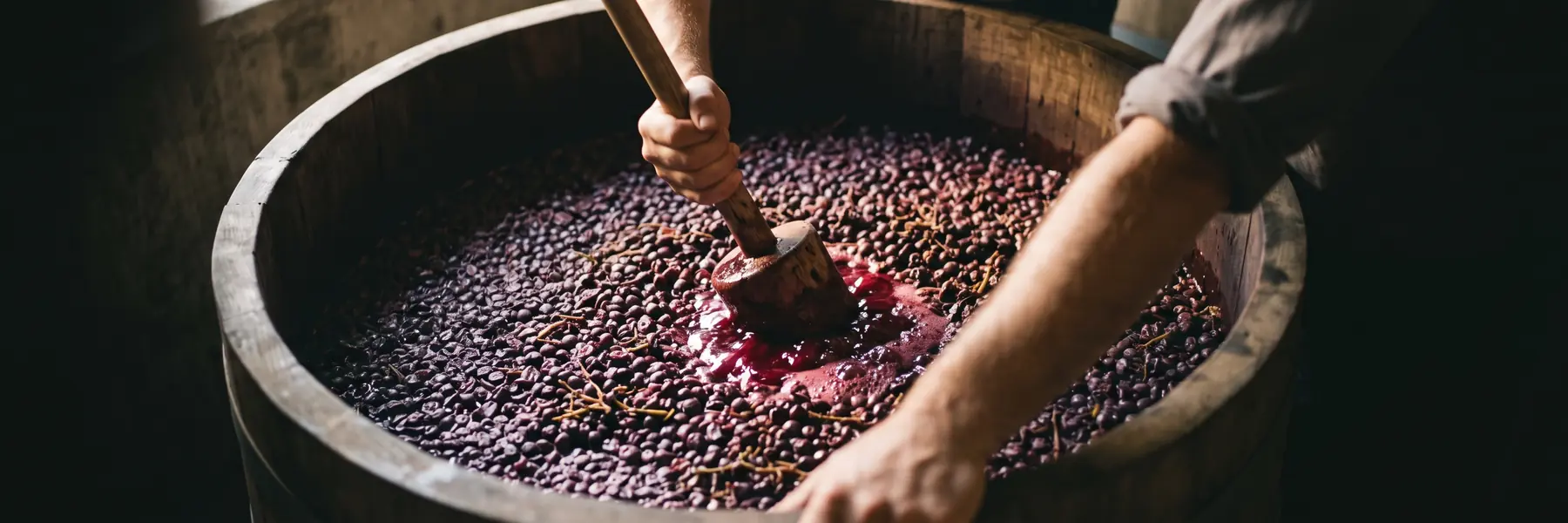
Whole-Cluster Fermentation: When and Why
Whole-Cluster Fermentation: When and Why
Whole-cluster fermentation — fermenting intact grape bunches rather than destemmed berries — is one of the most distinctive traditional winemaking techniques. It's experiencing a significant revival, particularly in Burgundy and among natural wine producers globally. When applied correctly, it produces wines of unusual complexity and structure.
What Whole-Cluster Means
In most modern winemaking, grapes are destemmed (sometimes with a destemmer-crusher) before fermentation. Whole-cluster fermentation retains a proportion (or all) of the stems alongside the berries in the fermentation vessel.
This can be:
- 100% whole cluster: all bunches intact, no destemming whatsoever
- Partial whole cluster: a percentage of whole bunches added to the destemmed mass (e.g. 30% whole cluster + 70% destemmed)
- Stem-back: grape berries fermented with additional stems added back in (less common)
What Happens Biochemically
Carbonic maceration (intracellular fermentation)
When whole berries are submerged in CO₂ (produced by the fermenting juice around them), the intact berry begins an intracellular fermentation. Inside the berry, enzymes convert sugar to a small amount of alcohol (1–2%) without yeast. This produces:
- Malic acid reduction (inside the berry, via malate decarboxylation)
- Increased glycerol (rounder, richer mouthfeel)
- Specific aromatics: kirsch, banana, cinnamon, rose, and other esters not produced by conventional fermentation
This is the basis of Beaujolais Nouveau style — full carbonic maceration produces very fruit-forward, soft wines.
Semi-carbonic maceration (Burgundy, natural wine)
In a partially submerged pile of whole clusters with active fermentation below, only the top layers ferment intracellularly; the bottom layers are crushed under weight and ferment normally. This semi-carbonic approach is what occurs in traditional Burgundy whole-cluster vinification.
Stem contribution
Stems are green, structural plant material. Their contribution depends entirely on stem lignification:
- Underripe stems (green): high in unpleasant green tannins, vegetal, herbaceous
- Ripe, lignified stems (brown/woody): contribute fine, grippy tannins, spice, earthy complexity without greenness
You should only use whole clusters with fully lignified (brown, woody) stems. If you crack a stem and it's white and wet inside, the stems are not ripe.
What Whole-Cluster Adds to Wine
| Characteristic | Effect |
|---|---|
| Tannin structure | More savoury, grip, fine-textured tannin |
| Aromatics | Spice (pepper, cinnamon), floral, earthiness |
| Freshness | A sensory impression of freshness and lift — though measured TA is usually LOWER (stem potassium binds tartaric acid) and pH slightly higher |
| Reductive character | Stems act as a reducing agent — protects from oxidation during ferment |
| Colour | Often lower — stems can adsorb colour compounds |
| Mouthfeel | Can be more grippy, less plush than fully destemmed |
Varieties That Excel with Whole Cluster
| Variety | Notes |
|---|---|
| Pinot Noir | Classic whole-cluster variety — Burgundy's signature. Lifts aromatics and adds complexity. 20–100% whole cluster typical at premium estates. |
| Syrah/Shiraz | Whole cluster adds white pepper (rotundone), spice, and freshness. Common in Rhône (up to 100%). |
| Gamay | Full whole-cluster for Beaujolais carbonic style. |
| Nebbiolo | Some Barolo producers use partial whole cluster for structure. |
| Grenache | Occasionally, for aromatic lift. |
| Cabernet Sauvignon | Generally avoided — stems rarely fully lignified in warm climates, too much green tannin risk. |
Practical Approach
Starting with partial whole cluster (30–50%)
For first-time whole-cluster experiments, start with 30–50% whole bunches added to the bottom of the fermenter before the destemmed mass on top. This limits risk while allowing you to experience the effect.
Key requirements
- Stems must be fully lignified — crack and inspect every bunch before adding
- Cold soak benefits: a 3–5 day cold pre-fermentation soak at 8–12°C allows slow intracellular fermentation and better colour extraction before temperature rises
- Gentle cap management: whole clusters form a more fragile cap; avoid aggressive pump-overs that could crush the bunches prematurely
- Extended maceration: whole-cluster wines often benefit from longer post-fermentation maceration to polymerise the stem tannins into softer, more complex structures
Pressing
Whole-cluster wines often require a gentle press cycle. The intact bunches absorb some wine and need pressure to release it. Watch the colour — press wine from whole-cluster ferments can be particularly useful for structure.
Common Mistakes
Using unripe stems: Results in harsh, green tannins and vegetal character. Non-negotiable — check lignification.
Too much whole cluster for the vintage: In cooler years when stems may be marginally lignified, reduce the whole-cluster percentage to 10–20% to manage risk.
Aggressive extraction with whole clusters: Pump-overs that crush the whole bunches change the character significantly. For maximum whole-cluster character, prefer gentle punch-downs or even no cap management during early carbonic phase.
Tip: Photograph your stems before fermentation and again after pressing. The visual change in lignification across vintages is striking — and it explains a lot about why whole-cluster wines taste different year to year.