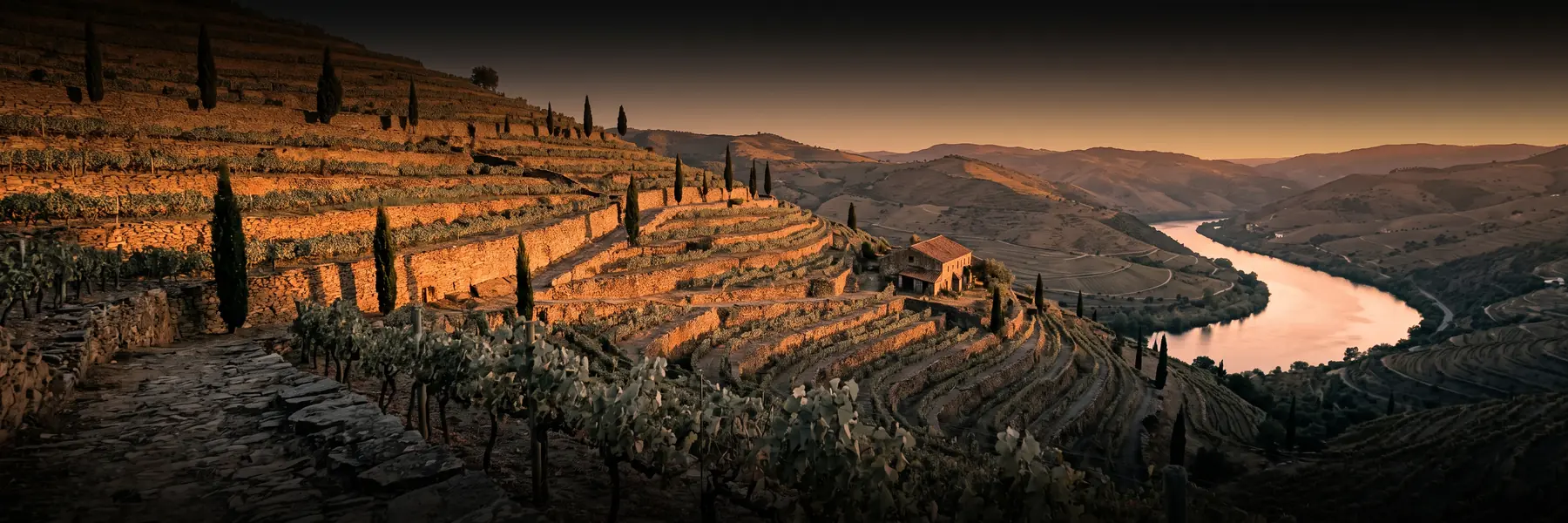
Vinho Verde — Low Alcohol, High Acid, and Alvarinho
Vinho Verde — Low Alcohol, High Acid, and Alvarinho
"Green wine" does not refer to colour. Verde means young — wine drunk in the months after harvest rather than kept. That single cultural fact produced Portugal's most distinctive wine style and, more usefully, a working template for something most winemakers find very difficult: a low-alcohol white that still tastes like a proper wine rather than like something with the middle taken out.
Geography
Vinho Verde covers the whole of Portugal's humid north-west, from the Minho river on the Spanish border down to the Douro. It is Portugal's largest demarcated region by area and is divided into nine sub-regions. The ones to know:
- Monção e Melgaço — the far north, up the Minho valley, directly across the river from Spain's Rías Baixas. Warmer and more sheltered than the coast. The home of serious Alvarinho
- Lima and Cávado — coastal, cool, wet; Loureiro country
- Ave and Sousa — central; high volume
- Baião and Paiva — inland and warmer, near the Douro; Avesso does well here, giving fuller, riper wines
- Amarante — inland, granitic
Soils are predominantly granite-derived: sandy, acidic, free-draining.
Climate
Atlantic, and emphatically so: mild, humid, and among the wettest wine regions in Europe. That drives everything.
Historic viticulture trained vines high — on pergolas (ramadas), along trees, up granite posts, around the edges of fields that were also growing vegetables and maize. It looks quaint and was entirely rational: get the fruit up into moving air and away from damp ground, and use the valuable flat land for food. High training also means shaded fruit, which is part of why the traditional wines were so low in alcohol and so high in acid.
Modern quality producers have moved to lower vertical trellising with careful canopy management, gaining ripeness and control at the cost of the old picture-postcard look.
Key Grapes
| Grape | Character |
|---|---|
| Alvarinho | The same variety as Albariño. Thick-skinned, structured, peach and citrus, and capable of real ageing. The region's ceiling |
| Loureiro | Intensely floral — bay laurel, orange blossom, lime. High acid, aromatic, distinctive |
| Arinto (locally Pedernã) | Steely, citrus, very high acid; a blending backbone |
| Trajadura (Treixadura) | Softer, apple and stone fruit; rounds a blend out |
| Avesso | Fuller, riper, lower acid; inland |
| Azal | Very high acid, green apple; traditional |
| Vinhão | The red. Deeply pigmented teinturier, ferociously acidic, purple-staining |
The Pétillance Question
Classic Vinho Verde has a faint prickle. Understanding where it comes from is genuinely instructive.
Traditionally the wines were bottled young and still carrying malic acid, and a malolactic fermentation completing in the bottle produced a light natural spritz — along with cloudiness, variability and, sometimes, faults. It was charming when it worked and unsellable when it did not.
Modern commercial Vinho Verde is stable, clean, and — where it fizzes at all — carbonated by injecting CO₂ before bottling, or by capturing a little of the wine's own fermentation gas. The best quality producers, especially in Monção e Melgaço, make wines that are completely still.
If you want a natural prickle at home, the honest options are the same ones the region uses: a light carbonation, or a genuine bottle fermentation with the risks that implies — see the Cava guide for how a controlled bottle ferment actually works. Do not simply bottle a wine with unfinished MLF and hope.
Wine Styles
Commercial Vinho Verde: 9–11% alcohol, off-dry to dry, light spritz, lemon and green apple, refreshing and inexpensive. Drink cold, drink young, do not overthink it.
Sub-regional and varietal wines: dry, still, 12–13%, with real varietal definition — Loureiro's floral snap, Avesso's weight, Arinto's steel.
Monção e Melgaço Alvarinho: the serious tier. 12.5–13.5%, textured, often lees-aged and occasionally oaked, and capable of ten years. Soalheiro and Anselmo Mendes are the reference points.
Vinhão (red): an acquired taste and worth acquiring. Opaque purple, searingly acidic, low tannin, served cold from a ceramic bowl. Nothing else in wine resembles it.
Producers
- Quinta de Soalheiro — Melgaço; the estate that proved Alvarinho could be world-class in Portugal
- Anselmo Mendes — the region's most influential winemaker; Muros Antigos and Parcela Única
- Quinta da Aveleda — the large-scale reference
- Adega de Monção — the important cooperative; excellent value Alvarinho
Making a Good Low-Alcohol White
Low alcohol is the hardest style to make well, because alcohol contributes body and sweetness of texture, and removing it exposes everything else.
Pick early, deliberately. Not late-and-diluted, but early-and-concentrated: fruit picked at 18–20 °Bx with high acid and developed flavour. The flavour is the hard part; underripe fruit at low Brix gives a thin, green wine. Read harvest timing.
Protect the aromatics. With no alcohol to carry the palate, aroma is doing more of the work. Chill the fruit, press gently, settle cold, ferment at 13–15 °C, and choose an aromatic strain. See fermentation temperature and choosing your yeast.
Keep the malic. Blocking MLF preserves the crispness that defines the style — and, critically, prevents the bottle refermentation described above. See MLF explained.
Consider a few grams of residual sugar. Many commercial Vinho Verdes finish just off-dry, and it is a deliberate, effective choice: a small amount of sugar restores the mid-palate that low alcohol takes away. It must be stabilised properly — read back-sweetening and get the SO₂ and sorbate right, because a 10% wine is more vulnerable to refermentation than a 14% one.
Lees for texture. As in Galicia, fine-lees contact is the cheapest way to add body without adding alcohol.
Get the SO₂ and closure right. Low alcohol means less microbial protection from the wine itself. Check free SO₂ with the calculators, cold stabilise (cold stabilisation), and use a reliable closure (closure comparison).
Food Pairing
Grilled sardines, salt cod fritters, shellfish, roast chicken, green soups, and anything eaten outdoors in July. Vinhão with the region's roast pork and cozido. Serve everything cold — 8–10 °C.
Tip: Vinho Verde is the strongest argument in wine for making something deliberately light. If you have more fruit than cellar space, consider vinifying part of it as a fresh, low-alcohol, early-bottled white. It is ready in months rather than years, it is easy to give away, and it teaches you more about clean white winemaking than a barrel-aged wine you cannot taste for two years.