Primitivo di Manduria — Zinfandel's Italian Identity
Primitivo di Manduria — Zinfandel's Italian Identity
Primitivo and Zinfandel are the same grape. DNA work in the 1990s and 2000s established that both are identical to the Croatian variety Crljenak Kaštelanski, now generally called Tribidrag — a Dalmatian grape that travelled west into Puglia and across the Atlantic to California, acquiring a different name and a completely different reputation in each place.
Manduria is where it makes its most concentrated wine. The name Primitivo refers to its early ripening: primativus, first to ripen, and in Puglia it can be picked in August.
Geography
The DOC covers a stretch of the Salento peninsula in Puglia — the heel of Italy — around the town of Manduria, in the province of Taranto, close to the Ionian coast.
This is flat to gently rolling country on terra rossa: iron-rich red soil over a limestone base, free-draining and low in organic matter. The Mediterranean is close on both sides of the narrow peninsula, which moderates the extreme summer heat slightly and brings useful sea breezes.
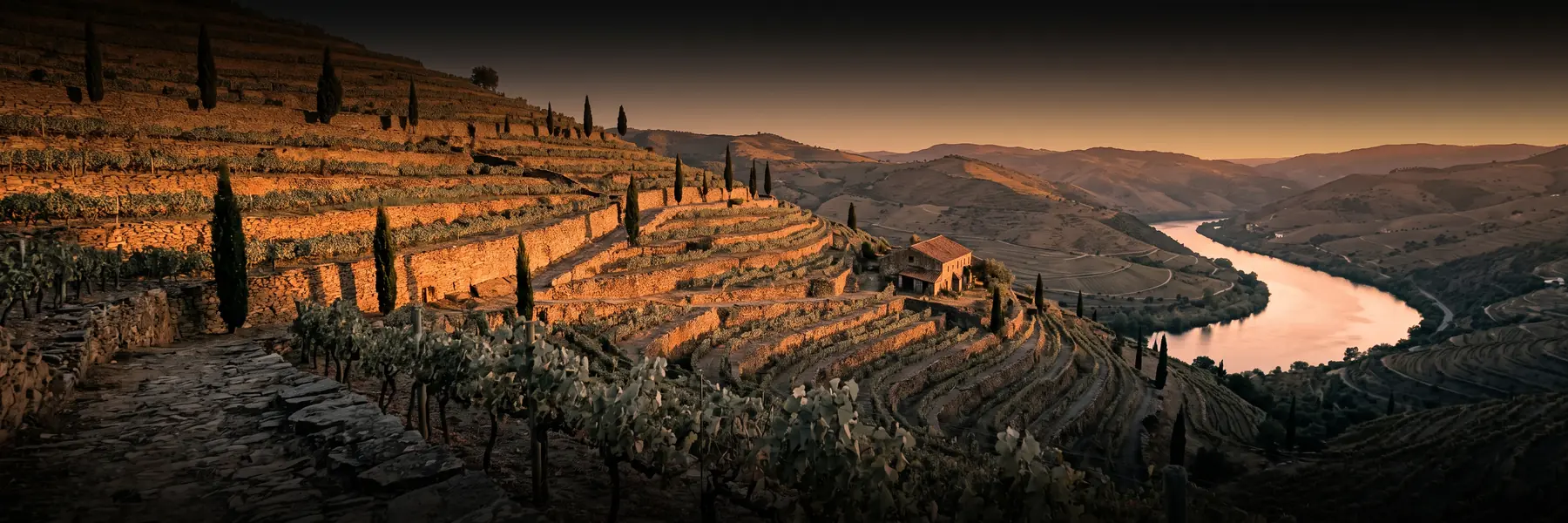
Much of the older vineyard is trained as alberello pugliese — the traditional low, free-standing bush vine, hand-worked, low-yielding, and superbly adapted to heat and drought. Newer plantings are mostly on wires.
The rules and the styles
Primitivo di Manduria DOC is a dry red, requiring a high proportion of Primitivo, and it is produced in a standard version and in a riserva.
Primitivo di Manduria Dolce Naturale DOCG is a separate and higher-ranked appellation — promoted to DOCG in 2011 — for a naturally sweet red made from grapes left to over-ripen or partly dry on the vine, then fermented so that natural residual sugar remains. There is also a fortified liquoroso tradition.
The Dolce Naturale is the older style. Puglia's historic role was as a source of dark, high-alcohol, often sweet wine sold in bulk northwards to strengthen thinner blends — the region has only relatively recently begun bottling its own wine under its own name.
Climate
Hot Mediterranean. Very high summer temperatures, intense sunlight, low rainfall, and consistent ripening. This is not a marginal climate; the challenges here are heat and drought rather than getting the fruit ripe.
Producers
- Gianfranco Fino — the estate that changed how Primitivo was seen; the Es cuvée, from old alberello bush vines at very low yields, became one of Italy's most talked-about wines of the 2000s
- Felline / Racemi (Gregory Perrucci) — a long-running champion of old Puglian vineyards and indigenous varieties
- Cantine San Marzano, Produttori Vini Manduria, Pervini (Archidamo) — the co-operative and larger-scale quality producers
Style
Deep ruby to near-black. Ripe plum, blackberry, dried fig, prune, cocoa, sweet spice and often a liqueur-like intensity. Full-bodied, low to moderate acidity, soft tannin, and high alcohol — 14.5% to 17% is normal, and this is one of the highest-alcohol dry red wine styles in the world.
It is generous and immediate rather than subtle, and most of it is best within five to eight years. The best old-vine bottlings have more structure and go further.
What Primitivo teaches your winemaking
This is the most practically useful appellation in Italy for anyone who has ever had a fermentation stop with sugar still in it.
The core problem: uneven ripening
Primitivo and Zinfandel share a notorious habit — within a single bunch you get raisins, ripe berries and green berries at the same time. The bunches are compact and set unevenly, and the earliest berries can be shrivelling while others are still hard.
That means every picking decision is a compromise:
- Pick when the majority is ripe and you include raisins (sugar spikes) and green berries (harsh, herbaceous tannin)
- Pick later and the raisin proportion climbs, taking your potential alcohol with it
- Pick earlier and the green fraction dominates
The professional answers are sorting — at the bunch and berry level — and, where legal and appropriate, multiple passes through the vineyard. At home, sorting is entirely within your power and it is the highest-value hour you will spend all harvest.
Raisins mean your Brix reading is lying to you
Shrivelled berries hold a great deal of sugar that is not fully in solution when you first crush. A hydrometer reading taken immediately after crushing will read low, and then the reading climbs over the next day as the sugar equilibrates. Winemakers get caught by this every year.
Take your reading after the must has sat for several hours to a day, well mixed. Then use the calculators to work out your real potential alcohol. See reading a hydrometer and reading grape chemistry.
Plan for a 16% ferment before you pitch
If your potential alcohol is above your yeast's stated tolerance, you have already chosen a stuck fermentation. Address it before inoculation, not after:
- Choose a high-tolerance strain. EC-1118 and BM4x4 are common choices for high-sugar reds; check the manufacturer's stated alcohol tolerance. See choosing your yeast.
- Rehydrate properly, with a rehydration nutrient. Stressed yeast at inoculation do not survive to 16%.
- Stage your nutrient additions across the first third of fermentation rather than all at the start. See our nutrients article.
- Keep the ferment cool. Heat plus alcohol is what kills yeast. Ferment at the lower end of your red-wine range. See fermentation temperature.
- Have a plan for a stall. See stuck fermentation.
Volatile acidity is the companion risk
A high-sugar, slow, warm ferment with an exposed cap is the textbook VA scenario. Keep the cap wet, keep the vessel covered, and smell for the nail-varnish note at every check. See volatile acidity.
Low acidity needs correcting at crush
Hot-climate Primitivo arrives with low TA and a high pH. High pH costs you colour stability, microbial safety and freshness at once. Correct with tartaric acid at crush, where it integrates; measure first. See pH and TA and understanding SO₂.
Extract gently — the fruit is already extreme
Soft tannins, deep colour and enormous fruit concentration mean this variety needs no help. A shorter maceration and moderate cap work give a better-balanced wine than a long, hard extraction. See punch-down vs pump-over.
The Dolce Naturale lesson
If you cannot get a very high-sugar must to finish dry, consider finishing it as a sweet wine on purpose — which is exactly what Manduria's older tradition does. A stable, deliberately sweet red is a good wine; a stuck dry red with three grams of residual sugar and rising VA is not. Stabilisation is non-negotiable: see back-sweetening.
For the wider south see the Sicily guide and Abruzzo guide.
Food pairing
Grilled and roasted lamb, orecchiette with sausage ragù, aged caciocavallo and pecorino, barbecued meats, and dark chocolate desserts with the Dolce Naturale. Primitivo's ripeness and low acid want salt and fat rather than tomato.
Tip: Never take your final Brix reading straight off the crusher when there are raisins in the fruit. Mix the must well, wait overnight, and read again. The number will be higher — and knowing it a day early is the difference between choosing the right yeast and rescuing a stuck ferment three weeks later.