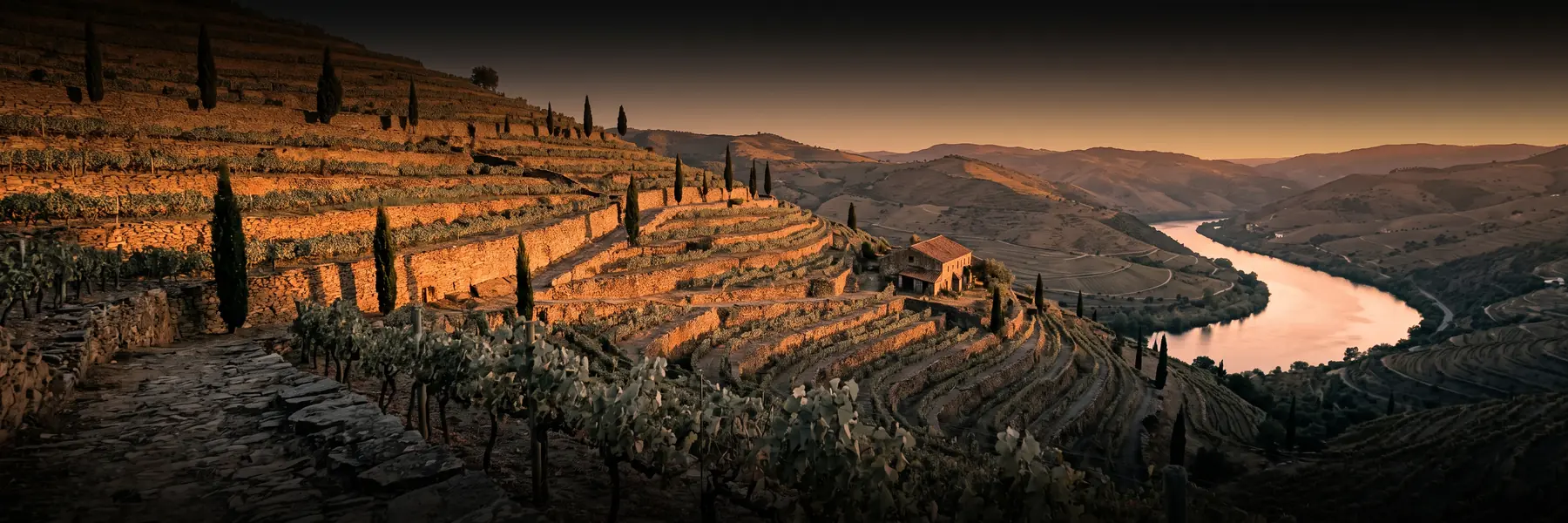
Greece — 300 Indigenous Grapes and the Oldest Wine Culture in Europe
Greece — 300 Indigenous Grapes and the Oldest Wine Culture in Europe
Greece has been making wine continuously for four thousand years and spent the twentieth century almost entirely absent from the fine wine conversation. The recovery, from the 1980s onwards, was built on a decision that looked eccentric at the time: rather than planting Cabernet and Chardonnay, Greek producers doubled down on their own varieties. There are several hundred of them, most found nowhere else, and a dozen or so are now clearly world-class. For a winemaker, the more interesting question is how they work — because several of them do something that most varieties cannot, which is hold acidity in real heat.
Geography
Greek wine divides into four broad blocks:
- Northern Greece (Macedonia and Thrace) — the most continental. Naoussa and Amyndeon for Xinomavro, Goumenissa for Xinomavro-Negoska blends, Drama and Halkidiki for a wide range including international varieties
- Central Greece and Attica — Savatiano country; the historic home of retsina; increasingly serious modern wine from the slopes of Mount Parnitha and Evia
- The Peloponnese — Nemea for Agiorgitiko, Mantinia for Moschofilero at altitude, Patras for Muscat and Mavrodaphne
- The islands — Santorini for Assyrtiko, Crete for Vidiano and Liatiko, Samos for Muscat, Cephalonia for Robola, Paros, Lemnos, Rhodes
Altitude is the unifying feature. Greece is a mountainous country, and almost every good vineyard is either high up or on an island in a wind — both of which are ways of getting cool nights in a Mediterranean climate.
Climate
Mediterranean, hot and dry in summer, with rainfall concentrated in winter. The northern mainland is meaningfully continental, with cold winters and spring frost risk. The islands are hot, arid and windswept.
The consequence for winemaking is straightforward: sunshine and ripeness are free; acidity is the scarce resource. Everything Greece does well — high-altitude sites, island wind exposure, night harvesting, indigenous varieties selected over centuries for acid retention — is a response to that single constraint.
The Varieties Worth Knowing
White
| Grape | Character |
|---|---|
| Assyrtiko | The great one. High acid retained in heat, citrus, saline minerality, ages for decades. See the Assyrtiko guide |
| Malagousia | Rescued from near-extinction in the 1970s. Aromatic — peach, jasmine, basil — with fuller body and lower acid than Assyrtiko |
| Moschofilero | Pink-skinned and highly aromatic; rose petal and citrus peel; grown at altitude in Mantinia |
| Roditis | Pink-skinned, high-yielding; excellent at altitude, dilute on the plain |
| Robola | Cephalonia; lemon and stone, high acid |
| Vidiano | Crete's rising star; textured, apricot and herb, more body than Assyrtiko |
| Savatiano | Attica's workhorse and the base of retsina; old-vine Savatiano is genuinely good |
Red
| Grape | Character |
|---|---|
| Xinomavro | "Acid black". High acid, high tannin, low colour, complex aromatics. See the Xinomavro guide |
| Agiorgitiko | Nemea's grape. Deep colour, soft tannin, plummy; versatile and food-friendly |
| Mavrodaphne | Patras; used for a sweet fortified wine and, increasingly, for serious dry red |
| Limnio | Ancient northern variety; herbal, medium-bodied |
| Liatiko, Kotsifali, Mandilaria | Crete; Mandilaria brings colour and tannin to soft Kotsifali — a classic corrective blend |
The Classification System
Greece uses the standard EU framework:
- PDO (ΠΟΠ / POP) — the top tier, roughly thirty appellations with defined varieties and rules
- PGI (ΠΓΕ / PGE) — regional wines; more flexible, and where much of the country's most ambitious experimental wine sits, because PDO rules often exclude what a producer wants to do
- Traditional designations — including Retsina, the pine-resin wine, which is a category of its own rather than a place
An important practical note: a PGI label in Greece is not a signal of lower quality. Several of the country's best wines are PGI because they use a variety or a technique that the local PDO does not permit.
Retsina, Honestly
Retsina is white wine (usually Savatiano) fermented with Aleppo pine resin added — a practice descended from sealing amphorae with resin, which flavoured the wine as a side effect. Most of what is exported is poor. A well-made modern retsina, with restrained resin addition and clean winemaking, is a genuinely interesting savoury-aromatic wine and a superb food match. Kechris's Tear of the Pine is the usual demonstration.
Producers
- Domaine Sigalas and Hatzidakis — Santorini; the modern reference for Assyrtiko
- Thymiopoulos — Naoussa; brought Xinomavro to international attention with lighter, terroir-driven wines
- Kir-Yianni and Alpha Estate — northern Greece; serious across the board
- Gaia Wines — Santorini (Thalassitis) and Nemea; a strong argument for Agiorgitiko's seriousness
- Domaine Tselepos, Domaine Spiropoulos — Peloponnese; Moschofilero and Mantinia
- Domaine Papagiannakos — Attica; old-vine Savatiano
- Lyrarakis — Crete; rescued several near-extinct varieties from the brink
What Greece Teaches: Acid in a Hot Climate
This is the transferable lesson, and it matters to anyone growing grapes in a warming climate.
Variety choice comes first. Assyrtiko holds acid at high sugar; most varieties do not. If you are planting in a warm site, choose late-ripening, acid-retentive varieties rather than fighting a losing battle with early-ripening ones.
Then site. Altitude and wind exposure buy you cold nights, and cold nights are what preserve malic acid. Amyndeon at 650 m makes a different wine from Naoussa at 200 m from the same grape.
Then picking. Pick at night or at dawn, and pick on flavour and acid rather than on sugar alone. See harvest timing and reading grape chemistry.
Then the cellar, last. Block MLF in whites to keep the malic (MLF explained); ferment cool (fermentation temperature); and if you must add tartaric acid, calculate the addition properly rather than dosing by taste — the calculators will do it, and pH and TA explains what you are actually correcting.
Food Pairing
Greek food is built for Greek wine: Assyrtiko with grilled fish, lemon, capers and feta; Moschofilero with stuffed vine leaves and herbs; Agiorgitiko with lamb and moussaka; Xinomavro with tomato-based stews and hard cheese; retsina with anything fried.
Tip: If you are choosing what to plant and your climate is getting hotter, look at what the Aegean has been growing for three thousand years rather than at what Bordeaux planted two hundred years ago. Varieties selected under heat and drought are an asset that no cellar technique can substitute for.