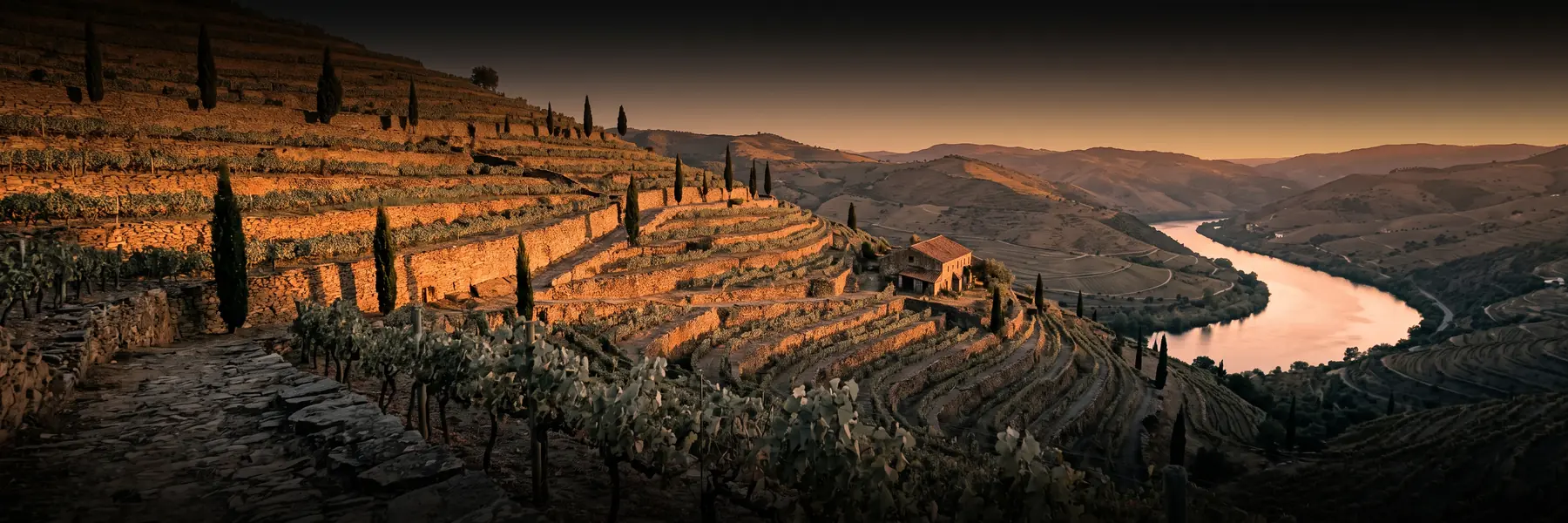
Santorini — Volcanic Assyrtiko, Basket Vines, and Vinsanto
Santorini — Volcanic Assyrtiko, Basket Vines, and Vinsanto
Santorini should not be able to grow grapes. It receives almost no rain, has thin volcanic soil with essentially no organic matter, and is scoured by a wind strong enough to strip leaves off a trellis. What it has instead is one of the most remarkable adaptations in world viticulture, and — as a direct result — a white wine of an intensity that is hard to find anywhere else.
Geography
Santorini is the rim of a collapsed volcano in the southern Aegean. The caldera cliffs drop several hundred metres to the sea on the west; vineyards occupy the gentler eastern and southern slopes, on soil that is not soil at all but volcanic pumice, ash and lava (aspa) over deeper layers of the same.
That substrate has two consequences that matter more than anything else on the island:
- No phylloxera. The louse cannot survive in loose volcanic ash, so Santorini's vines are ungrafted, on their own roots, and many are extremely old — layered and renewed continuously rather than replanted.
- Water from air, not rain. The porous ash absorbs night-time humidity and dew, and the vines' deep roots reach the moisture held below. The island's vineyards are traditionally dry-farmed — though after the severe droughts of the mid-2020s some growers have turned to emergency watering, and irrigation trials are under way.
Climate
Arid Aegean Mediterranean. Hot, brilliantly sunny, and dry — rainfall is a small fraction of what any mainland wine region gets. The Meltemi, the fierce summer north wind, is a constant. It keeps disease pressure almost nil, which is why organic farming is easy here, and it makes conventional trellising impossible.
The Kouloura
The response to the wind is the kouloura (or ampelia): the vine is trained in a low, coiled basket on the ground, with the canes woven into a circular nest and the fruit hanging inside the basket. The plant shelters its own crop from the wind and from direct sun, and the low profile keeps the vine near the ground where night humidity collects.
It also means everything is done by hand, crouching, at a yield per hectare that would bankrupt most regions. Santorini's economics work only because the wine commands a serious price — and the island's tourist-driven land values are now a genuine threat to its vineyard area.
The Grapes
| Grape | Role |
|---|---|
| Assyrtiko | Dominant, and required to dominate the Santorini PDO blend. High acid retained at full ripeness, citrus, saline, high extract. See the Assyrtiko guide |
| Athiri | Softer, floral, lower acid; a rounding component |
| Aidani | Aromatic, delicate, floral; also used in Vinsanto |
| Mavrotragano | Red; nearly extinct by the 1990s, revived by Sigalas and others; structured, savoury, serious |
| Mandilaria | Red; deep colour, firm tannin |
The Styles
Santorini (dry white): the mainstream. Pale, sometimes almost water-white. Lemon, grapefruit pith, wet stone, and a genuinely salty, almost oyster-shell finish. Very high acidity, medium-to-full body, and a phenolic grip that is unusual in a white wine. Excellent young, and — surprisingly — capable of a decade or more, developing waxy, honeyed, petrol-adjacent complexity.
Nykteri: traditionally picked at night ("night work") and processed before dawn. Riper, fuller, historically oak-aged, higher in alcohol. The PDO defines it as a distinct style. A serious wine that shows what Assyrtiko does with weight.
Vinsanto: the island's sweet wine, and a genuinely ancient practice. Grapes — Assyrtiko with Aidani and sometimes Athiri — are sun-dried on mats for days to weeks, losing water and concentrating sugar, before a very slow fermentation and long oxidative barrel ageing. The result is amber to mahogany, with dried apricot, orange peel, caramel and coffee, and — the critical part — Assyrtiko's acidity still cutting through several hundred grams of sugar. Nothing else quite tastes like it.
Mavrotragano: small-volume, ambitious red. Firm, savoury, mineral.
Producers
- Domaine Sigalas — the island's most influential; benchmark Santorini, Nykteri, Vinsanto and Mavrotragano
- Hatzidakis — biodynamic, wild-fermented, uncompromising; a modern legend
- Gaia Wines — Thalassitis, including a version aged underwater in the caldera
- Estate Argyros — the island's largest fine-wine producer and the best-known Vinsanto
- Santo Wines — the cooperative; reliable and a good introduction
- Vassaltis, Artemis Karamolegos — strong newer producers
What Santorini Teaches
Dry farming works, if the site allows it. The island is proof that vines with deep roots in porous ground can produce concentrated fruit with no water at all. The lesson for a grower is not "stop irrigating" but "root depth and soil structure determine drought tolerance" — a young vine on shallow soil will not survive what an old one on deep pumice shrugs off.
Phenolics in white wine are a resource. Santorini Assyrtiko has grip. That comes from thick skins, high extract and — from some producers — deliberate skin contact or generous pressing. If your whites feel thin, phenolic texture is a route to body that does not involve oak or residual sugar. Read skin contact, and press with intent: keep your fractions separate and blend by taste.
Passito drying is available to anyone. Sun-drying or air-drying fruit before fermentation is the oldest way to make a sweet wine, and it needs no equipment: a dry, airy space, a few weeks, and constant vigilance for rot. The practical difficulty is that a must at 30 °Bx or above will stall — fermentations of dried-grape musts are slow, need a high-tolerance yeast and staged nutrition, and often finish over months. Read stuck fermentation and choosing your yeast before starting, and use the calculators to work out where your alcohol and residual sugar will land.
Acid is what makes sweet wine work. Vinsanto is the clearest possible demonstration. If you want to make a sweet wine, start with a high-acid variety; sugar without acid is just syrup.
Food Pairing
Santorini white with grilled octopus, sea bream, tomatokeftedes, capers and fava. Nykteri with richer fish and roast chicken. Vinsanto with dried figs, walnut cake, and hard salty cheese — not with chocolate, which flattens it.
Tip: If you make a high-acid white and it tastes austere, resist deacidifying it. Try a small proportion — 5 to 10% — fermented on skins for a week, then blend it back. You get texture and mid-palate weight while keeping every gram of the acidity that makes the wine age.