Nemea — Agiorgitiko and the Altitude Ladder
Nemea — Agiorgitiko and the Altitude Ladder
Nemea is the Peloponnese's most important red appellation and the home of Agiorgitiko — "the grape of St George" — a variety with an unusual set of gifts. It gives deep colour easily, soft tannin naturally, and generous plummy fruit without much effort. What it does not give is acidity, and the entire structure of the appellation, from vineyard siting to picking dates, is organised around finding some.
Geography
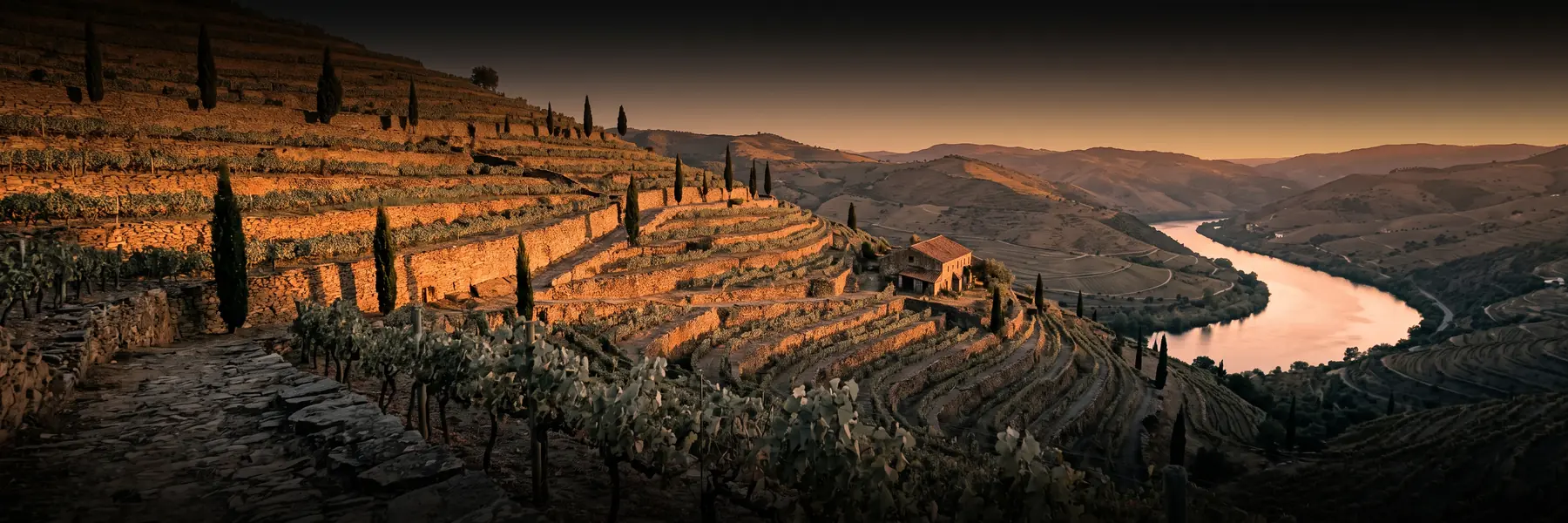
Nemea sits in the north-eastern Peloponnese, inland from Corinth, in a series of basins and slopes rising from the valley floor into the surrounding hills. The appellation is usually described as three altitude bands, and the difference between them is dramatic:
- The valley floor (roughly 250–400 m) — the warmest and most fertile. Ripens early and fully; gives soft, dark, jammy wine with low acid. Historically the source of bulk Nemea and of the sweet style
- The middle slopes (roughly 450–650 m) — the balance point; most of the serious wine comes from here
- The high zone (roughly 650–900 m; villages such as Koutsi, Asprokampos, Psari) — cool, late-ripening, retains acidity; the source of the most structured and longest-lived wines
Soils are varied: clay and clay-loam on the lower ground, stonier and more calcareous with altitude.
Climate
Mediterranean, with altitude doing all the work. Hot dry summers, mild wet winters. On the valley floor, Agiorgitiko ripens so readily that it can be picked with high sugar and almost no acid left. Eight hundred metres up, the same variety in the same year is picked weeks later with genuine freshness. Nemea is the clearest single-variety demonstration of elevation as a climatic lever that exists in Greek wine.
Agiorgitiko
| Trait | Consequence |
|---|---|
| Deep colour, ample anthocyanin | Colour is never a problem — the opposite of Xinomavro |
| Soft, low-to-moderate tannin | Approachable young; needs care to give structure |
| Low acidity, falling fast at ripeness | The central issue; the reason altitude matters |
| Moderate sugar accumulation | Alcohol usually 13–14% |
| Aromas: red and black plum, sour cherry, sweet spice, nutmeg, dried herbs | Attractive and immediate |
| Vigorous, prone to overcropping | Yield control is essential for concentration |
The variety is versatile in a way few reds are — Nemea PDO covers dry reds and, historically, sweet wine, while Agiorgitiko outside the PDO makes very good rosé and even light sparkling.
Wine Styles
Young Nemea: unoaked or lightly oaked, deep purple, plummy and spiced, soft and juicy. Genuinely good everyday wine and Greece's best-value red category.
Oaked / Reserve Nemea: from lower-yielding slope vineyards, with time in French oak. Fuller, with more definition, sweet spice and cedar over dark plum; a decade of life in the best examples.
High-altitude single vineyard: the top tier. Firmer acid, finer tannin, more mineral and floral lift, and real ageing capacity. This is where Agiorgitiko stops being pleasant and starts being interesting.
Producers
- Gaia Wines — Gaia Estate and Agiorgitiko by Gaia; the strongest argument that this grape can be profound
- Domaine Skouras — Saint George and the Grande Cuvée; consistently excellent
- Palivou Estate — Ammos and Terra Leone; a family estate in the heart of the appellation
- Domaine Spiropoulos — organic, reliable, good value
- Semeli, Papaioannou — long-established; Papaioannou's old-vine bottlings are worth seeking out
What Nemea Teaches: Making a Low-Acid Red Work
Agiorgitiko's problem is the most common problem in warm-climate red winemaking, and Nemea's answers are all reproducible.
1. Site and yield before anything. If you have any choice, plant on the coolest, highest, poorest ground available. High yields on fertile valley soil give dilute, flabby wine that no cellar work will repair.
2. Pick on acid, not sugar. In a variety whose acid collapses in the last two weeks of ripening, the picking date is the single most important decision you make. Track TA and pH as well as Brix in the run-up to harvest — see reading grape chemistry and harvest timing.
3. Acidify pre-fermentation if you need to, and do it properly. Tartaric addition to the must is standard practice in warm regions and is entirely legitimate. It works better before fermentation than after, because the wine integrates it and because the yeast and MLF will both move the numbers. Measure, calculate, then add — use the calculators, and read pH and TA so you know whether you are correcting pH or TA, which are not the same target.
4. Watch the pH, because everything depends on it. Above about pH 3.7, SO₂ becomes markedly less effective, colour is less stable, and Brettanomyces and lactic spoilage become real risks. High-pH reds are the ones that develop faults in the barrel. See understanding SO₂ and volatile acidity.
5. Think hard about MLF. MLF raises pH and lowers acidity — exactly the wrong direction for a low-acid red. Warm-climate producers often still run it for microbial stability and texture, but they acidify before or after to compensate. Decide deliberately rather than by default; see MLF explained.
6. Extract for structure, gently. Agiorgitiko gives colour readily and tannin reluctantly. Longer, cooler maceration builds a little more structure without harshness — but do not confuse that with brute-force extraction. See tannin management.
7. Oak can supply what the tannin lacks. In a soft, low-tannin red, oak tannin genuinely contributes structure as well as flavour, which is why the Reserve style works here. Moderate new-wood percentage, medium toast. See barrel ageing basics.
Food Pairing
Lamb kleftiko, beef stifado, moussaka, grilled aubergine, hard sheep's cheese. Agiorgitiko's soft tannin and spice make it one of the more flexible reds for slow-cooked and lightly spiced food; the young unoaked style is also good very lightly chilled.
Tip: If your reds keep finishing flat and short, measure the pH before you blame the fruit. A red at pH 3.9 will taste dull, lose colour and pick up faults no matter how good the vineyard was — and it is the one problem you can genuinely fix with a calculated addition rather than a technique.