Chambolle-Musigny — The Most Perfumed Village in Burgundy
Chambolle-Musigny — The Most Perfumed Village in Burgundy
Blind, with two glasses of Côte de Nuits Pinot Noir in front of you, the easiest pair to separate is Gevrey and Chambolle. Gevrey is dark, savoury and firm. Chambolle is red-fruited, floral and almost weightless — a wine that seems to hover rather than sit. Violets, rose petal, wild strawberry, a tannin so fine it registers as texture rather than grip.
It is the most delicate expression of Pinot Noir in Burgundy, and one of the most expensive.
Geography
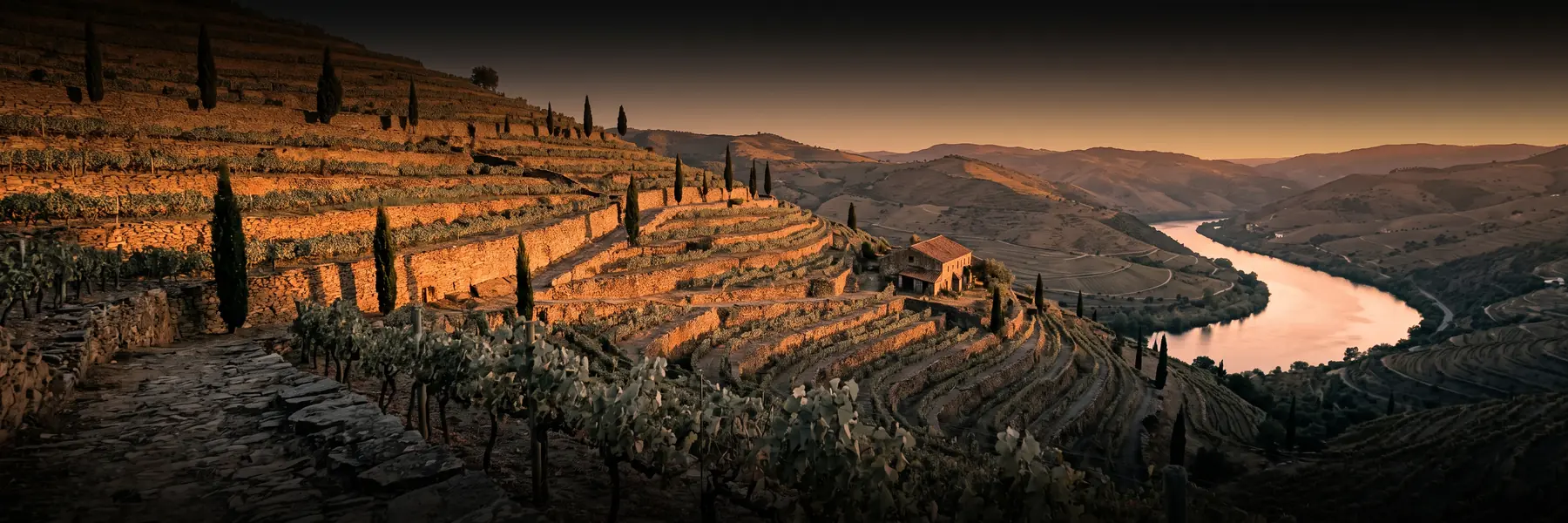
Chambolle lies between Morey-Saint-Denis to the north and Vougeot to the south, in the heart of the Côte de Nuits. A steep, narrow gorge — the Combe d'Ambin — cuts into the hills directly behind the village, and it is central to the wine's character. Cool air pours out of the combe onto the vineyards, slowing ripening and preserving aromatics, and over millennia the combe has washed pale, stony scree down the slope.
The soils are thin and unusually rich in active limestone, with relatively little clay. Vines here are stressed: shallow topsoil over hard rock, small crops, small berries, low potential body. That is the physical basis of Chambolle's lightness — and of its perfume, since aromatic precursors sit in the skin, and a small berry has a high proportion of skin.
The Grand Crus
Musigny sits on the slope at the southern end of the commune, immediately above Clos de Vougeot. It is often described as the most complete Pinot Noir vineyard in existence: perfume, structure and length together. Curiously, Musigny is also permitted to produce white wine — the only Grand Cru in the Côte de Nuits that does — and Domaine de Vogüé's Musigny Blanc is one of Burgundy's rarest bottles.
Bonnes-Mares occupies the northern end of the commune, straddling the boundary with Morey-Saint-Denis. It is a different animal: more clay, darker, firmer, closer in style to Morey than to Musigny. Many domaines own both and the contrast within a single cellar is instructive.
Between them, the Premier Cru Les Amoureuses sits directly below Musigny and is the most famous non-Grand-Cru vineyard in Burgundy alongside Gevrey's Clos Saint-Jacques. It routinely sells for Grand Cru money. Les Charmes and Les Cras are the other Premier Crus worth seeking out.
Climate
Continental, with the cooling draught from the Combe d'Ambin as a local modifier. That draught is an advantage in a hot year and a liability in a cool one — Chambolle can struggle to ripen fully in poor vintages, which is why the wines are so vintage-sensitive.
Domaines
- Domaine Georges Roumier — the benchmark; Bonnes-Mares, Musigny, and the legendary Amoureuses
- Domaine Comte Georges de Vogüé — the largest holder of Musigny, including the white
- Domaine Ghislaine Barthod — an outstanding range of Premier Crus, the best study of Chambolle's terroirs available
- Domaine Jacques-Frédéric Mugnier — ethereal, restrained; destems almost entirely
- Domaine Amiot-Servelle, Domaine Hudelot-Noëllat — excellent and (relatively) findable
Style
Pale to medium ruby, rarely deep. Violets, rose, raspberry, wild strawberry, redcurrant; with age, undergrowth, truffle and dried rose. Silky, low-grip tannin and a long, lifting finish. Village wines drink from four to ten years; Amoureuses and the Grand Crus from ten to thirty.
What Chambolle teaches your winemaking
Chambolle is the hardest style in the world to make, because it is defined by the absence of everything that a nervous winemaker adds.
You cannot extract your way to elegance
Every intervention that increases colour and tannin — longer maceration, hotter fermentation, harder pressing, more punch-downs — moves you away from Chambolle. If your Pinot is pale and you are tempted to fix it, understand that the fix costs you the perfume. Chambolle's answer is to accept the pale colour and build the wine on aroma and texture instead. See tannin management.
Cap management should be minimal
Two gentle punch-downs a day at peak, tapering off, is plenty. Some Chambolle producers do almost nothing after the first few days and simply let the cap float. Compare approaches in punch-down vs pump-over.
Press early, and use only the gentle fraction
The hard press fraction of Pinot Noir is coarse and bitter, and in a delicate wine there is nothing to hide it behind. Keep it separate. If it is not good enough to bottle on its own, it is not good enough to blend in.
Whole clusters — carefully
Roumier and others use a proportion of whole bunches (typically 20–30%) to add lift and a floral top note; Mugnier, by contrast, destems almost everything — both routes make great Chambolle. In a light-framed wine, stems can just as easily add greenness and dilution. If you try it, use fully lignified stems and keep the proportion modest. See whole cluster fermentation.
Oak should be invisible
20–30% new oak at most, in 228-litre or larger vessels, for around a year. Small new barrels in a delicate wine produce a wine that tastes of barrels. See barrel ageing basics.
Handle finished wine as little as possible
Rack rarely, avoid pumps, avoid filtration if the wine is clean, and keep sulphur adequate but not heavy. Aromatic Pinot loses its top notes every time it is moved. See racking guide.
For the region see the Burgundy guide; for the structural opposite, Gevrey-Chambertin; for the variety, our Pinot Noir guide.
Food pairing
Roast poultry, guinea fowl, veal, salmon, mushroom dishes, and mild soft cheeses. Chambolle is the Burgundy to serve with something quiet — a heavily seasoned dish erases it.
Tip: Weigh your Pinot's success by the smell, not the colour. Home winemakers routinely ruin good Pinot Noir chasing a depth of colour that the grape was never going to give. Pour a glass of village Chambolle next to your own wine and note how pale the benchmark actually is.