Gevrey-Chambertin — Burgundy's Most Powerful Pinot Noir
Gevrey-Chambertin — Burgundy's Most Powerful Pinot Noir
Most of Burgundy is about delicacy. Gevrey-Chambertin is about force. It is the largest village of the Côte de Nuits, it holds nine Grand Crus — more than any other commune in the Côte d'Or — and its wines are the ones people reach for when they want to prove that Pinot Noir can be as serious as Cabernet.
Geography
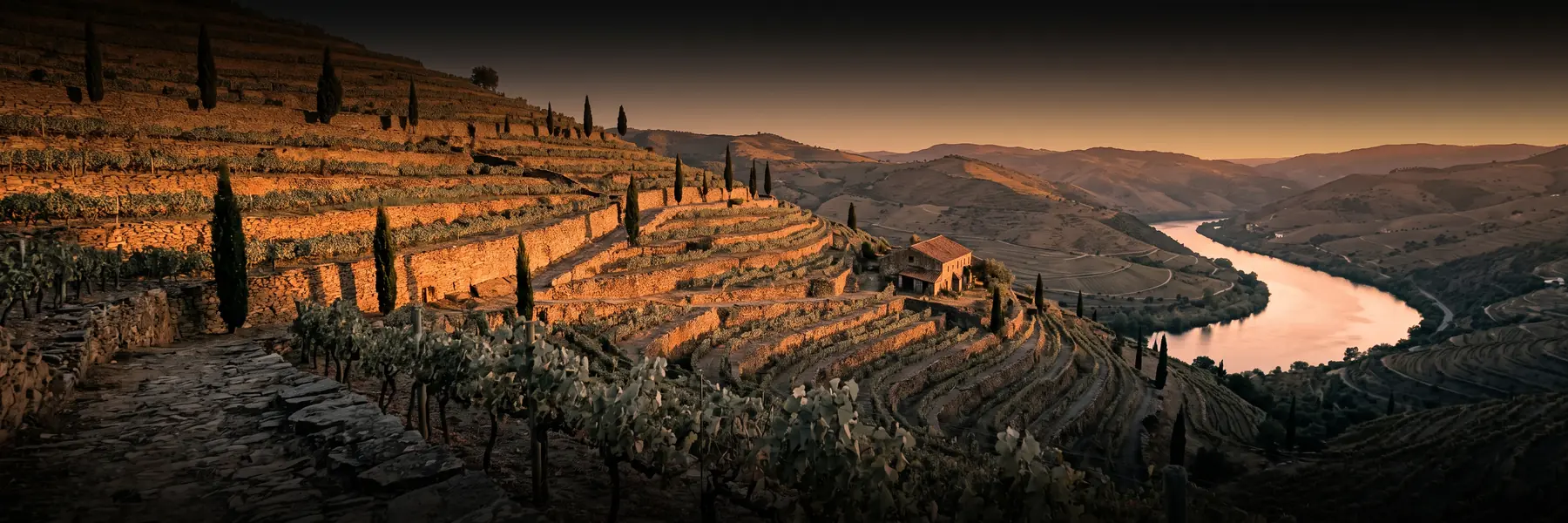
Gevrey sits toward the northern end of the Côte de Nuits, south of Dijon. The commune spreads wide: vineyards run from the flat, richer ground east of the main road, through the village-level slopes, up to a band of Premier and Grand Crus on the mid-slope, and then into a side valley, the Combe de Lavaux, which cuts west into the hills.
That combe matters. It funnels cool air down onto the vineyards at its mouth and it has, over geological time, washed limestone scree across the slope — which is why the Premier Crus north of the village have a different character from the Grand Cru band to the south.
The Grand Cru strip lies south of the village on gentle, east-facing mid-slope with thin brown limestone soils over fissured Bajocian and Bathonian rock. Roots go deep through the fissures; drainage is excellent; the crop is small and concentrated.
The nine Grand Crus
Chambertin and Chambertin-Clos de Bèze sit at the top of the hierarchy and may be sold under those names alone. The other seven attach the Chambertin name as a suffix: Chapelle-Chambertin, Charmes-Chambertin, Griotte-Chambertin, Latricières-Chambertin, Mazis-Chambertin, Mazoyères-Chambertin and Ruchottes-Chambertin. (Mazoyères may legally be sold as Charmes-Chambertin, which is why you rarely see the name.)
Clos de Bèze was planted by monks from the Abbey of Bèze in the seventh century, making it one of the oldest continuously documented vineyards in France. The neighbouring field belonging to a grower called Bertin — champ de Bertin — became Chambertin.
Above the Grand Cru band, the Premier Cru Clos Saint-Jacques is widely considered the finest non-Grand-Cru site in the Côte de Nuits and prices accordingly.
Climate
Continental: cold winters, warm summers, real spring frost risk, and a harvest that depends entirely on September weather. Hail is a periodic threat on this stretch of the Côte.
Domaines
- Domaine Armand Rousseau — the benchmark; holdings in Chambertin, Clos de Bèze and Clos Saint-Jacques
- Domaine Denis Mortet and Domaine Dugat-Py — richer, more extracted, more modern
- Domaine Rossignol-Trapet and Domaine Trapet Père et Fils — biodynamic, more transparent and floral
- Domaine Fourrier — restrained, fully destemmed in the Jayer tradition, very highly regarded
- Domaine Claude Dugat, Domaine Bruno Clair, Domaine Sérafin — the depth of the village
Style
Where Chambolle is silk, Gevrey is velvet over iron. Expect dark cherry and blackcurrant rather than raspberry, with liquorice, iron, game and a savoury, forest-floor undertone. The tannin is more evident than elsewhere in the Côte de Nuits, and the wines demand time — village wines from five to ten years, Grand Cru rarely before fifteen.
What Gevrey teaches your winemaking
Gevrey answers a question that troubles almost everyone making Pinot Noir at home: how do I get structure without ruining the aromatics?
Structure comes from the crop, not the cap
The single biggest lever is yield. Concentrated, small-berried Pinot from a modest crop has skin-to-juice ratio on its side and needs relatively little help in the fermenter. If you are buying fruit, buy on concentration; if you are growing it, thin. No amount of punching down turns dilute Pinot into Gevrey.
Whole clusters add frame, not tannin
Including a proportion of whole bunches — Trapet and Rossignol-Trapet are both associated with the practice — contributes stem-derived structure, a savoury spice note, and a lift on the finish. It also raises pH slightly and can add a green character if the stems are not lignified (brown and woody, not green and sappy). Start at 20–30% and taste the difference. See whole cluster fermentation.
Cold soak for colour, not extraction
Pinot Noir has low anthocyanin content and unstable colour. A few days of cold maceration before fermentation extracts water-soluble colour and fruit without pulling seed tannin, because there is no alcohol present yet to dissolve the harsher phenolics. It is the cheapest quality gain available to a Pinot maker.
Ferment warm at the peak, then get out
Pinot needs a warmer peak than most reds — up to around 30 °C — to extract at all. But the window between "enough" and "too much" is narrow. Taste the cap juice twice a day. The moment the tannin turns from grippy to drying, press. See fermentation temperature and tannin management.
Big wine, restrained oak
The temptation with a structured Pinot is to match it with new oak. Gevrey's domaines vary enormously: from ~20% new oak at Fourrier to 100% on Rousseau's top grands crus, over 12–18 months — restraint is a choice here, not the rule. Pinot's aromatics are its value; oak competes with them directly. See barrel ageing basics.
For the classification system and the wider region see the Burgundy guide; for the opposite stylistic pole two villages south, see Chambolle-Musigny; for the variety in detail, our Pinot Noir guide.
Food pairing
Game — venison, hare, wild duck — plus beef, mushroom dishes and Époisses, the washed-rind cheese made an hour's drive west in the same département. Gevrey is the Burgundy that can handle a genuinely rich dish.
Tip: Before including whole bunches, bite a stem. If it is green and tastes of cut grass, destem everything. Lignified stems are brown, snap rather than bend, and taste of tea and spice — those are the ones that make Gevrey-style wines better rather than greener.