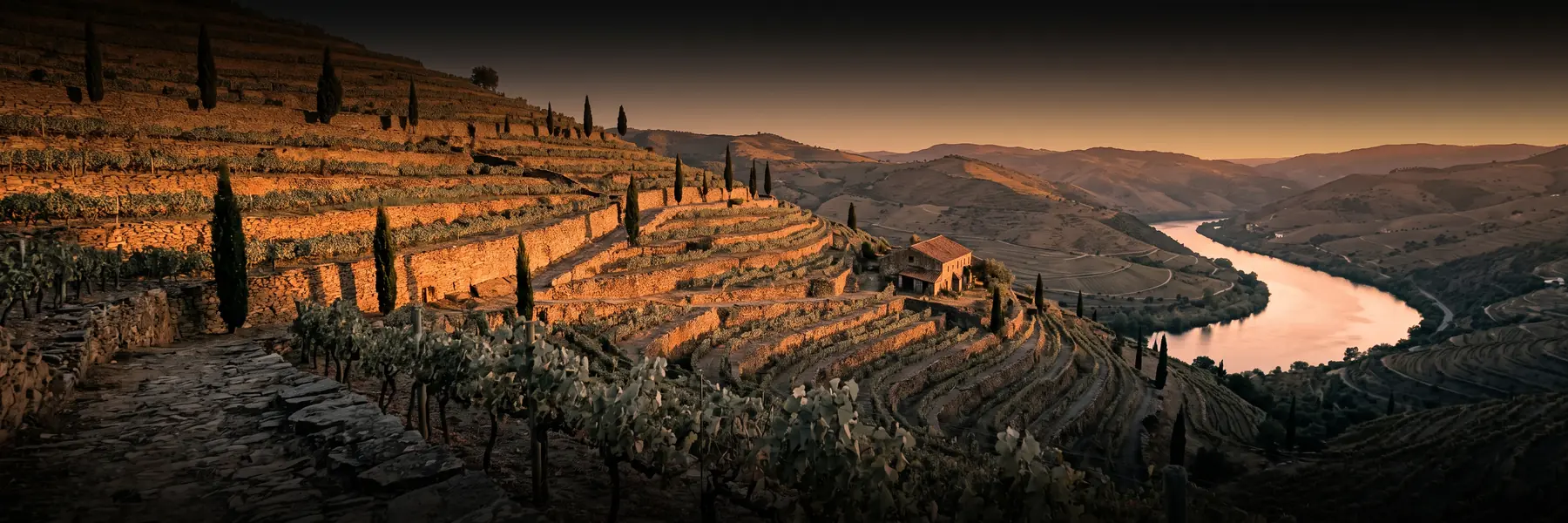
Tokaji Aszú — Noble Rot, Berry Selection, and the Puttony
Tokaji Aszú — Noble Rot, Berry Selection, and the Puttony
Tokaji Aszú is the oldest documented botrytised sweet wine in the world — made deliberately in Hungary before Sauternes or the German Beerenauslese tradition existed. It is also, for a winemaker, the most instructive of the great sweet wines, because it is the only one where the concentration happens in a separate, visible, hand-controlled step rather than as a diffuse consequence of leaving fruit on the vine. Understanding Aszú means understanding noble rot itself.
Noble Rot vs Grey Rot
Everything depends on this distinction.
Botrytis cinerea is a fungus. Given persistently damp conditions, it becomes grey rot — a straightforward spoilage organism that splits berries, invites acetic bacteria, destroys aromatics, releases the browning enzyme laccase, and ruins the fruit.
Given alternating conditions — damp misty mornings that let the fungus establish, then warm dry afternoons that check its growth and dehydrate the berry — it becomes noble rot. The berry's skin is perforated, water evaporates out, and what remains is shrivelled, brown-purple, and concentrated in sugar, acid and extract. The fungus itself contributes the distinctive aromatics: saffron, orange marmalade, apricot, ginger, honey.
Tokaj's river-fed morning fog and dry sunny afternoons produce exactly that alternation, most years. That is the region's whole natural advantage.
Aszú Selection
Aszú means shrivelled or dried. The defining labour of the region is that botrytised berries are picked individually, berry by berry, in repeated passes through the vineyard over several weeks as different bunches and different berries develop.
This is extraordinarily slow work. A skilled picker gathers a very small quantity a day, and a vineyard may be walked six or eight times in a season. It is the reason Aszú is expensive and it is not reducible.
The berries are collected into a hod — the puttony — traditionally a back-carried basket of roughly 20–25 kg.
Maceration: The Part That Makes Aszú Different
Sauternes ferments botrytised juice. Aszú does something else. The collected aszú berries are macerated in must or in young wine — a paste of shrivelled berries steeped for a period of hours to a couple of days, extracting sugar, acid, aromatics and extract — and only then pressed and fermented.
That is why Aszú has a texture and a savoury, extract-driven depth that other botrytis wines do not: it has effectively had skin contact. It is also why the wine can be built to a specified sweetness — the ratio of aszú berries to base volume is the winemaker's lever.
Puttonyos, Honestly
The traditional measure was the number of puttony hods of aszú berries added per cask (a Gönc barrel, of about 136 litres) of base must — hence "5 puttonyos" or "6 puttonyos" on old labels, with more puttonyos meaning a sweeter, more concentrated wine.
The system has been revised. Modern Hungarian law sets a minimum residual sugar for anything labelled Aszú, at a level well above what most dessert wines carry, and the lower puttonyos grades that used to appear on labels have been retired. Some producers still use 5 or 6 puttonyos as a stylistic indication; many now simply label the wine "Aszú" and let the residual sugar figure speak.
If you need the exact current thresholds — for a label, a competition entry or an export document — read the Hungarian PDO specification for the vintage in question rather than any secondary summary. The numbers have changed more than once in the last two decades and out-of-date figures circulate widely.
Fermentation and Ageing
Fermenting a must at that sugar concentration is slow and difficult. Yeast is working against enormous osmotic pressure and rising alcohol; fermentation may take months and effectively stops on its own, leaving high residual sugar and modest alcohol — traditionally around 9–12%.
Ageing then happens in small oak casks in the tuff cellars, cool, humid, and often not completely full, so the wine takes up a slow, deliberate amount of oxygen. The cellars are lined with a black mould, Cladosporium cellare, which is harmless and part of the region's identity. Historic Aszú was aged this way for many years; modern styles range from a few years of cask to a much more reductive, fruit-forward approach.
Eszencia is the extreme: the free-run juice that weeps from a mass of aszú berries under their own weight, with several hundred grams per litre of sugar, fermenting over years to only a few percent alcohol. It is sold in tiny bottles and functions more as a concentrate than as a wine.
Producers
- Royal Tokaji — single-vineyard Aszú from the classified sites; Mézes Mály and Szent Tamás
- Disznókő — consistently excellent
- Château Pajzos, Oremus — reliable benchmarks
- Szepsy — the region's most exacting producer, sweet and dry alike
- Dobogó, Demeter Zoltán — small, meticulous
Making a Botrytised Sweet Wine
Honestly: you probably cannot make true noble-rot wine unless your climate provides the alternating fog-and-sun autumn. Trying it in a wet climate produces grey rot and a ruined crop. But the rest of the process is reproducible, and there is a legitimate substitute for the concentration step.
If you do get noble rot: sort obsessively — a single grey-rotted berry brings laccase and acetic bacteria into the batch. Handle the fruit cold. Sulphite at the crusher, because botrytised must is highly oxidation-prone and carries a high wild-microbe load.
If you do not: dry the fruit instead. Air-drying or sun-drying bunches on racks concentrates sugar and acid without any fungus at all — the method behind Santorini's Vinsanto and Italy's passito wines. You will not get botrytis aromatics, but you will get the concentration.
Then, in both cases:
- Expect a very slow fermentation. Choose a high-osmotic-tolerance, high-alcohol-tolerance yeast, and stage nutrients rather than adding them all at pitch. Read choosing your yeast and stuck fermentation — a stalled high-sugar ferment is the most common failure here, and it is only a failure if it stops at the wrong sweetness.
- Plan the numbers before you start. Work out the alcohol and residual sugar you will end up with for a given starting Brix and stopping point using the calculators.
- Watch volatile acidity. Botrytised and dried-fruit musts are the classic source of high VA, because the microbial load is high and the ferment is slow. Read volatile acidity.
- Sulphite carefully at the end. High-sugar wines need reliable protection. Read understanding SO₂, and if the wine finished by stalling rather than by design, treat stabilisation as seriously as you would for a back-sweetened wine.
Food Pairing
Foie gras, blue cheese, apricot and almond tart, aged hard cheese. A great Aszú is also perfectly good entirely alone — its acidity means it does not tire the palate the way most dessert wine does. Serve at 10–12 °C in a normal wine glass.
Tip: If you ever get botrytis-affected fruit, taste the berries before you decide. Noble rot tastes sweet, honeyed and concentrated; grey rot tastes mouldy, damp and bitter. That five-second check on a handful of berries is the difference between the best wine you will ever make and losing the batch.