Tokaj — Furmint, Volcanic Soil, and the Dry Wine Revival
Tokaj — Furmint, Volcanic Soil, and the Dry Wine Revival
Tokaj is one of the oldest formally classified wine regions on earth. Its vineyards were ranked in the early eighteenth century — well before Bordeaux's 1855 classification and before the modern appellation system existed anywhere — because the wine mattered enough to a royal court to be worth protecting. For two centuries that reputation rested entirely on sweet Aszú. What has happened since the 1990s is arguably more interesting: Tokaj has rediscovered that Furmint makes a serious dry white, and the region now has two distinct claims on your attention rather than one.
Geography
Tokaj sits in north-eastern Hungary at the meeting of the Bodrog and Tisza rivers, on the southern foothills of the Zemplén mountains. A small part of the historic region lies across the border in Slovakia.
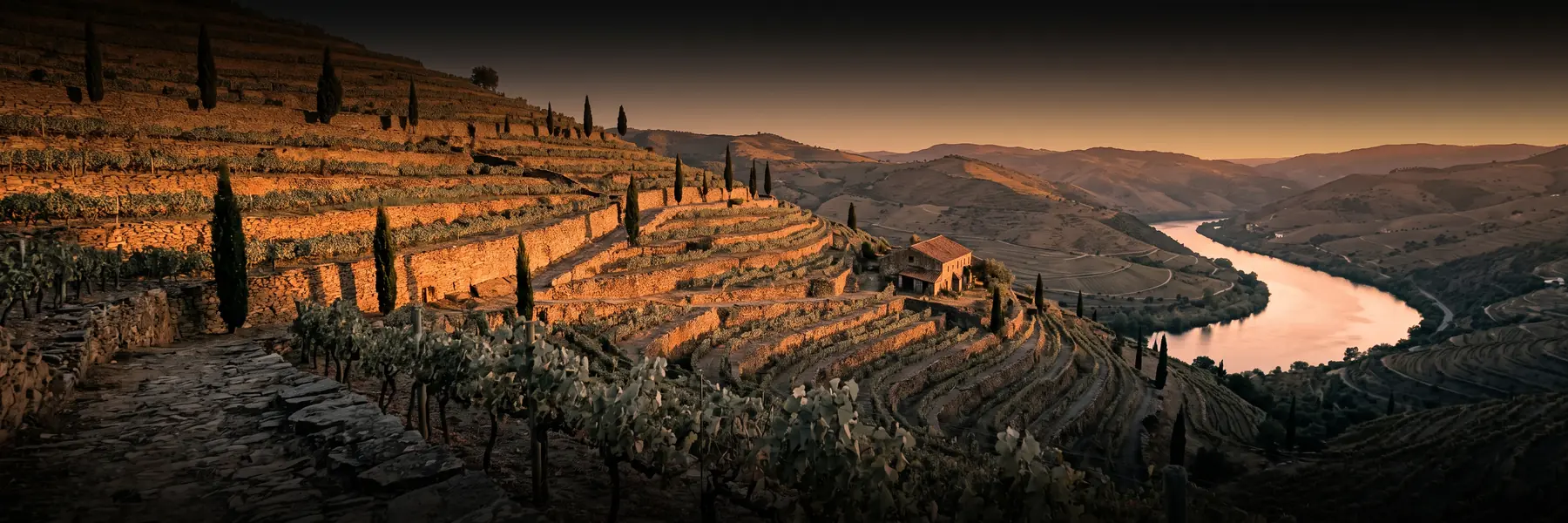
The soils are the region's signature: volcanic. Rhyolite and andesite bedrock, weathered volcanic clays, and — critically — deep beds of volcanic tuff, soft enough to tunnel through by hand. That is why the region's cellars are labyrinths cut directly into the hillsides, running for kilometres at a constant cool temperature and very high humidity.
Named vineyards — Szent Tamás, Betsek, Úrágya, Nyulászó, Mézes Mály, Király — were the subject of the historic classification and are again being used on labels.
Climate
Continental, with hot summers, cold winters and — the crucial part — long, misty autumns. The two rivers generate morning fog that burns off into warm afternoon sunshine. That daily cycle of damp mornings and dry afternoons is the ideal condition for Botrytis cinerea to develop as noble rot rather than as grey rot, and it is why Tokaj can make botrytised wine reliably rather than once a decade.
The same long autumn is a gift for dry wine: it allows Furmint to hang for a long time and develop flavour without losing acidity.
Key Grapes
| Grape | Character |
|---|---|
| Furmint | The region's great variety. Very high acidity, thick skins, high extract, and an unusual ability to botrytise while keeping structure. Dry: quince, pear, smoke, wet stone, with a distinctly savoury, mineral finish and real ageing capacity |
| Hárslevelű | "Linden leaf". More aromatic and softer — honey, linden blossom, spice; lower acid than Furmint and its natural blending partner |
| Sárga Muskotály (Yellow Muscat) | Small proportions; grapey aromatic lift |
| Zéta, Kövérszőlő, Kabar | Minor permitted varieties, mostly botrytis-friendly |
Furmint's combination of thick skins and very high acid is exactly the profile that makes both great botrytis wine and great dry wine — which is the whole reason the region can do both.
The Styles
Dry Furmint (száraz). The modern story. Fermented and often aged in large oak or acacia casks, or in steel. Taut, mineral, savoury, medium-to-full bodied, with genuine ageing potential — a wine much closer in spirit to white Burgundy or dry Chenin from the Loire than to anything sweet. The best single-vineyard examples are among Central Europe's finest whites.
Late Harvest. Sweet but not aszú — from fully ripe or lightly botrytised fruit, fermented part-way. Fresher and lighter than Aszú, and much better value.
Szamorodni. "As it was born" — whole bunches with a proportion of botrytised berries, picked together. Made édes (sweet) or száraz (dry). Dry Szamorodni is aged under a film-forming yeast in part-filled casks and is a genuine curiosity: Tokaj's own version of biological ageing, closely comparable to fino Sherry.
Aszú. The classic sweet wine, made from individually selected botrytised berries. It has its own guide: Tokaji Aszú.
Eszencia. The free-run nectar that seeps from a mass of aszú berries under their own weight. Several hundred grams per litre of sugar, fermenting over years to only a few percent alcohol. Sold in tiny bottles and effectively unclassifiable.
Producers
- Royal Tokaji — founded 1990 with Hugh Johnson among the partners; the company that restarted the region's international reputation, and an early champion of single-vineyard bottlings
- Disznókő — outstanding Aszú; long-established quality
- Oremus (Vega Sicilia) — excellent across dry and sweet
- Szepsy — István Szepsy; the region's most respected figure, and the driving force behind serious dry Furmint
- Château Pajzos, Dobogó, Barta, Demeter Zoltán — a strong and growing quality tier
What Tokaj Teaches
Botrytis is a weather pattern, not a technique. Noble rot needs alternating humidity and dryness. Constant damp gives grey rot, which is a spoilage organism: it brings laccase, off aromas and colour loss, and it is a fault. If your autumn is uniformly wet, you cannot make botrytised wine, and trying is how good fruit gets ruined. The distinction is covered further in the Aszú guide and the Neusiedlersee guide.
Very high acid whites are the ones worth ageing. Furmint's TA is high enough to be alarming on paper and it is the reason both the dry and the sweet wines last for decades. If you have a high-acid white, resist deacidification and think about giving it lees contact, large-format oak and time instead. Read pH and TA, and check what you actually have with the calculators.
Large, old, breathing wood. Tokaj's tradition is casks that impart no flavour but allow slow oxygen ingress in cool, humid cellars. For a high-extract white, that is a much better tool than a new barrel — see barrel ageing basics.
A humid cellar is an asset. The tuff cellars run cool and near-saturated, so evaporation losses are low and the wine's temperature never moves. If you have a damp cellar, that is closer to ideal than a dry, warm one.
Food Pairing
Dry Furmint: roast chicken, pork with paprika, river fish, mushrooms, hard cheeses — a genuinely versatile food wine. Dry Szamorodni: exactly what you would drink a fino with — olives, almonds, cured meat. Late Harvest: foie gras, blue cheese, fruit tarts.
Tip: If you have only ever met Tokaj as a dessert wine, buy a single-vineyard dry Furmint and taste it next to a Chablis and a dry Vouvray. The three together are the best short course available in what high acidity, oak restraint and volcanic or limestone soil actually do to a white wine.