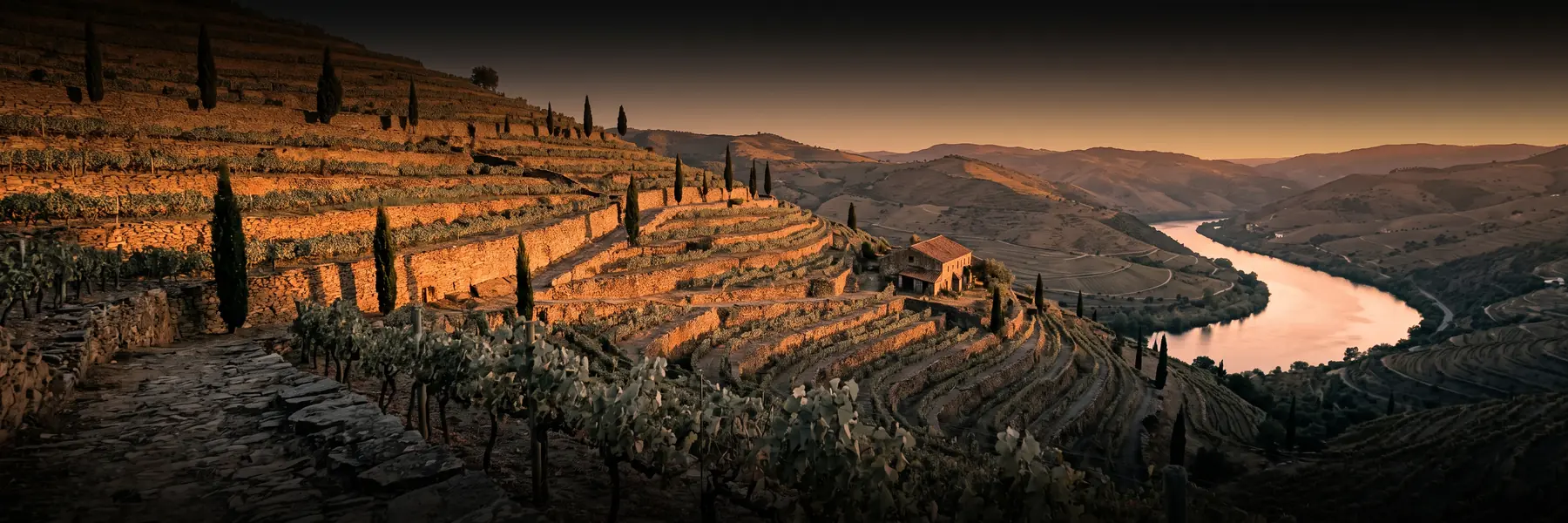
Neusiedlersee — Lake Mist, Botrytis, and Austria's Sweet Wine Masters
Neusiedlersee — Lake Mist, Botrytis, and Austria's Sweet Wine Masters
Lake Neusiedl is enormous, almost entirely surrounded by reed beds, and — remarkably — barely more than a metre or two deep. That shallowness is the whole reason this corner of Austria became one of the world's most reliable sources of botrytised sweet wine. A large, shallow, warm body of water in a hot, flat, Pannonian landscape generates dense autumn mist almost every morning, which burns off into sunshine almost every afternoon. That daily rhythm is exactly what noble rot requires, and Neusiedlersee gets it more consistently than Tokaj, Sauternes or the Mosel.
Geography
Neusiedlersee lies in Burgenland, in eastern Austria on the Hungarian border. The DAC covers the flat land on the lake's eastern and northern shores — the Seewinkel ("lake corner"), around the villages of Illmitz, Apetlon and Podersdorf. It is genuinely flat, with sandy and gravelly soils, a very high water table, and dozens of small salty ponds.
Across the water on the western shore, the ground rises into the Leithaberg hills, and the town of Rust has its own long tradition of sweet wine under the name Ausbruch.
Climate
Pannonian: hot, dry, sunny summers with the highest sunshine hours in Austria; cold winters; low rainfall. The lake moderates temperature swings and — the crucial part — supplies the moisture for autumn fog.
The Seewinkel's shallow water table also matters: vines there are not water-stressed even in a dry summer, so they crop reliably and the fruit hangs healthily into a long autumn.
Grapes
For sweet wine: Welschriesling (high acid, neutral, botrytises beautifully — the classic Seewinkel base), Chardonnay, Scheurebe, Muskat Ottonel, Bouvier, Traminer (in Austria Scheurebe is still often called Sämling 88 — the same grape). Notice that these are chosen for their behaviour under botrytis and their acidity, not for their varietal aromatics — the fungus supplies the character.
For red wine: Zweigelt — the DAC's designated red variety, giving juicy sour-cherry fruit and modest tannin — plus Blaufränkisch (structured, peppery, high-acid, Austria's most serious red), St. Laurent (Pinot-like, savoury) and Merlot and Cabernet in blends.
The Austrian Prädikat Ladder
Austria classifies sweet wine by must weight at harvest, measured in KMW (Klosterneuburger Mostwaage) rather than in the Oechsle degrees used in Germany — the two scales are not interchangeable. The ladder runs from Spätlese and Auslese up through Beerenauslese and Eiswein (both 25 °KMW minimum), then Ausbruch and Trockenbeerenauslese (30 °KMW), with Austria's thresholds set higher than Germany's at several points.
Ausbruch is Austria's own category and has no German equivalent: botrytised berries with must or juice from later-harvested healthy grapes added to help extraction — conceptually close to Tokaj's aszú maceration, which is unsurprising given that Rust and Tokaj were both in the Kingdom of Hungary. Ruster Ausbruch is now protected as its own DAC.
Because the specific KMW thresholds and permitted practices have been revised, check the current Austrian wine law rather than a summary if you need the numbers.
The Kracher Legacy
Alois Kracher (1959–2007) is the reason Neusiedlersee is internationally famous, and his method is worth knowing because it is a deliberate, systematic experiment.
Kracher bottled his Trockenbeerenauslesen in two parallel series from the same vintages:
- Zwischen den Seen ("between the lakes") — aged in large, neutral, traditional casks; Austrian varieties, especially Welschriesling; pure, transparent, botrytis-driven
- Nouvelle Vague — aged in new French oak; often Chardonnay or Scheurebe; richer, spicier, more overtly worked
Numbered by concentration within each vintage, the two series let you taste the same fruit through two ageing regimes. It is the clearest demonstration in sweet wine of what oak does and does not contribute — and it is the reason a small producer should think twice before assuming new oak improves a botrytis wine. The estate continues under his son Gerhard.
Producers
- Kracher — the reference; see above
- Willi Opitz — Illmitz; an eccentric and superb range of sweet wines
- Umathum — excellent reds as well as sweet wine; a leading Burgenland name
- Paul Achs, Gernot Heinrich — serious Blaufränkisch and Zweigelt
- Feiler-Artinger, Ernst Triebaumer — Rust; benchmark Ausbruch and Blaufränkisch
What Neusiedlersee Teaches
Botrytis is a site, not a technique. Reliable noble rot needs a specific daily pattern: humid mornings that let the fungus establish, dry warm afternoons that check it and dehydrate the berry. Without the afternoon drying you get grey rot, which is a fault — laccase, browning, mouldy aromas, acetic spoilage. If your autumns are uniformly wet, do not try to make botrytis wine; dry the fruit on racks instead, as in Santorini's Vinsanto.
Choose the variety for the process. The Seewinkel's use of neutral, high-acid Welschriesling is a deliberate choice: when botrytis is going to supply the aromatics, an aromatic variety just fights it. That is a transferable principle — match the grape to the process, not to its reputation.
Sweet ferments are slow and risky. A must at 30 °Bx or beyond ferments over months against heavy osmotic pressure. Use a high-tolerance strain, stage nutrients, and expect the ferment to stop of its own accord. Read choosing your yeast and stuck fermentation, and plan your alcohol and residual sugar with the calculators.
Volatile acidity is the characteristic fault. High-sugar, high-microbe, slow-fermenting musts are where VA comes from. A little is part of the style in great botrytis wine; a lot is vinegar. Read volatile acidity and keep SO₂ management tight (understanding SO₂).
Oak is optional and often wrong. The Kracher experiment is the evidence. Try large neutral vessels before you reach for a new barrel — see barrel ageing basics.
A moderating lake is a real asset. Any large water body near a vineyard buys you frost protection, temperature moderation and autumn humidity. It is worth factoring into a planting decision — see planting your first vineyard.
Food Pairing
TBA and BA: foie gras, blue cheese, apricot tart — or entirely alone, in small glasses, cold. Blaufränkisch: game, duck, goulash, grilled beef. Zweigelt: sausage, roast chicken, paprika dishes; good lightly chilled.
Tip: If you make a sweet wine, bottle a portion in half-bottles. Sweet wine is drunk in small quantities, and a 375 ml bottle finished in one sitting shows far better than a full bottle that spends a fortnight in the fridge losing its aromatics.