Saint-Julien — The Médoc's Most Consistent Commune
Saint-Julien — The Médoc's Most Consistent Commune
Saint-Julien has no First Growth and it has never needed one. It is the smallest of the four great Médoc communes and the one with the highest proportion of its vineyard in classified hands — which means that when you buy a bottle labelled Saint-Julien, the odds of getting a serious wine are better than anywhere else on the Left Bank. Consistency, not spectacle, is the commune's identity.
Geography
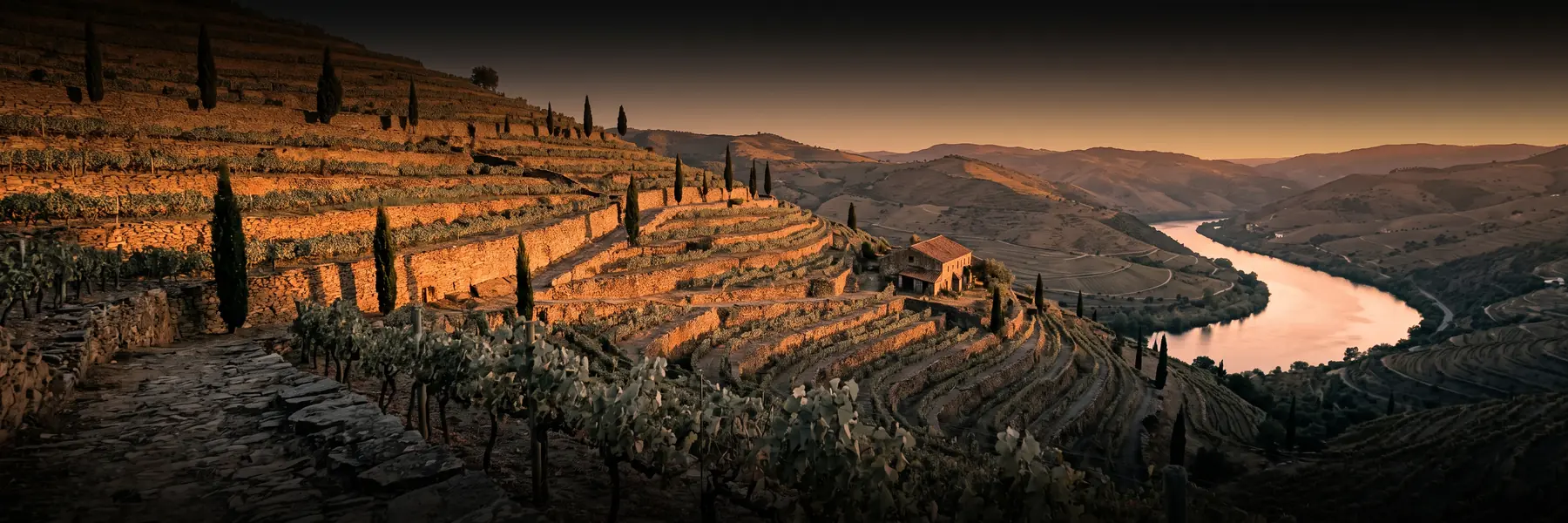
Saint-Julien sits between Pauillac to the north and Margaux to the south, on the left bank of the Gironde. Its vineyards fall into two broad groups: a river-facing plateau where the Léoville and Ducru-Beaucaillou vineyards look out over the estuary, and an inland plateau around Gruaud-Larose and Talbot with more clay beneath the gravel.
The gravel is deep and the drainage excellent. The estuary-side plots benefit from the same thermal buffering that helps Latour just to the north — a moderating body of water that reduces frost risk and evens out the ripening curve. Ducru-Beaucaillou's name is literally a reference to the ground: beaux cailloux, beautiful stones.
Climate
Maritime, indistinguishable in broad terms from Pauillac. What distinguishes Saint-Julien in practice is how well its sites cope with bad years. Deep gravel over clay gives the vine drainage in a wet autumn and a water reserve in a dry summer — the combination behind the commune's reputation for rarely producing a poor vintage.
The Léoville story
One estate, Léoville, was among the largest properties in the Médoc before the French Revolution. It was progressively divided, and the pieces are now three separate classified châteaux:
- Château Léoville-Las Cases — the estuary-facing Grand Enclos; the archetypal "super second", regularly priced and rated alongside First Growths
- Château Léoville-Poyferré — richer, more immediately generous in style
- Château Léoville-Barton — owned by the Barton family, of Irish origin, since 1826 — two centuries this year; classical, restrained, and historically excellent value
Alongside them: Château Ducru-Beaucaillou (pure, precise, long-lived), Château Gruaud-Larose and Château Talbot (larger, fuller, more generous), Château Branaire-Ducru, Château Beychevelle and Château Lagrange.
Style
Saint-Julien is the balance point of the Médoc: less overtly powerful than Pauillac, less overtly perfumed than Margaux, and better at both than either is at the other. Expect cassis and dark cherry, cedar, gravel dust and a fine, evenly distributed tannin. The wines usually enter a good drinking window earlier than Pauillac and hold it longer than Margaux.
What Saint-Julien teaches your winemaking
The interesting lesson here is not about extraction or oak. It is about selection — the discipline of deciding what does not go in the bottle.
The second wine is a quality tool, not a marketing one
Almost every Saint-Julien estate runs a second label: Le Petit Lion at Las Cases (Clos du Marquis, often called its second wine, is really a separate-parcels Saint-Julien), Sarget de Gruaud-Larose, La Croix Ducru-Beaucaillou, Connétable Talbot. Their real function is to give the winemaker somewhere to put the lots that are sound but not exceptional — young vines, weaker parcels, a press fraction that tastes coarse.
If you make more than one carboy of red, adopt the same habit. Keep your lots separate through fermentation and MLF, taste them blind, and be willing to declare that lot three is a perfectly nice everyday wine that would drag down your best blend. A single mediocre lot blended into an excellent one lowers the whole thing; kept apart, you have two good wines.
Consistency comes from parcels, not from vintages
The estates that ride out bad years do it by knowing which plots to reduce, pick earlier, or exclude entirely. At home the equivalent is record-keeping: log each vine block or each fruit source separately, log its numbers at harvest, and log what the finished lot tasted like. After three vintages the pattern is visible. If you keep your batches in MakeWine, that history is exactly what the lot records are for.
Balance is a blending decision
Saint-Julien's signature is proportion. In practice that means resisting the urge to maximise anything — not the darkest colour, not the highest alcohol, not the most oak. Build the blend to a target you have written down before you start tasting, then check it against that target. Our blending theory guide covers bench-trial method and how to scale a trial reliably.
The rest of the technique is Left Bank standard
Ripe Cabernet picked on tannin rather than sugar, warm but not hot fermentation, a fortnight or so on skins, full MLF, French oak in proportion. See Pauillac for the detail, the Cabernet Sauvignon guide for the variety, and the Bordeaux guide for the region.
Food pairing
Roast beef, lamb, game birds, mushroom dishes, Comté and other aged hard cheeses. Saint-Julien's balance makes it the least fussy of the great Médocs at the table.
Tip: Before your next blend, write down the wine you intend to make in one sentence — "medium-full, cassis and cedar, tannin firm but not drying, no visible oak." Then blend to that sentence. It is a surprisingly effective defence against the very common mistake of blending toward whichever lot tastes most impressive on its own.