Cabernet Sauvignon — A Winemaker's Guide to the King of Reds
Cabernet Sauvignon — A Winemaker's Guide to the King of Reds
Cabernet Sauvignon is the world's most planted wine grape variety and for good reason: it produces structured, age-worthy red wines with a distinct character of blackcurrant, cedar, graphite, and firm tannins. For the winemaker, it demands respect — but it rewards careful technique generously.
Variety Profile
- Origins: Bordeaux, France (a natural cross of Cabernet Franc and Sauvignon Blanc)
- Bud burst: Late — avoids spring frost better than Merlot or Pinot
- Ripening: Late season — needs long, warm autumns to fully ripen
- Skin thickness: Thick — high colour and tannin potential
- Characteristic aromas: Blackcurrant, blackberry, cassis, green capsicum (at underripeness), cedar, cigar box, graphite (with oak and age), tobacco, eucalyptus (in warm climates)
- Key risk: Green/herbaceous character from underripe fruit (methoxypyrazines, the same compound as green capsicum)
Harvest Targets
Cabernet Sauvignon's biggest quality risk is underripeness. Unlike Pinot Noir, which can be elegant at lower Brix, Cabernet with pyrazines is unpleasant and no winemaking will fix it.
| Parameter | Target range |
|---|---|
| Brix at harvest | 24–27°Bx (warm climate), 22–25°Bx (cool climate) |
| pH | 3.5–3.8 |
| TA | 5.5–7.0 g/L |
| Tasting notes | Black fruit dominant, tannins firm but ripe (no greenness) |
Taste the seeds — they should be brown, not green. Green seeds indicate underripe tannins that will taste harsh.
Fermentation
Vessel
Open-top fermenters work well for Cabernet — easier to manage cap and extraction. Stainless, concrete, or open wood vats all work.
Temperature
22–28°C during active fermentation for colour and tannin extraction. A pre-fermentation cold soak — 2–5 days with the must held cold, around 4–10°C — can enhance colour and fruit intensity without harsh tannin extraction.
Cap management
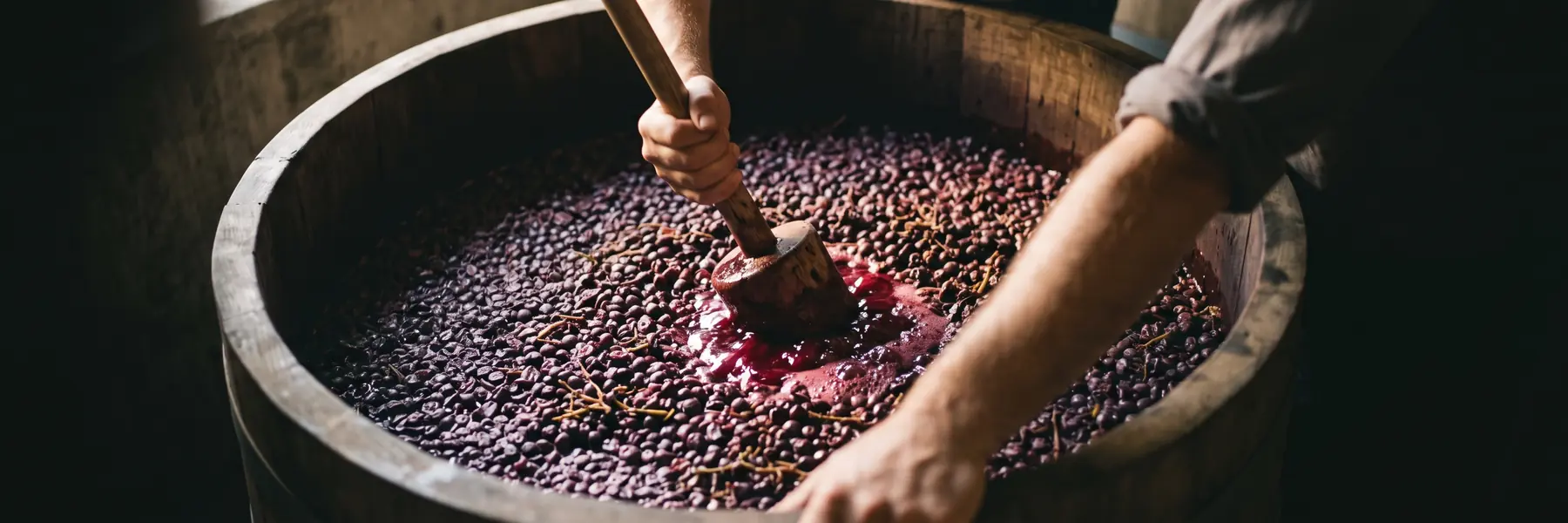
Cabernet Sauvignon forms a thick, tight cap. Punch down (pigeage) 2–3 times daily or pump over (remontage) twice daily. Over-extraction is easy — taste the wine regularly.
Yeast selection
- BDX — the Bordeaux-red isolate; full body, colour stability
- RC212 — spice and structure, popular for reds
- D80 / ICV-D254 — promotes smooth tannin and dark fruit character
- Lalvin BM45 — depth and mouthfeel in warm-climate Cabernet
Maceration length
- Short maceration (8–10 days): lighter, more approachable wine, less ageing required
- Standard maceration (14–20 days): classic Bordeaux style, firm structure
- Extended maceration (30+ days): very high tannin, needs significant oak and ageing
Pressing
Separate free-run juice from press wine. P1 (light press) can be blended back in; P2+ only for structured blends.
Malolactic Fermentation
Always encourage MLF in Cabernet Sauvignon. The high natural acidity and hard malic acid needs conversion to softer lactic acid for balance. Inoculate with a LAB starter (e.g. VP41, CH11) immediately after pressing, while the wine is still warm.
Conditions for MLF: temperature above 18°C, pH 3.2–3.5, free SO₂ below 10 mg/L.
Oak Strategy
Cabernet Sauvignon is perfectly suited to oak ageing. Its high tannin and structure can integrate significant oak without being overwhelmed.
| Oak approach | Profile | Typical use |
|---|---|---|
| New French oak (225L) | Cedar, graphite, fine spice | Premium Cabernet, 12–18 months |
| New American oak | Vanilla, coconut, bold | Rioja-style, some New World |
| Older French oak (1–3 fill) | Subtle, micro-oxygenation | Second tier, less oak flavour |
| Oak spirals/staves in tank | More controllable | Home/small producer, 3–6 months |
Target 12–18 months oak ageing for serious Cabernet. Taste regularly — oak integration is an evolving process.
Blending
Pure Cabernet Sauvignon can be austere. Classic blending partners:
- Merlot (5–40%): softens structure, adds plum and mid-palate weight, earlier drinkability
- Cabernet Franc (5–20%): adds floral aromatics, pencil shavings, lifts structure
- Petit Verdot (2–10%): deep colour, violet, structure
- Malbec (5–15%): plush texture, dark fruit depth
Run bench trials before committing to a blend. Taste all components separately first.
Common Problems
Greenness (bell pepper, capsicum)
Cause: Underripe fruit. Methoxypyrazines are very stable and don't reduce with ageing.
Prevention: Only pick at full physiological ripeness. Confirm seed ripeness.
Harsh, astringent tannins
Cause: Overextraction, very young wine, or tannins from underripe fruit.
Fix: Extended ageing, egg-white fining (3–8 egg whites per 225L barrel, set by bench trial), or micro-oxygenation.
Stuck MLF
Cause: Temperature drop, high free SO₂, very low pH.
Fix: Warm wine to 20–22°C, check and adjust free SO₂ to below 10 mg/L, re-inoculate.
Ageing Potential
Well-made Cabernet Sauvignon with good structure is one of the longest-lived wines:
- Home winemaker quality: 3–7 years peak drinking
- Small commercial producer: 5–15 years
- Premium Bordeaux: 20–40+ years
The keys to ageability: sufficient tannin, adequate acidity, correct SO₂, and clean winemaking. Without these, the wine peaks early and oxidises.
Tip: Log each racking, SO₂ addition, and tasting note in MakeWine. Cabernet's evolution over multiple years is fascinating to track — you'll see the tannins soften and secondary characters emerge over time.