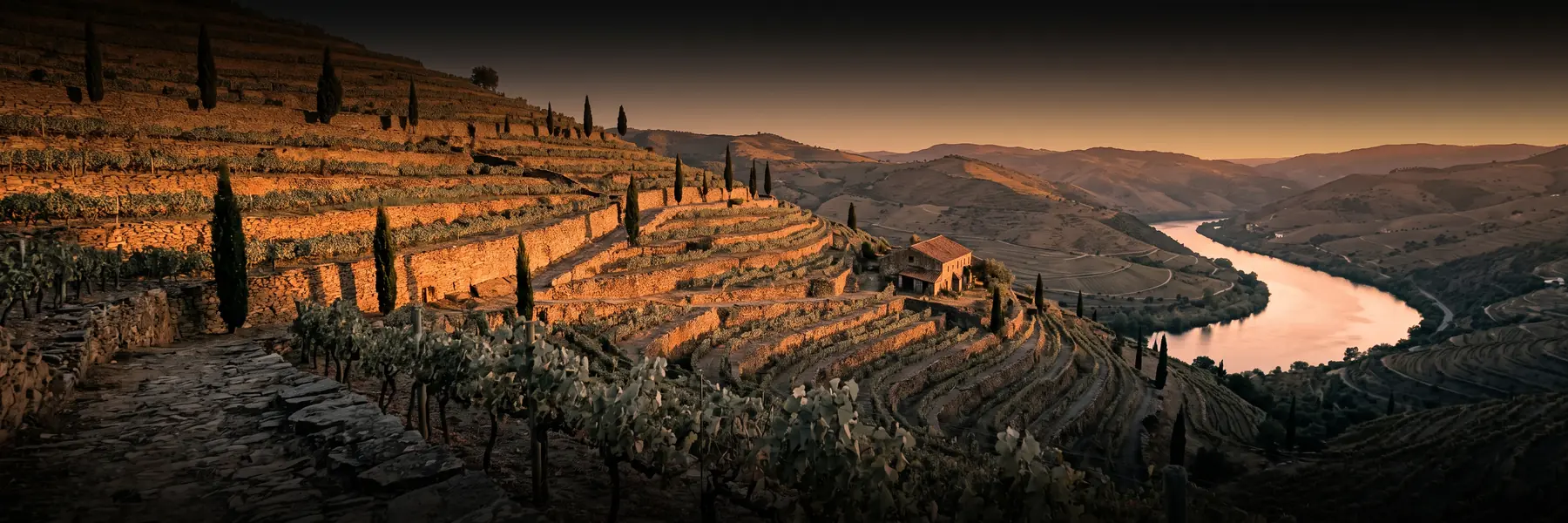
Bordeaux — The World's Most Famous Wine Region
Bordeaux — The World's Most Famous Wine Region
Bordeaux is the benchmark for structured red wine blending. Sitting on the Atlantic coast of southwest France, it has historically produced around 700 million bottles per year across more than 60 appellations (recent vintages, 2021–2024, have averaged closer to 500 million), and the best châteaux have commanded some of the highest wine prices in the world for centuries.
Geography
The Gironde estuary divides Bordeaux into two distinct banks. The Left Bank (Médoc, Graves, Sauternes) sits on well-drained gravel over clay, favouring Cabernet Sauvignon. The Right Bank (Pomerol, Saint-Émilion) has more clay and limestone, favouring Merlot. The river moderates extremes: maritime summers are warm but rarely scorching; winters are mild.
Climate
Maritime. The Atlantic moderates temperature year-round. Summers are long and warm. The main threat is autumn rain — late-season harvests are vulnerable to dilution and botrytis. Well-drained gravel sites are what let the best estates ride out wet years.
Key Grapes
| Grape | Bank | Role |
|---|---|---|
| Cabernet Sauvignon | Left | Backbone — tannin, structure, ageing potential |
| Merlot | Right | Body, plum, mid-palate weight |
| Cabernet Franc | Both | Floral lift, pencil shavings, structure |
| Petit Verdot | Left | Deep colour, violet, added tannin |
| Malbec | Both | Plush texture (less common now) |
| Sauvignon Blanc | Both | White Bordeaux — crisp, grassy, citrus |
| Sémillon | Both | Oaked whites, Sauternes — body, lanolin |
Appellations
Left Bank: Médoc, Haut-Médoc, Pauillac, Margaux, Saint-Julien, Saint-Estèphe, Graves, Pessac-Léognan, Sauternes/Barsac (sweet)
Right Bank: Saint-Émilion, Pomerol, Fronsac, Canon-Fronsac
Between the rivers: Entre-Deux-Mers (dry whites) — the wedge between Garonne and Dordogne
Region-wide: Bordeaux Supérieur
The 1855 Classification
Napoleon III commissioned a classification of Bordeaux châteaux for the Paris Exhibition. The Médoc estates were ranked 1er–5ème Grand Cru Classé. Only four were named 1er Cru in 1855: Château Lafite Rothschild, Château Latour, Château Margaux, and Château Haut-Brion (the sole non-Médoc estate, in Graves). Château Mouton Rothschild was promoted from Second to First Growth in 1973 — the only revision ever made to the list — bringing the total to five today.
Famous Producers
- Château Pétrus — Pomerol. Nearly 100% Merlot. One of the world's most expensive wines.
- Château Mouton Rothschild — Pauillac. Famous for commissioning artist label art each year.
- Château Margaux — Margaux. Perfumed, feminine Cabernet Sauvignon.
- Château Haut-Brion — Pessac-Léognan. The only non-Médoc red wine estate in the 1855 Classification (which also classified the sweet whites of Sauternes and Barsac).
- Château d'Yquem — Sauternes. The world's most celebrated sweet wine.
- Le Pin — Pomerol. Tiny production, garagiste icon.
Wine Styles
Left Bank red: Cabernet Sauvignon-dominant (60–85%). Firm tannins, high structure, needs years. Blackcurrant, cedar, graphite, cigar box. Ages 10–30+ years at the top level.
Right Bank red: Merlot-dominant. More plush, fleshy, accessible young. Plum, chocolate, dark cherry. Saint-Émilion and Pomerol.
Dry white: Sauvignon Blanc-led, often blended with Sémillon. Crisp, citrus, grassy, lemon curd.
Sweet white (Sauternes): Noble rot (Botrytis cinerea) concentrates sugars on Sémillon and Sauvignon Blanc. Apricot, marmalade, honey, saffron. Very long ageing potential.
Making Bordeaux-Style Wine
Red blend approach
- Pick Cabernet Sauvignon at full ripeness (24–26°Bx). Underripe Cab shows harsh green tannins.
- Ferment at 25–28°C for good extraction. 14–20 day maceration for Left Bank style.
- Always encourage MLF — malic acid makes Cabernet harsh.
- Blend after MLF: Cab as backbone, Merlot (15–30%) for body, Cab Franc (5–15%) for lift.
- Oak ageing: French oak, medium toast, 12–18 months. New oak (25–50%) for premium batches.
Yeast recommendations
- Lallemand ICV BDX — isolated for Bordeaux reds; colour stability and a round mid-palate
- ICV-D254 — smooth dark fruit, works well in warm climates
- Lalvin BM 4x4 — reliable in higher-Brix reds; dark fruit and mouthfeel
Key parameters at harvest
| Parameter | Target |
|---|---|
| Brix (Cab Sauv) | 24–26°Bx |
| pH | 3.5–3.8 |
| TA | 5.5–7.0 g/L |
Food Pairing
Left Bank reds: roast lamb, entrecôte, aged cheeses, duck confit.
Right Bank reds: beef bourguignon, venison, truffle risotto.
Sauternes: foie gras, Roquefort, crème brûlée.
Tip: When making a Bordeaux-style blend, always run small bench trials first — the synergy between Cab and Merlot varies enormously by vintage. A ratio that works one year may need adjustment the next.