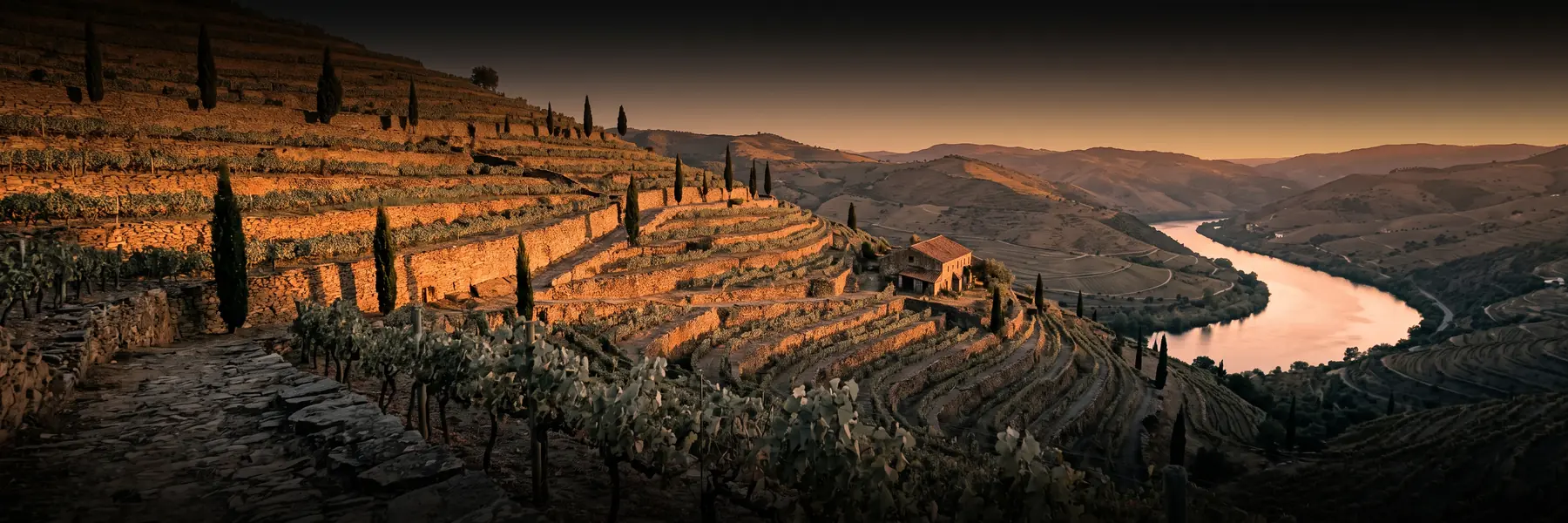
Pauillac — Three First Growths and the World Standard for Cabernet
Pauillac — Three First Growths and the World Standard for Cabernet
If you had to point at one square of earth and say this is what Cabernet Sauvignon is for, you would point at Pauillac. Three of the five 1855 First Growths — Lafite Rothschild, Latour and Mouton Rothschild — sit inside this one small Médoc commune, along with a long list of Second and Fifth Growths that outperform their rank. No other appellation carries that concentration of reputation.
Where it is, and why the ground matters
Pauillac sits on the left bank of the Gironde estuary, roughly halfway up the Médoc peninsula. The commune is built on deep beds of gravel — quartz and quartzite pebbles washed down from the Pyrenees and the Massif Central in glacial cycles, sitting over clay and limestone.
Two things follow from that. First, the gravel drains ferociously, so the vine is never waterlogged and roots drive deep. Second, stones absorb heat during the day and radiate it back at night, which is exactly what a late-ripening variety like Cabernet Sauvignon needs this far north.
The commune divides informally into a northern plateau (Lafite, Mouton, Pontet-Canet) and a southern one (Latour, the two Pichons), separated by a shallow valley. Latour's Enclos sits close to the estuary, where the water buffers frost — one of the reasons Latour is famous for making respectable wine in poor vintages.
Climate
Maritime. The Atlantic and the estuary keep summers warm rather than hot and winters mild. The defining risk is not heat but water: rain at flowering causes poor fruit set, and rain in late September or October dilutes a Cabernet crop that is still finishing. Vintage variation in Pauillac is real and large, which is why the estates keep a second wine — fruit that does not make the grade in a difficult year goes into Les Forts de Latour, Carruades de Lafite, Réserve de la Comtesse, and so on.
The blend
Pauillac is Cabernet Sauvignon-led, usually well above half the blend and sometimes far higher, supported by Merlot for mid-palate flesh, Cabernet Franc for aromatic lift, and small amounts of Petit Verdot for colour and a violet-and-spice top note. Malbec and Carménère remain permitted but are rare here.
| Variety | What it contributes in Pauillac |
|---|---|
| Cabernet Sauvignon | Blackcurrant, cedar, graphite; the tannic spine and the ageing |
| Merlot | Body and mid-palate; softens the attack |
| Cabernet Franc | Floral and leafy lift, fine tannin |
| Petit Verdot | Deep colour, violet, extra grip — a seasoning, not a base |
Names worth knowing
- Château Latour — the most consistent estate in Bordeaux; famously left en primeur in 2012 to release only when the wines are ready to drink
- Château Lafite Rothschild — the most perfumed and restrained of the three First Growths
- Château Mouton Rothschild — promoted from Second to First Growth in 1973 — the only change of rank ever made to the 1855 red-wine classification (the one other amendment was Château Cantemerle's addition as a Fifth Growth in 1856, after it was accidentally left off the original list); commissions a different artist for each vintage's label
- Château Pichon Baron and Pichon Comtesse de Lalande — two halves of a single divided estate, facing each other across the road, now with very different styles
- Château Lynch-Bages and Château Pontet-Canet — Fifth Growths that trade well above their classification; Pontet-Canet has been certified biodynamic since the 2010s
What Pauillac tastes like
Blackcurrant and cassis in youth, over a firm, drying tannin frame. With ten to twenty years those primaries settle into cedar, pencil shavings, graphite, tobacco leaf and dried herb. The best bottles are still improving at thirty. Young Pauillac from a serious château is genuinely hard to enjoy — the tannin is built for time, not for pleasure now.
What this appellation teaches your winemaking
Pauillac is a masterclass in one thing: ripe tannin from a variety that does not always get there. Almost every fault in home-made Cabernet traces back to picking underripe fruit and then trying to fix it in the cellar.
Pick on tannin, not on sugar
Cabernet Sauvignon accumulates sugar before it finishes ripening its seeds and its methoxypyrazines. If your fruit tastes of green pepper and the pips are still pale and bitter, more sugar will not help — you will get an alcoholic wine with green tannin. Chew skins and crack pips as your primary test; use Brix, pH and TA as confirmation. Our harvest timing guide sets out the sampling routine, and the calculators will convert your readings.
Extract deliberately, then stop
Left Bank practice is a relatively long cuvaison — typically two to three weeks on skins for the top wines — but that only works with fully ripe fruit. Taste the fermenting must every day and stop extracting when the tannin turns from grippy to drying. Punch-downs or pump-overs both work; see punch-down vs pump-over for the trade-off.
Malolactic fermentation is not optional
Malic acid makes Cabernet tannin feel harsh and metallic. Every serious Bordeaux red goes through MLF; so should yours. See MLF explained.
Blend after MLF, in trials
No château decides its blend at harvest. Ferment your varieties separately, let each finish MLF, then bench-trial. A 5% addition of Petit Verdot can transform a blend's colour and aromatic top note — or wreck its balance. Our blending theory guide covers the arithmetic.
Oak in proportion to the fruit
First Growths use a high proportion of new French oak because the fruit can carry it. Most fruit cannot. If your Cabernet is medium-bodied, 20–30% new oak equivalent over 12–18 months will flatter it; 100% will bury it. See barrel ageing basics.
For the variety itself, our Cabernet Sauvignon guide goes deeper on targets and faults, and the Bordeaux guide covers the wider region and its classifications.
Food pairing
Rib of beef, roast lamb with rosemary, duck, aged hard cheeses. Young Pauillac needs fat and protein to absorb its tannin; mature Pauillac wants something simpler that gets out of the way.
Tip: If your Cabernet finishes with a green, stalky edge, resist the urge to bury it in new oak — oak tannin adds to the astringency rather than masking it. Blend it down with a riper, softer parcel instead, and let time do the rest.