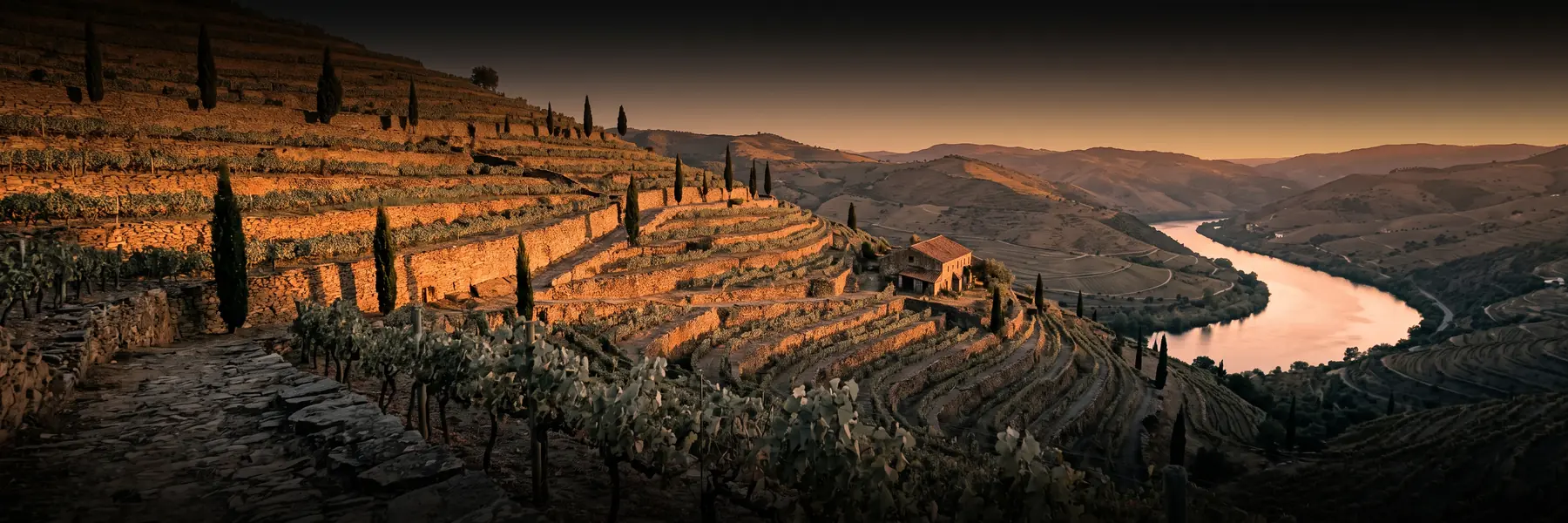
Saint-Émilion — Limestone, Cabernet Franc, and a Contested Classification
Saint-Émilion — Limestone, Cabernet Franc, and a Contested Classification
Saint-Émilion is the oldest wine region in Bordeaux and the least like the rest of it. Where the Médoc is a landscape of grand estates on flat gravel, Saint-Émilion is a medieval hilltop town — a UNESCO World Heritage site — surrounded by hundreds of small properties, many of only a few hectares, worked by families. Vines have been grown here since Roman times, long before the Médoc marshes were drained.
Geography
The appellation sits on the right bank of the Dordogne, east of Libourne. Its terroirs divide into three broad types, and the difference between them is the difference between a great wine and an ordinary one:
- The limestone plateau (plateau calcaire) — around and beneath the town itself, on a bed of calcaire à astéries, a fossil-rich limestone. Thin clay-limestone topsoil over free-draining rock that holds water in reserve. This is where Château Ausone and most of the classified estates sit.
- The côtes — the steep limestone-clay slopes falling away from the plateau. Excellent, warm, well-drained sites.
- The sandy and gravelly soils to the north-west, adjoining Pomerol. Château Cheval Blanc and Château Figeac are here, on a band of gravel that is geologically closer to the Médoc than to the plateau — which is part of why Cheval Blanc tastes as it does.
Below and around these, the lower-lying sandy plain toward the river produces the bulk of generic Saint-Émilion, and it is a much plainer wine.
The town's limestone has a second function: it has been quarried for centuries, and the resulting caves beneath Saint-Émilion are used as naturally cool, humid cellars.
Climate
Maritime, marginally warmer and more sheltered than the Médoc across the estuary. Merlot's early ripening makes the appellation vulnerable to spring frost — the February 1956 frost did serious damage here, as it did in Pomerol. Autumn rain is the usual vintage decider.
The grapes
Merlot dominates, generally two-thirds or more of a typical blend. Cabernet Franc is the crucial partner and the appellation's signature — it does better on Saint-Émilion's cooler limestone than Cabernet Sauvignon does, and it contributes the floral, leafy, graphite-scented lift that separates good Saint-Émilion from generic ripe Merlot. Cabernet Sauvignon appears in small amounts, chiefly on the gravel.
Château Cheval Blanc is the famous demonstration of what Cabernet Franc can do: historically around half the blend, which is unique among Bordeaux's greatest estates.
The classification — and the arguments
Saint-Émilion's classification is separate from the 1855 Médoc list and, unlike it, is revised roughly every decade. That is meant to be a virtue: an estate that improves can be promoted, and one that declines can be demoted.
In practice it has produced repeated controversy. The tiers are Premier Grand Cru Classé A, Premier Grand Cru Classé B, and Grand Cru Classé, and revisions have been contested in the French courts. In the most recent cycle, Château Ausone, Château Cheval Blanc and Château Angélus all withdrew from the classification rather than participate — leaving the top tier without the estates most people would name first.
There is a further wrinkle that catches buyers out: "Saint-Émilion Grand Cru" is a separate appellation covering a large volume of wine, and it is not the same as being a classified growth. A bottle can say Grand Cru without any classification behind it at all.
Producers
- Château Cheval Blanc — the gravel site; historically Cabernet Franc-heavy; one of the world's great wines
- Château Ausone — a tiny estate on the plateau's edge in an amphitheatre of limestone; extraordinary longevity
- Château Figeac — Cheval Blanc's neighbour, with an unusually high Cabernet Sauvignon proportion for the right bank
- Château Pavie and (since its 2022 promotion) Château Figeac — the two Premiers Grands Crus Classés A of the current ranking — with Château Canon and Château Bélair-Monange (both Premier Grand Cru Classé B) and Château Angélus (outside the classification since its 2022 withdrawal)
- Château Valandraud and Château Le Tertre-Rôteboeuf — the garagistes: tiny properties that from the late 1980s made intensely concentrated, low-yield, heavily extracted wines in what were literally garages, and forced the establishment to take them seriously
Style
Merlot-led plushness with a Cabernet Franc frame: plum, black cherry, violet, tobacco, graphite, and — from the limestone sites — a distinctly mineral, savoury depth. Softer and more approachable young than the Médoc, but the plateau estates are seriously long-lived; Ausone at thirty years is still developing.
Plateau and côtes wines are firmer and more mineral; the gravel wines (Cheval Blanc, Figeac) are more perfumed and structured; the plain wines are simply fruitier and shorter.
What Saint-Émilion teaches your winemaking
Cabernet Franc is the most underused blending grape there is
This is the appellation's great practical lesson. Cabernet Franc ripens earlier than Cabernet Sauvignon, so it gets fully ripe in cooler sites and seasons where Cabernet Sauvignon stays green. It contributes fine tannin, aromatic lift (violet, graphite, pencil shavings) and a finish — precisely what a broad, soft Merlot lacks.
If your reds are fleshy in the middle and vanish at the end, 10–20% Cabernet Franc is a more effective fix than more oak or a longer maceration. See blending theory.
But underripe Cabernet Franc is worse than none
Cabernet Franc's methoxypyrazines give a green-pepper, stalky character when the fruit is not ripe, and it shows through a blend at very low percentages. Taste the component on its own before you use it, and reject it if it is green — see harvest timing.
Limestone teaches about water, not minerals
The plateau's advantage is hydrological: free-draining rock that also holds a reserve, so the vine is neither waterlogged in a wet autumn nor stressed in a dry August. That is a real, measurable mechanism — unlike the folk claim that minerals travel from rock to glass. When you assess a vineyard site, ask about drainage and water-holding capacity, not about mineral flavours. See planting your first vineyard.
The garagiste lesson, and its limits
The garagistes proved that a very small producer with obsessive attention and severely reduced yields could beat established estates. That should encourage anyone working at small scale. But their signature style — very ripe fruit, heavy extraction, a lot of new oak — has aged less well than the classical wines it challenged, and the fashion has receded. Concentration is not the same as balance. See tannin management and barrel ageing basics.
Merlot technique
Pick before the acid collapses, correct high pH at crush, extract less than you would for Cabernet, and complete MLF. Our Pomerol guide covers all of this in detail, and the Bordeaux guide sets out the region.
Food pairing
Duck, lamb, beef in red wine, mushroom and truffle dishes, roast pork, and washed-rind cheeses. Saint-Émilion's softer tannin makes it an easier partner at the table than young Médoc.
Tip: If you can buy or grow a small amount of Cabernet Franc, do. It is the single most useful blending component available to a home winemaker working with Merlot or any soft, mid-palate-heavy red — and Saint-Émilion has spent several centuries demonstrating exactly why.