Planting Your First Vineyard Block
Planting Your First Vineyard Block
Planting a vineyard is a long-term commitment. Vines planted this spring won't produce commercially viable fruit for 3–4 years, and won't reach full maturity for 7–10 years. But a well-sited vineyard, planted with the right varieties, is one of the most rewarding projects in food and drink production. This guide covers the decisions that matter most in the first year.
Site Assessment
Climate
The first question: can you grow wine grapes where you live?
Minimum temperature: Wine grapes require approximately 1,000–1,200 Growing Degree Days (GDDs, base 10°C) from budbreak to harvest for early varieties. Southern England and parts of Wales can achieve this for early-ripening varieties; Ireland is marginal — only the warmest south-eastern sites are viable, and only for very early varieties.
Key risks:
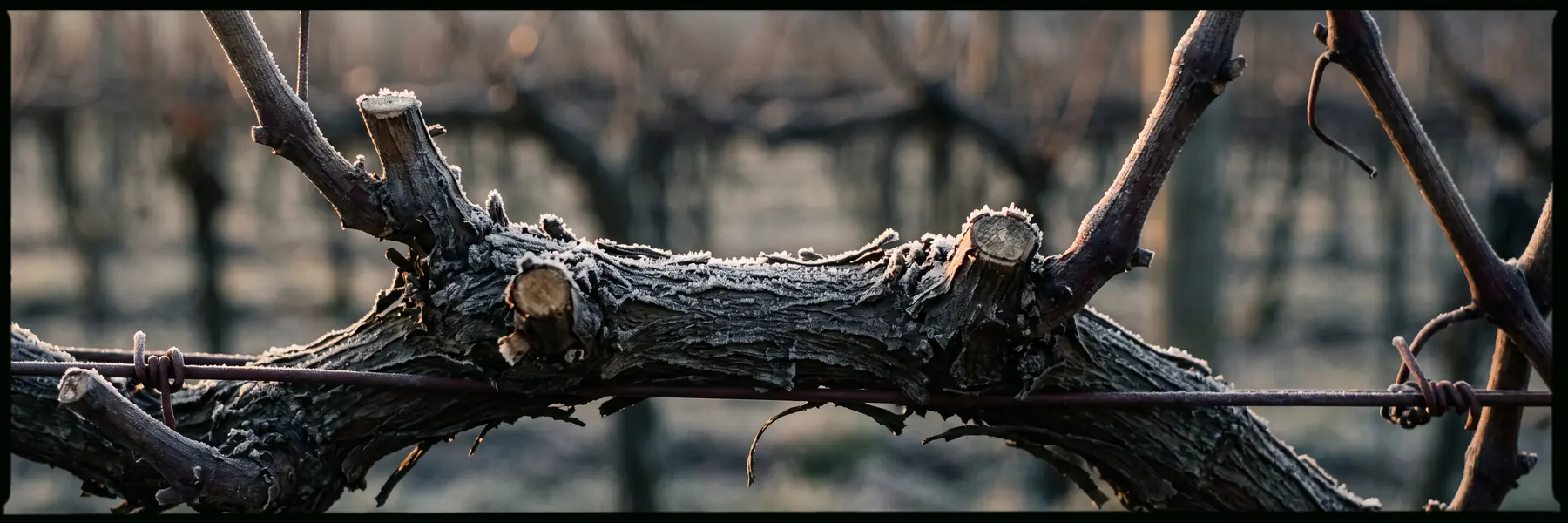
- Spring frost: Budbreak occurs in April in most UK vineyards. A late frost after budbreak destroys the developing shoots. Low-lying frost pockets are high risk. Site on slopes where cold air drains away (never plant in the valley bottom).
- Summer rain: Wet summers dramatically increase disease pressure (mildew, botrytis). Well-drained hillsides are preferable.
- Autumn sunshine: Ripening happens August–October. Good sun exposure in this window is more important than summer heat.
Aspect and slope
South or south-west facing slopes receive maximum solar radiation in the northern hemisphere. The slope also provides cold air drainage (frost protection) and improved drainage. A 5–15° slope is ideal; steeper slopes require terracing.
Soil
Vines are remarkably adaptable but thrive in specific conditions:
- Well-drained: Vines hate waterlogged roots. Clay soils need drainage remediation.
- Low-moderate fertility: High-nitrogen soils produce excessive vegetative growth at the expense of fruit quality. Poorer soils often produce better wine.
- pH 6.5–7.0: Slightly acidic to neutral. Test before planting.
- Deep: 60–90cm of rooting depth minimum. Rock or hardpan closer than 50cm limits root development.
Variety Selection
Choose varieties suited to your specific climate. Don't fight your climate by planting varieties that need more heat than you can reliably provide.
Cool-climate UK/Ireland options (reliable)
| Variety | Type | Ripening | Notes |
|---|---|---|---|
| Madeleine Angevine | White | Very early | Light, aromatic, fresh |
| Reichensteiner | White | Early | Neutral, reliable cropper |
| Ortega | White | Early | Aromatic, botrytis-prone |
| Pinot Noir Précoce | Red | Early | Early-ripening Pinot clone |
| Rondo | Red | Early–mid | High colour, disease resistant |
| Solaris | White | Very early | Disease resistant, excellent quality |
| Phoenix | White | Early–mid | Disease resistant, commercial quality |
Classic varieties (marginal in UK, possible with good sites)
| Variety | Type | Notes |
|---|---|---|
| Chardonnay | White | Needs good sites; exceptional sparkling base |
| Pinot Noir | Red | UK's most exciting red; needs good sites |
| Pinot Meunier | Red | More reliable than Pinot Noir in cool sites |
Disease-resistant (PIWI) varieties
Increasingly important for organic production and sustainable viticulture. Varieties like Solaris, Phoenix, Johanniter, Cabernet Blanc, and Souvignier Gris have genetic resistance to downy and powdery mildew, dramatically reducing spray programmes.
Rootstock Selection
Wine grapes are almost always grafted onto phylloxera-resistant rootstocks. If your soil has known phylloxera, rootstocked vines are essential. In the UK, phylloxera is less universal but still present in many regions — potted own-rooted vines are acceptable for small garden plantings but commercial blocks should always be grafted.
Common rootstocks:
- SO4: vigorous, widely used, good for clay-loam soils
- 3309C: moderate vigour; poor drought tolerance and only modest lime tolerance — best in fresh, well-drained soils, not chalk or droughty sites
- 5BB: very vigorous, tolerates wet soils
- 101-14: low vigour, ideal for small plantings
Match rootstock vigour to your soil fertility — high-fertility soils with a vigorous rootstock produce unmanageable shoot growth.
If your soil is chalky, active lime decides the shortlist before vigour does — and ask the lab for active lime (calcaire actif), not total carbonate. They are different measurements, a soil can be 40% total carbonate with only 8% active lime, and comparing the wrong one against a rootstock's tolerance points you confidently at the wrong vine.
A fuller reference — parentage, active-lime ranges, drought and wet-soil behaviour, and what the sources genuinely disagree about — is in Understanding Rootstocks.
Layout and Spacing
Row orientation: North–south rows maximise morning and afternoon sun exposure to both sides of the row.
Row spacing: Depends on tractor access:
- Narrow rows (1.5–1.8m): more vines per hectare, hand-managed, higher labour, better quality potential
- Standard rows (2.4–3.0m): tractor-accessible, typical for most UK commercial vineyards
- Wide rows (3.0m+): suitable for small ride-on mowers or multi-crop integration
Vine spacing within rows: 0.9–1.5m. Tighter spacing = higher planting density = smaller canopies = potentially better fruit quality. Also more cost.
Planting density: roughly 2,500–4,500 vines per hectare follows from the spacings above and matches typical UK practice. Premium Burgundy-style planting goes to 10,000+ per hectare — but this is for specific styles and climates.
Trellis Systems
Vertical Shoot Positioning (VSP)
The most common UK trellis system. Vines trained to two cordons or canes, with shoots positioned vertically upward through pairs of foliage wires. Creates an open, sun-exposed canopy that dries quickly and allows airflow — reducing disease pressure.
Posts: End posts at 2.5–3m, internal posts at 5–6m centres. Posts should be 1.8m above ground (plus 0.5–0.6m buried).
Wires: Bottom wire at 60cm (fruiting wire). Two pairs of foliage wires at 90cm and 120cm. Use 2.5mm galvanised or high-tensile wire.
Other systems
- Lyre/U system: split canopy, very high vigour management capability
- Pergola/Tendone: traditional southern European, not suitable for cool climates
- Scott Henry: divided canopy via movable wires — half the shoots trained up, half down (the Geneva Double Curtain is the separate "double-curtain" system)
Establishment Year
Year 1: After planting, focus is on root establishment, not fruit. Remove any flower clusters that appear. Train the strongest shoot to become the trunk. Don't allow cropping.
Year 2: Train to permanent structure. Begin establishing the cordon or cane. Allow light cropping at season end if growth is strong.
Year 3–4: First significant crop. Quality improves as vines establish.
Year 7+: Full mature vine. Vines continue improving in quality for decades.
Tip: Log every phenological event in MakeWine's vineyard module from day one — budbreak, flowering, fruit set, veraison, harvest. Over 3–5 years, the patterns help you predict the harvest window and plan your winemaking calendar.