Pouilly-Fumé — Flint, Smoke, and Sauvignon Blanc That Ages
Pouilly-Fumé — Flint, Smoke, and Sauvignon Blanc That Ages
Look across the Loire from the hill of Sancerre and you are looking at Pouilly-Fumé. Same river, same grape, same broad geology — and a wine that most tasters can distinguish at once. Pouilly-Fumé is smokier, tauter, more overtly flinty, and in the hands of its best producers it does something almost no other Sauvignon Blanc in the world does: it improves for a decade.
First, the name
Two clarifications, because both catch people out.
Pouilly-Fumé is not Pouilly-Fuissé. Pouilly-Fuissé is in the Mâconnais, at the southern end of Burgundy, and it is Chardonnay. Pouilly-Fumé is in the Loire and it is Sauvignon Blanc. The similarity of the names is one of wine's more unhelpful accidents.
The fumé is disputed. It is often explained as the smoky, gunflint character the wines take from silex soils, and sometimes as a reference to the greyish bloom on ripe Sauvignon berries. Both explanations circulate; neither is settled. The wine is also permitted the older name Blanc Fumé de Pouilly.
Geography
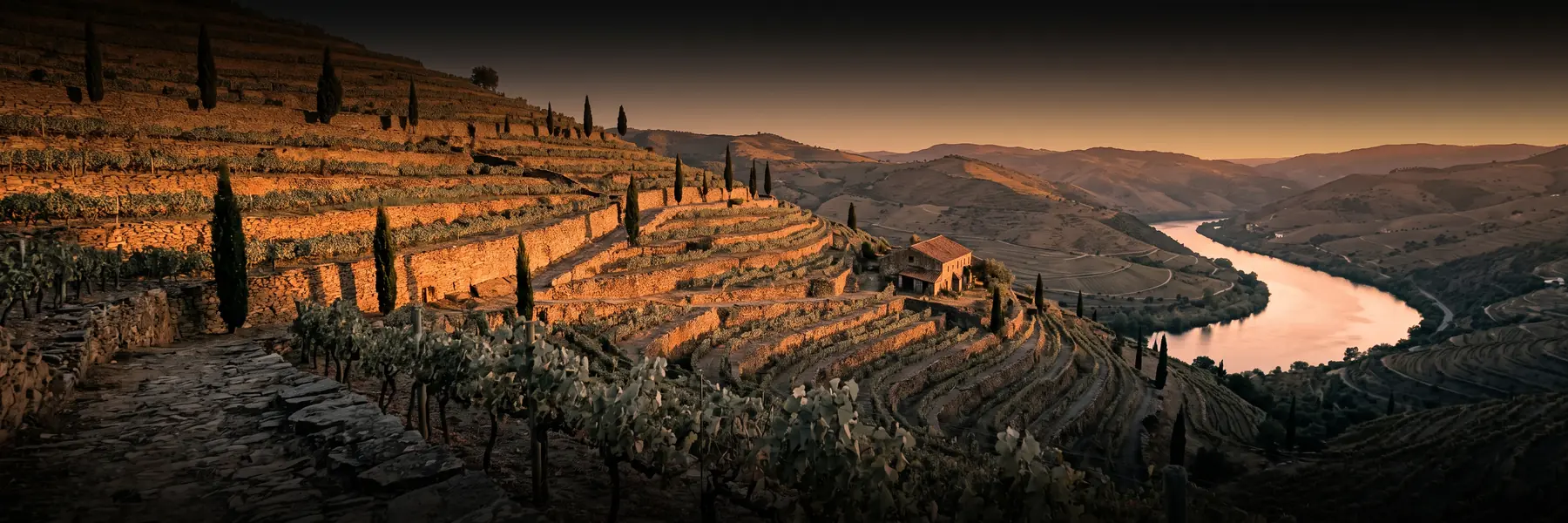
The appellation sits on the right bank of the Loire around the village of Pouilly-sur-Loire, opposite and slightly south of Sancerre. Like its neighbour it has Kimmeridgian marl and limestone, but its distinguishing feature is a higher proportion of silex — flint — in the soils, particularly on the slopes closest to the river.
Flint soils are dark, they warm quickly, and they are strongly associated with the smoky, struck-match character in the wines. Whether that link is causal or correlative is not established — but the tasting association is consistent enough that growers plan around it.
The separate appellation Pouilly-sur-Loire exists for wines made from Chasselas in the same area — a historical curiosity, rarely exported, and a different wine entirely.
Climate
Continental, essentially identical to Sancerre: cold winters, warm summers, spring frost risk, and enough coolness to hold Sauvignon's acidity high.
Producers
- Domaine Didier Dagueneau — the transformative figure. Dagueneau treated Sauvignon Blanc with Burgundian seriousness — very low yields, barrel fermentation, long élevage — and his Silex and Pur Sang cuvées proved the variety could be a great, age-worthy wine rather than a fresh one. He died in 2008; the domaine continues under his son Louis-Benjamin.
- Château de Tracy — historic estate, elegant and precise
- Domaine Michel Redde — reliable across a range of cuvées
- De Ladoucette — the large, widely distributed name; the Baron de L cuvée is the prestige bottling
- Henri Bourgeois — holdings on both banks, so a good way to compare Sancerre and Pouilly-Fumé from one cellar
Style
Grapefruit, lemon, white peach, blackcurrant leaf, and above all a smoky, flinty, almost struck-match quality. Drier and more structured than most Sauvignon Blanc, with high acidity and a mineral, slightly salty finish. Straightforward bottles drink young; serious cuvées from low-yielding vines age for eight to fifteen years, turning honeyed and nutty while keeping their spine.
What Pouilly-Fumé teaches your winemaking
Sancerre teaches restraint. Pouilly-Fumé, thanks to Dagueneau, teaches ambition — how to build a Sauvignon Blanc that is worth keeping.
Concentration comes first
Nothing in the cellar substitutes for low-yielding, concentrated fruit. Dagueneau's whole approach began in the vineyard with severe yield reduction. A dilute Sauvignon Blanc treated to barrel fermentation and long lees ageing does not become serious — it becomes a dilute wine that tastes of wood.
Barrel fermentation changes Sauvignon fundamentally
Fermenting in wood (and, for Dagueneau, in unusual vessels including cigar-shaped barrels) integrates oak, adds texture from lees contact, and shifts the wine from aromatic to structural. Crucially it is fermentation in the barrel, not ageing a finished wine in one — see Chardonnay styles for the technique, which transfers directly.
Long élevage on lees builds ageability
Several months to a year on fine lees develops mannoproteins that give palate weight, protect against oxidation and let the wine survive bottle age. This, more than oak, is what separates an ageing Sauvignon from a fresh one.
But keep the thiols alive
The tension here is real: barrel work and long élevage expose the wine to oxygen, and Sauvignon's thiol aromatics are oxidation-sensitive. Protect the juice hard at the front end — cool picking, quick pressing, adequate SO₂, no copper contact — so there is something left to age. See understanding SO₂.
Decide about MLF deliberately
Producers differ. Blocking MLF preserves the citrus drive; allowing it adds breadth and reduces the sharpness of a very high-acid vintage. Either is defensible. What is not defensible is letting it happen by accident in bottle. See MLF explained.
Sulphur management over a long élevage
A wine spending a year in barrel needs its free SO₂ checked and topped repeatedly — barrel élevage consumes it faster than glass does, and the higher the pH, the less protection a given reading provides. See pH and TA.
For the wider region see the Loire Valley guide; for the appellation across the river, Sancerre; for Chenin Blanc's very different Loire achievement, Vouvray.
Food pairing
Oysters, langoustines, smoked fish, goat's cheese, and — for a mature, barrel-aged bottle — roast chicken or veal. The smoky character makes it one of the better whites for anything grilled or smoked.
Tip: If you want a Sauvignon Blanc that will still be good in five years, the decision that matters most is made before you pick: keep the crop small. Everything Dagueneau did in the cellar only worked because the fruit had the concentration to survive it.