Meursault — Barrel-Fermented Chardonnay and the Premox Lesson
Meursault — Barrel-Fermented Chardonnay and the Premox Lesson
Meursault is the village that taught the world what Chardonnay could be with a barrel and some patience. Hazelnut, toasted almond, butter, honey and a broad, mouth-filling texture over a limestone spine — the whole international idea of "Burgundian Chardonnay" is really an attempt to copy Meursault, usually with far more oak and far less restraint.
It is also the largest white-wine producing village of the Côte d'Or, and, curiously, it has no Grand Cru at all.
Geography
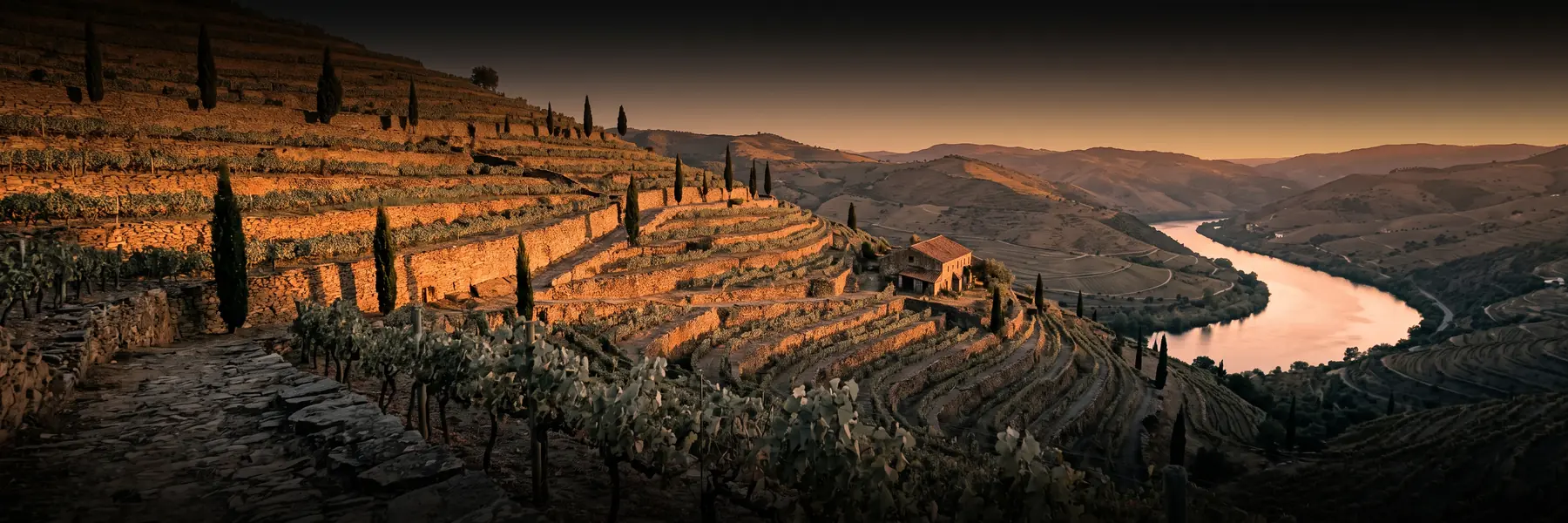
Meursault sits in the southern half of the Côte de Beaune, between Volnay to the north and Puligny-Montrachet to the south. The slope faces east and south-east on limestone — Bathonian and Callovian rock with a clay-rich topsoil that is deeper and heavier here than in Puligny.
That extra clay is the practical explanation for the stylistic difference between the two villages. More clay means more water retention, riper fruit, more body, and a wine that feels rounder and broader. Puligny, on thinner, stonier ground, is tauter and more mineral.
No Grand Cru — but the Premier Crus
Meursault's absence from the Grand Cru list is a historical accident rather than a verdict on quality. The best Premier Crus sit in a band on the mid-slope toward the Puligny boundary:
- Les Perrières — the most celebrated; stony, tense, the closest Meursault comes to Grand Cru weight and mineral drive. Frequently argued to deserve promotion.
- Les Charmes — larger, broader, generous and open
- Les Genevrières — floral and honeyed with real length
- Les Poruzots, Les Bouchères, Les Gouttes d'Or — excellent and less expensive
The village-level land, particularly the plots on the plateau such as the Narvaux and Tillets lieux-dits, produces some remarkably good wine because the growers here are so consistently skilled.
Climate
Continental, with the usual Burgundian risks: spring frost, hail, and rain at harvest. Warmer vintages have pushed Meursault's alcohol up and its acidity down over recent decades, and the best producers have responded by picking earlier and reducing lees stirring.
Domaines
- Domaine Coche-Dury — the cult address; extraordinary, and priced impossibly
- Domaine des Comtes Lafon — historic, wide holdings, benchmark across the range
- Domaine Roulot — precise, tense, the more mineral end of Meursault
- Domaine Arnaud Ente, Domaine Pierre-Yves Colin-Morey, Domaine Antoine Jobard — the modern reference points
- Domaine Michel Bouzereau and Domaine Ballot-Millot — reliable and comparatively accessible
Style
Golden in the glass. Toasted hazelnut and almond, butter, ripe orchard fruit, honey, a hint of smoke, and a mineral, slightly salty finish underneath. Meursault is broad rather than sharp; its acidity carries the wine rather than defining it. Village wines drink well from three to eight years; Perrières and Genevrières can run fifteen or more.
What Meursault teaches your winemaking
Meursault is where you learn texture — the difference between a white wine that has flavour and one that has a shape in your mouth.
Barrel fermentation, not barrel ageing
Fermenting the juice in the barrel is not the same as fermenting in tank and moving it to wood. During fermentation, yeast metabolise and bind oak compounds, so the wood integrates instead of sitting on top. If you have any oak vessel available, ferment in it. If not, a neutral vessel plus a lees regime beats a fresh oak barrel used only for ageing.
Lees are the texture engine
As dead yeast cells break down they release mannoproteins and polysaccharides, which coat the palate and give that creamy weight. Leave the wine on its fine lees for months. Stirring (bâtonnage) accelerates the effect. Our Chardonnay styles guide covers the mechanics.
Malolactic fermentation is part of the style
Unlike white Bordeaux, Meursault goes through MLF. It softens the acid and the diacetyl by-product contributes the buttery note. If your fruit is low in acid to begin with, MLF will make the wine flabby — in which case correct the acid first, or reconsider the style. See MLF explained and pH and TA.
The premox warning — take it seriously
From the mid-1990s, white Burgundy suffered an epidemic of premature oxidation: bottles that should have been at their peak at ten years were brown and sherried at five or six. No single cause was ever proved. The suspects included lower SO₂ additions, more aggressive lees stirring, high-solids musts, changes in cork production, and greater use of new oak.
The practical lessons for your own cellar:
- Do not under-sulphur a barrel-aged white. Free SO₂ has to be maintained through a long élevage, and it disappears faster in barrel than in glass. Measure it, do not guess. See understanding SO₂.
- Bâtonnage consumes oxygen and consumes SO₂. More stirring means more monitoring.
- Oxygen ingress at bottling is cumulative. Purge headspace, fill fully, and use a closure you trust — see closure comparison and bottling guide.
Modern Meursault is picked slightly earlier, stirred less and sulphured more carefully than it was in 1998. That is a real-world quality lesson, learned the expensive way.
For the region's structure see the Burgundy guide; for the leaner neighbour, Puligny-Montrachet; for the unoaked pole of Chardonnay, Chablis.
Food pairing
Lobster, scallops, sole with butter, roast chicken, veal in cream, Comté. Meursault's weight lets it handle butter and cream sauces that would swamp a leaner white.
Tip: Log your free SO₂ every time you touch a barrel-aged white — after each stirring, each racking and each topping-up. Premature oxidation in a home cellar is almost always a slow leak of protection that nobody was measuring.