Chablis — Chardonnay Without Makeup
Chablis — Chardonnay Without Makeup
Chablis is Chardonnay with nothing added. No new oak, no butter, no tropical fruit — just a taut, saline, faintly bitter white that tastes more of the ground it grew on than of the grape. It is the northern outpost of Burgundy, closer to Champagne than to the Côte d'Or, and it is the single most useful region in the world for a winemaker who wants to understand what Chardonnay actually is underneath the winemaking.
Geography and the famous rock
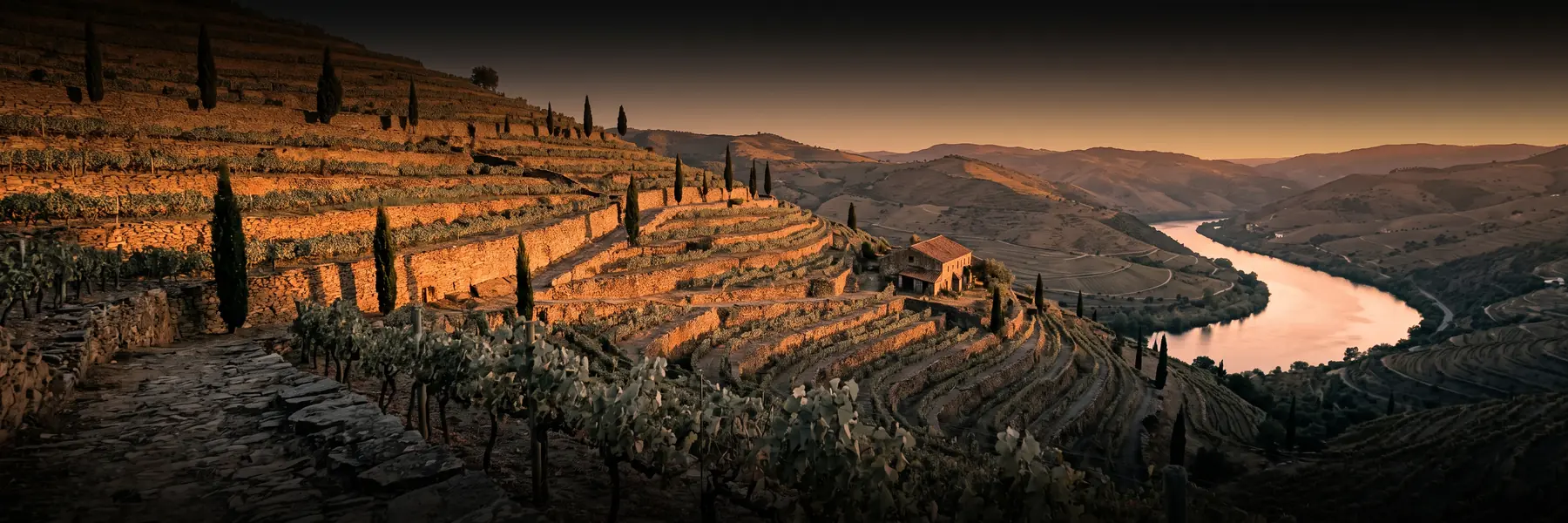
Chablis sits on the Serein river in the Yonne, well north of the rest of Burgundy. The vineyards climb both banks of a shallow valley.
The soil that made the region's name is Kimmeridgian marl — a Jurassic limestone-and-clay formation packed with the fossilised shells of a small oyster, Exogyra virgula. Break a lump of Chablis subsoil and the shells are visible. The best sites, including all the Grand Crus, sit on this formation. The younger Portlandian limestone on the plateaux above tends to be assigned to Petit Chablis, and generally gives lighter, shorter wines.
Whether the oyster shells cause the wine's salinity is a matter of argument — the mechanism is not established, and you should be sceptical of anyone who tells you minerals travel from rock to glass. What is not in doubt is that the correlation between the Kimmeridgian outcrop and the great vineyards is exact.
The four levels
| Level | Character |
|---|---|
| Petit Chablis | Plateau sites, lighter soils; simple, crisp, drink young |
| Chablis | The workhorse appellation; citrus, chalk, clean acid |
| Chablis Premier Cru | Named slopes — Montée de Tonnerre, Fourchaume, Vaillons, Mont de Milieu and others; more depth and length |
| Chablis Grand Cru | A single south-west-facing hillside above the town |
The seven Grand Cru climats are Blanchot, Bougros, Les Clos, Grenouilles, Preuses, Valmur and Vaudésir. They all sit on one contiguous slope on the right bank, directly above Chablis itself. Les Clos is generally considered the most powerful and long-lived. (La Moutonne, sometimes seen on labels, is a privately held parcel straddling Vaudésir and Preuses — a monopole, not an eighth Grand Cru.)
Climate — and frost
Cool continental. This is the northern edge of viable Chardonnay, and the region's defining hazard is spring frost. Budburst in April can be followed by a radiation frost that destroys the crop in a single night. Chablis growers fight it two ways: aspersion, spraying water over the vines so that the latent heat released as it freezes protects the bud inside a shell of ice; and chaufferettes, oil or gas burners between the rows. Both are expensive and neither always works — which is why Chablis vintages vary in volume far more than most French regions.
Producers
- Domaine Raveneau and Domaine Vincent Dauvissat — the two cult addresses; both age in old, neutral barrels
- Domaine William Fèvre — large, high-quality, extensive Grand Cru holdings
- Domaine Louis Michel — the purist stainless-steel reference; no oak at all
- Domaine Christian Moreau, Domaine Billaud-Simon, Domaine Laroche — reliable across the range
- La Chablisienne — a co-operative of unusually high standard, with a large share of the appellation
What Chablis tastes like
Green apple, lemon, wet stone, oyster shell, and in Grand Cru a smoky, almost gunflint edge. The texture is lean and tensile; the finish is dry and slightly saline. With five to fifteen years, good Premier and Grand Cru develop honey, hazelnut and a waxy richness while keeping the acid spine.
What Chablis teaches your winemaking
The most important correction: Chablis does go through malolactic fermentation
There is a widespread belief among home winemakers that Chablis's freshness comes from blocking MLF. It does not. MLF is standard practice in Chablis. The wine is fresh because the fruit arrives with genuinely high tartaric acidity and low pH, not because malic acid was preserved.
This matters practically. If you have low-acid Chardonnay fruit and you try to fake Chablis by blocking MLF, you get a wine with sharp, angular malic acid and no depth, and it is microbiologically unstable in bottle. The right approach is to get the acid in the vineyard — pick earlier, at lower Brix — and then let MLF happen normally. See MLF explained and pH and TA.
Pick early and mean it
Chablis is picked at modest sugar. Chardonnay loses acidity quickly in the final weeks; a week of patience costs you the very thing you are trying to make. Target ripe flavour at the lowest Brix that gives you a stable, complete wine, and check potential alcohol with the calculators as you go. See also harvest timing.
Neutral vessels, not new oak
Louis Michel makes great Chablis in stainless steel; Raveneau makes great Chablis in old barrels. Nobody makes great Chablis in new barrels. If you want to use wood, use old or neutral wood for the oxygen transfer and the texture, not for the flavour. Avoid oak cubes and spirals entirely for this style — they add exactly the vanilla and coconut you are trying to avoid. See barrel ageing basics.
Lees, but not stirring
Chablis typically rests on its fine lees for several months, which builds a subtle texture and protects against oxidation. Aggressive bâtonnage, however, is a Côte de Beaune technique — it builds creaminess that is out of place here. Leave the lees alone and let them work slowly.
Cold stabilise, and expect tartrates
Low-pH, high-acid whites are exactly the wines that throw tartrate crystals in a cold bottle. If you are not going to cold stabilise, at least tell the drinker what the crystals are. See cold stabilisation.
Compare with the richer, oak-fermented style of Meursault, and read our Chardonnay styles guide for the full stylistic spectrum. The Burgundy guide sets out the wider region.
Food pairing
Oysters, above all. Then raw shellfish, ceviche, goat's cheese, smoked salmon, and simply cooked white fish. Grand Cru Chablis with three years on it is one of the very best wines for roast chicken.
Tip: Make two carboys of Chardonnay from the same fruit — one picked a week earlier than the other, both taken through MLF, both in neutral vessels. Nothing demonstrates the primacy of harvest date over cellar technique as brutally as those two wines side by side.