Cornas — Syrah With Nothing Softened
Cornas — Syrah With Nothing Softened
Cornas is the northern Rhône appellation that never learned to charm. No white grapes are permitted, no Viognier softens the aromatics, and the traditional producers do not use new oak. What you get is Syrah, granite, and time — a wine that is close to unapproachable in its first five years and magnificent at twenty.
The name is generally said to come from an old Celtic word for burnt or scorched earth, which is a fair description of the place in August.
Geography
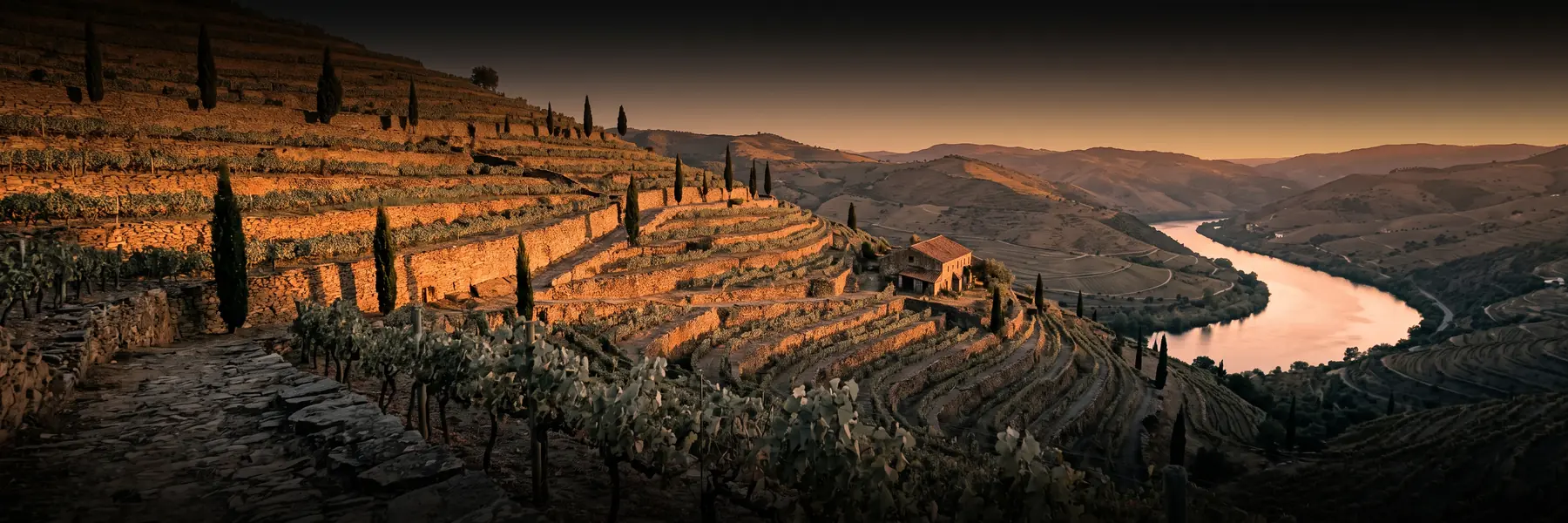
Cornas sits on the right bank of the Rhône, south of Hermitage, in a small natural amphitheatre of steep, terraced granite facing east and south-east. The hills behind shelter it from the north, which means the Mistral touches it less than its neighbours and the amphitheatre traps heat.
That shelter has a real consequence: Cornas is one of the earliest-ripening appellations in the northern Rhône, often picking before Hermitage across the river. Combine early, complete ripening with granite soils and low yields from old vines and you get the appellation's characteristic density.
The vineyard is small — about 150 hectares — and, as at Côte-Rôtie, entirely hand-worked on dry-stone terraces.
The grape
Syrah, 100%. Unlike Hermitage and Côte-Rôtie, Cornas permits no white varieties at all. This is the purest expression of the grape in France.
Climate
Continental but sheltered and hot. The amphitheatre shape and the granite make it warmer than the surrounding appellations. Drought stress in dry years is a growing issue on such shallow, free-draining soils.
Producers
- Domaine Auguste Clape — the reference; wholly traditional, whole-bunch fermentation, no new oak, old vines; wines of extraordinary power and longevity
- Domaine Thierry Allemand — Chaillot and Reynard; more aromatic and slightly more approachable, but no less serious; low-sulphur winemaking
- Domaine Alain Voge — old-vine cuvées, excellent quality
- Domaine Vincent Paris — the newer generation; La Geynale from very old vines
- Domaine Jean-Luc Colombo — the modernising influence of the 1980s, using destemming and new oak; the stylistic counterpoint to Clape
Style
Very dark, almost opaque in youth. Black fruit, black olive, tar, iron, smoked bacon, green peppercorn and a wild, gamey, almost animal note that is Cornas's signature. Tannin is substantial and, when young, austere. There is nothing pretty about a five-year-old Cornas; at fifteen to twenty-five it is one of the great savoury reds of France.
What Cornas teaches your winemaking
Cornas is the appellation for a winemaker who has learned to make clean wine and now wants to make serious wine. Three lessons matter.
Whole-bunch fermentation, done properly
Clape's Cornas is traditionally fermented with a high proportion of whole bunches, and the practice is central to the style. Stems contribute structure, a savoury spice, and a lifted aromatic quality, and whole berries inside the cluster undergo a degree of intracellular fermentation that produces different aromatic compounds than crushed fruit does.
The prerequisite is stem ripeness. Green, sappy stems give you pyrazine-like greenness and harsh, drying tannin. Lignified stems — brown, woody, snapping rather than bending, tasting of tea and spice — give you the Cornas effect. Cornas's early, complete ripening is precisely what makes its stems usable. Read whole cluster fermentation before you try it, and always run a destemmed control lot.
Reduction is a tool and a trap
Syrah is prone to reduction — the development of sulphide off-aromas ranging from struck match through rubber to rotten egg. A little reduction is part of the savoury, mineral character of good northern Rhône Syrah. A lot of it is a fault that gets worse in bottle and does not blow off.
Manage it by giving the wine oxygen at the right moments: a splash rack during élevage, ageing in wood rather than glass, and adequate yeast nutrition during fermentation so the yeast are never scavenging nitrogen from sulphur-containing compounds. Nitrogen-starved ferments are the single most common cause of home-made reduced reds. See racking guide and choosing your yeast.
Traditional means neutral, not oaky
Clape uses large old wooden vessels. Colombo introduced new barriques and destemming, and the appellation argued about it for a decade. Both approaches can make good wine, but they make different wines, and the traditional one is what Cornas is famous for. If your ambition is a savoury, structured, long-lived Syrah, neutral wood serves you better than new oak — see barrel ageing basics.
Have the patience the wine requires
The hardest part of a Cornas-style wine is not making it, it is not judging it too early. A tannic, whole-bunch Syrah at six months tastes bitter, reduced and unfriendly. Take a bottle a year for five years before you decide whether the vintage worked. Bottle enough to make that possible.
For the wider region see the Rhône Valley guide; for the other faces of northern Rhône Syrah, Hermitage and Côte-Rôtie; for tannin technique generally, tannin management.
Food pairing
Game — hare, venison, wild boar — plus grilled red meat, oxtail, and strong washed-rind or blue cheeses. Cornas needs food with real savour; it will overwhelm anything delicate.
Tip: If your Syrah smells of struck match or burnt rubber in the carboy, do not reach for the copper sulphate first. Splash-rack a sample into a jug, swirl it hard, and smell it again after ten minutes. If the aroma clears, the wine needs oxygen, not treatment — and copper would have stripped fruit you did not need to lose.