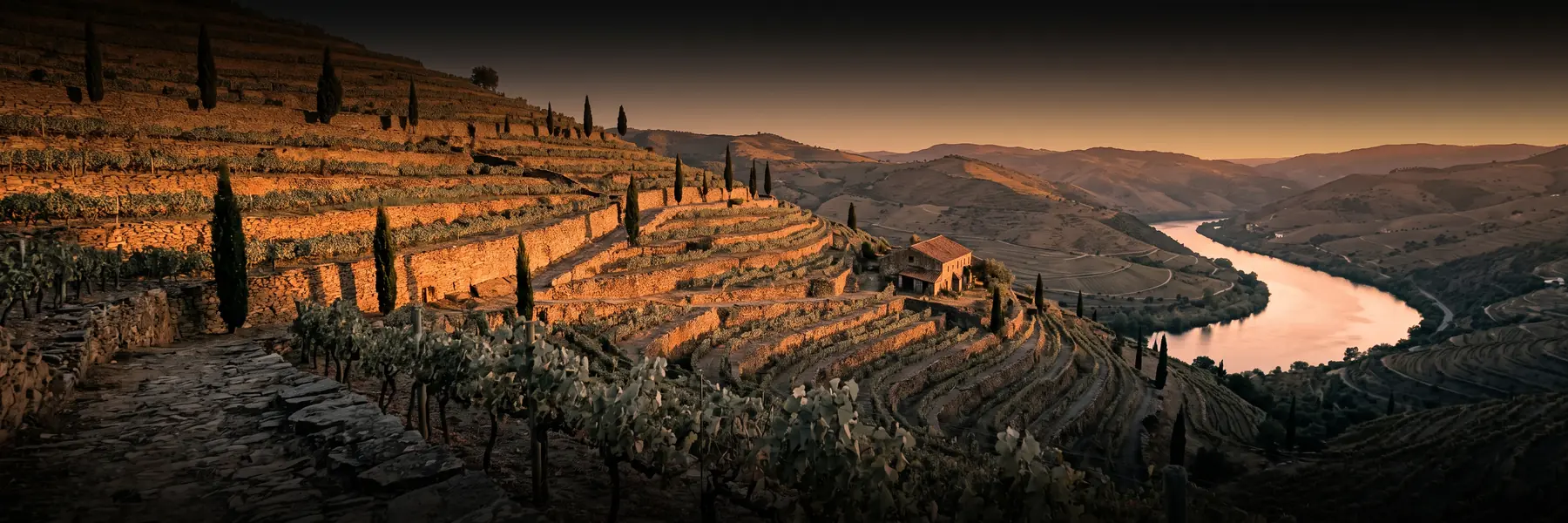
Rhône Valley — Syrah, Grenache, and the Wines of the South
Rhône Valley — Syrah, Grenache, and the Wines of the South
The Rhône Valley runs 200km south from Lyon to Avignon along the eponymous river. It divides neatly into two very different zones: the steep, granite-terraced Northern Rhône where Syrah reigns supreme, and the broad, garrigue-covered Southern Rhône where Grenache leads the way in complex blends.
Geography
Northern Rhône: Narrow river corridor, steep terraced hillsides on granite bedrock. The appellations are small and intensely sited: Côte-Rôtie, Condrieu, Hermitage, Crozes-Hermitage, Saint-Joseph, Cornas.
Southern Rhône: Broad alluvial plains. Galets roulés (large rounded stones) in Châteauneuf-du-Pape retain daytime heat and radiate it at night. Gigondas, Vacqueyras, Rasteau, Beaumes-de-Venise, Luberon, and the large Côtes du Rhône appellation.
Climate
Northern: Continental with Mediterranean influence. Hot summers, cold winters. Mistral wind desiccates grapes and reduces disease pressure but can be damaging.
Southern: Full Mediterranean. Hot, dry, relentless sun. The Mistral dominates. Irrigation sometimes permitted but traditionally avoided.
Key Grapes
Northern Rhône
| Grape | Type | Character |
|---|---|---|
| Syrah | Red | Olive tapenade, smoked meat, violets, black pepper, iron |
| Viognier | White | Apricot, peach blossom, white flowers (co-fermented with Syrah in Côte-Rôtie) |
| Marsanne | White | Rich, full-bodied, waxy, golden; ages magnificently |
| Roussanne | White | Floral, herbal, complex; often blended with Marsanne |
Southern Rhône
| Grape | Type | Character |
|---|---|---|
| Grenache | Red | Backbone of the South; red fruit, garrigue, spice, high alcohol |
| Mourvèdre | Red | Dark, tannic, gamey; adds backbone to blends |
| Syrah | Red | Colour, structure, spice |
| Cinsault | Red | Lightness, freshness, rosé production |
| Clairette | White | Aromatic, fresh |
| Grenache Blanc | White | Full-bodied, spicy |
Key Appellations
Northern Rhône:
- Côte-Rôtie — "Roasted slope." Some Viognier co-fermented (up to 20%) with Syrah. Perfumed, iron-rich, legendary.
- Condrieu — 100% Viognier. One of the world's great aromatic whites.
- Hermitage — the pinnacle of Northern Rhône Syrah. Single hill, granite. Long-lived, complex.
- Crozes-Hermitage — surrounds Hermitage; more accessible prices, variable quality.
- Saint-Joseph — stretches along the west bank; excellent value Syrah and Marsanne.
- Cornas — 100% Syrah on granite. Dark, austere, powerful. Needs time.
Southern Rhône:
- Châteauneuf-du-Pape — 13 traditional grape varieties (18 under the current AOC rules, once the noir/blanc/gris colour variants are counted separately). Grenache-dominant in practice. Powerful, complex.
- Gigondas — Grenache/Mourvèdre. Excellent value relative to Châteauneuf.
- Vacqueyras — similar to Gigondas, often more rustic and earthy.
- Rasteau & Beaumes-de-Venise — also produce fortified VDNs: Grenache-based in Rasteau, and the famous Muscat de Beaumes-de-Venise from Muscat Blanc à Petits Grains.
Famous Producers
- E. Guigal — the name of the Northern Rhône. "La La" wines (La Mouline, La Landonne, La Turque) from single-vineyard Côte-Rôtie. Extraordinary concentration and longevity.
- Paul Jaboulet Aîné — benchmark Hermitage "La Chapelle."
- Jean-Louis Chave — family estate; one of the finest Hermitage producers.
- Château Rayas — reclusive estate producing some of Châteauneuf's most sought-after wines from 100% old-vine Grenache.
- Michel Chapoutier — biodynamic pioneer; excellent across Northern and Southern Rhône.
- Château Beaucastel — respected Châteauneuf famously growing all 13 traditional varieties including significant Mourvèdre.
Wine Styles
Northern Rhône Syrah: Savoury, complex, iron-rich. Black olive tapenade, smoked meat, violets, cracked black pepper. Always requires food. Ages 15–30 years at the top level.
Southern Rhône GSM blend: Generous, sun-drenched. Kirsch, garrigue, herbs, spice, black cherry. More approachable younger than Northern Rhône Syrah.
Viognier (Condrieu): Opulent aromatics — apricot, white peach, acacia flowers. Drink young (2–5 years).
Hermitage Blanc: Rich, waxy Marsanne. Nutty and honeyed with age. Can live 20–30 years.
Making Rhône-Style Wine
Northern Rhône Syrah
- Target 23–26°Bx at harvest. Syrah is capable of impressive structure even without extreme ripeness.
- Yeast: Syrah clone or CLOS for varietal character; D80 for dark fruit and tannin.
- Include 5–20% whole clusters for peppery character and structural lift.
- Ferment at 28–32°C for full extraction (Syrah handles high temperatures well).
- Consider small additions of Viognier must (3–5%) co-fermented for aromatic complexity.
- Oak: French, medium toast, 12–18 months. Some producers use older demi-muids (600L).
Southern Rhône Blend (GSM)
- Ferment Grenache, Mourvèdre, and Syrah separately, then blend after MLF.
- Grenache: ferment at 28–30°C, moderate extraction. Mourvèdre: needs very warm fermentation.
- Blend: 60–70% Grenache, 15–25% Syrah, 10–20% Mourvèdre as a starting point.
- Oak: used with restraint in Grenache to preserve fruit; Mourvèdre benefits from more.
Food Pairing
Côte-Rôtie: grilled lamb chops, venison, tapenade.
Châteauneuf-du-Pape: wild boar, cassoulet, truffle dishes.
Condrieu: pan-seared foie gras, peach and gorgonzola salad.
Hermitage Blanc: lobster bisque, cream sauces.
Tip: When making Grenache, avoid over-extraction. Grenache has a light skin and can turn astringent and bitter if over-pumped or over-punched. Gentle extraction preserves its hallmark silky generosity.