Condrieu — Viognier's Only Great Home
Condrieu — Viognier's Only Great Home
Condrieu is small enough that you could walk its entire vineyard in an afternoon, and for a while in the middle of the twentieth century it very nearly ceased to exist. By the 1960s the appellation was down to a handful of hectares — the terraces were unfarmable by machine, the vines were low-yielding, and there was no market. Viognier, a variety grown almost nowhere else, came within a generation of disappearing altogether.
It survived, revived, and is now one of the most sought-after white wines in France.
Geography
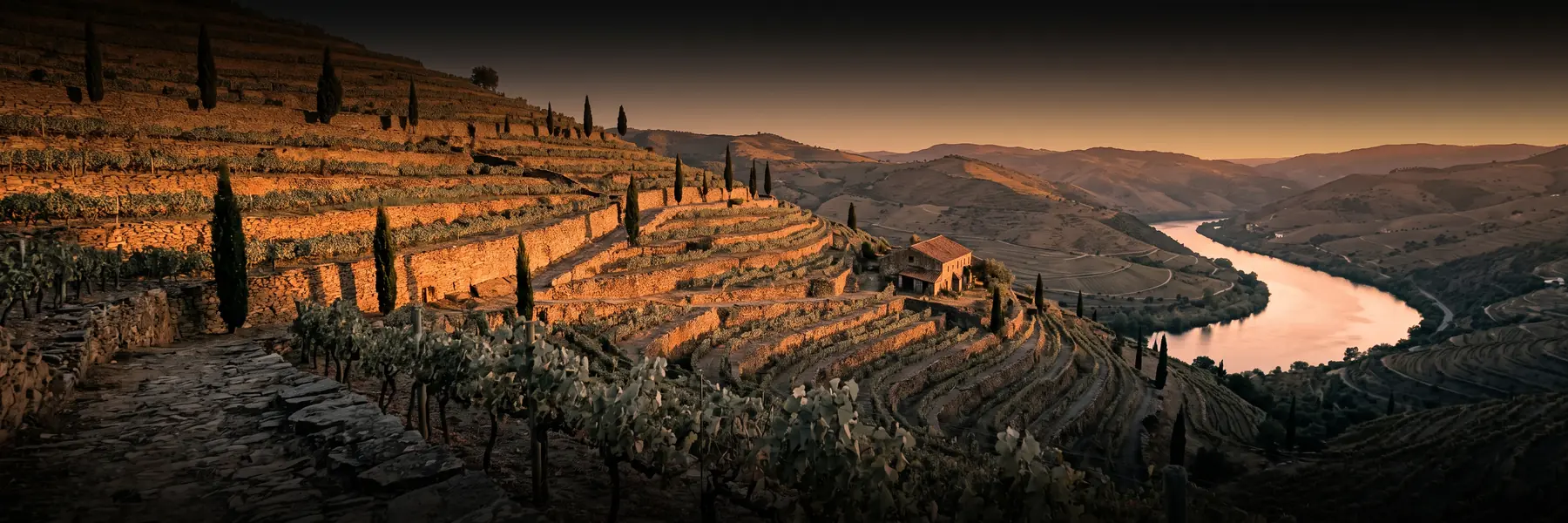
Condrieu sits on the right bank of the Rhône just south of Côte-Rôtie, on the same band of steep granite. The soil is a distinctive decomposed granite the locals call arzelle — a pale, friable, mica-rich sand that drains instantly and holds almost no water.
The terraces are as steep as their neighbours' and equally hand-worked. Because the granite sand is so loose, erosion is a permanent problem and the walls need constant maintenance. It is genuinely marginal agriculture, sustained only by the price the wine now commands.
The grape — and only one
Viognier, exclusively. Condrieu is the reference point for the variety, and the neighbouring appellation of Château-Grillet — a single walled estate, one of the very few AOCs covering one property — makes the same wine in even smaller quantity.
Viognier is a difficult grape. It sets fruit poorly, yields little, and its aromatics only develop in the last stretch of ripening — at which point its acidity has already fallen away. Pick early and you get a neutral, dull wine; pick late and you get perfume, but with high alcohol, low acid and a risk of bitterness.
Climate
Continental, with south and south-east-facing granite terraces amplifying the heat. The Mistral blows here. Vintage variation is significant, and in cool years Viognier fails to develop the aromatics that justify its existence.
Producers
- Domaine Georges Vernay — the family credited above all others with saving the appellation; the Coteau de Vernon cuvée is the benchmark
- E. Guigal — La Doriane, a richer, barrel-influenced style
- Yves Cuilleron and François Villard — leading modern producers, both with a range of cuvées
- André Perret, Domaine Niero — excellent and less hunted
Style
Explosively aromatic: apricot, white peach, honeysuckle, violet, May blossom, sometimes a musky, almost tropical top note. The palate is broad, low in acid, faintly oily in texture, and dry — though the perfume is so sweet-smelling that people often assume otherwise. There is usually a gentle bitterness on the finish, which is characteristic rather than a fault.
Most Condrieu is drunk young, within three to seven years, because the primary aromatics are the point. A few structured examples age longer, and a small quantity of sweet, late-harvest Condrieu is made in suitable years.
What Condrieu teaches your winemaking
Condrieu is the best case study available for the problem of an aromatic variety that loses acid before it gains perfume.
Accept the trade-off and pick for aroma
There is no picking date that gives you both Condrieu's perfume and Chablis's acidity. The Condrieu answer is to pick for aromatic ripeness and then manage the consequences: higher alcohol, a low-acid wine, and a style built on texture rather than tension. Trying to split the difference gives you a wine that is neither. Track the numbers with the calculators and use harvest timing for sampling technique.
A low-acid white is a microbiological risk
Higher pH means less of your free SO₂ exists in the effective molecular form, so the same reading protects the wine less well. Measure pH, not just free SO₂, and adjust your target accordingly — our understanding SO₂ guide sets out the relationship, and pH and TA covers the measurement.
Think hard before acidifying
A tartaric addition will raise the wine's TA, but it can also make Viognier taste disjointed — a hard acid edge under a soft, perfumed body. If you do acidify, do it before fermentation, in small increments, and taste rather than calculate your way to the answer.
Malolactic fermentation is usually done here
In a variety with this little acid, MLF's softening effect is not a problem — it rounds the wine and, more importantly, removes malic acid as a food source so the wine is stable in bottle. In a low-acid white, an unwanted MLF after bottling is a real hazard. Either complete it deliberately or block it decisively. See MLF explained.
Bitterness comes from phenolics — press gently
Viognier's skins are phenolic, and hard pressing or extended skin contact will bring out an astringent bitterness that a low-acid wine cannot balance. Whole-bunch press if you can, keep the free-run separate, and taste each press fraction before blending.
Oak sparingly, if at all
The finest Condrieu is often made in a mix of stainless and used barrels, or in barrel with no new wood. Viognier's apricot perfume and oak vanillin combine into something cloying very quickly. If you use wood, use it for texture and oxygen, not flavour. See barrel ageing basics.
Drink it young and say so
If you make an aromatic white in this style, be honest on the label or the tasting note about when to drink it. There is no shame in a wine designed for three years — see our wine QR codes guide if you want to put drinking-window advice where the drinker will actually see it.
For the wider region see the Rhône Valley guide; for Viognier's other role, co-fermented with Syrah, see Côte-Rôtie.
Food pairing
Apricot-glazed poultry, scallops, lobster, mildly spiced Asian dishes, foie gras (particularly with a late-harvest bottle), and soft goat's cheese. Condrieu is one of the few dry whites that copes with sweet-savoury cooking.
Tip: If you have Viognier and only one small batch of it, spend your effort on the press rather than on oak. The difference between a gently pressed and a hard-pressed Viognier is much larger than the difference between oaked and unoaked, and it is the bitterness — not the wood — that most often spoils a home-made one.