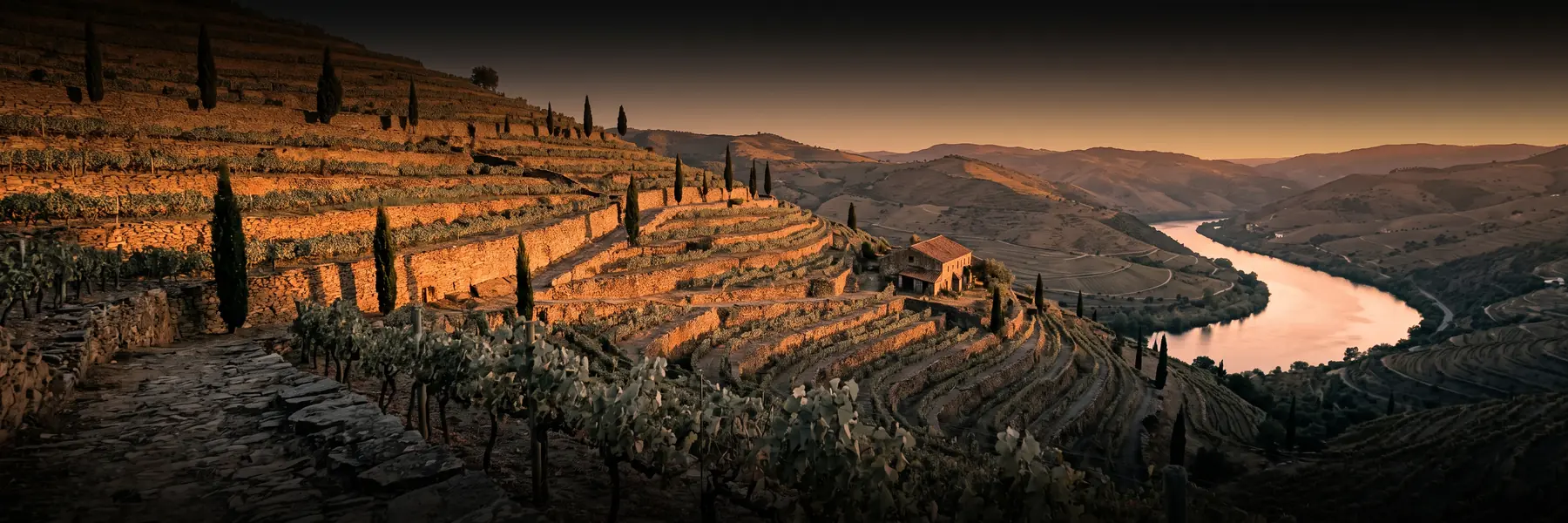
Bierzo — Mencía, Slate, and Spain's Most Elegant Red
Bierzo — Mencía, Slate, and Spain's Most Elegant Red
In 1999 Álvaro Palacios, having already made Priorat's most famous wine, went looking for something completely different and found it in a forgotten basin in north-western León. Bierzo had old Mencía vines on steep slate slopes, no reputation, and no one making serious wine from them. Within a decade it had become the reference for a strand of Spanish red wine that nobody had previously thought possible: light-footed, perfumed, mineral, and built on freshness rather than extraction.
Geography
Bierzo occupies a natural amphitheatre in the far west of Castilla y León, ringed by mountains, on the pilgrim road to Santiago. The distinction that matters is between two kinds of ground:
- The valley floor — deep, fertile alluvial clay; high-yielding; the source of most bulk Mencía
- The surrounding slopes — thin, stony, slate and schist soils on gradients that must be worked by hand; old, low-yielding, often ungrafted bush vines; the source of everything worth talking about
The village of Corullón, on the south-western slopes, is the region's most celebrated, and its named parcels — Las Lamas, Moncerbal, La Faraona, San Martín — are effectively Spanish crus.
Climate
Bierzo is a genuine transition zone between Atlantic Galicia and continental Castilla. It sits lower than the plateau to the east, sheltered by mountains on all sides, so it is milder and wetter than Castilla but drier and warmer than Galicia. Long, mild autumns allow slow ripening without heat spikes — which is why the wines keep their acidity and their aromatics.
Key Grapes
| Grape | Colour | Character |
|---|---|---|
| Mencía | Red | Violet, red cherry, pomegranate, graphite, black pepper; moderate colour and tannin; good acidity; strong site expression |
| Godello | White | Bierzo's serious white: citrus, pear, stone, with good body and real ageing potential |
| Doña Blanca | White | Local, lighter, often blended |
| Palomino | White | Historic plantings, in decline |
Mencía was long assumed to be related to Cabernet Franc, which it is not. It is, however, the same variety as Portugal's Jaen, grown in Dão.
The Village Hierarchy
Bierzo has adopted a Burgundian-style pyramid — regional wine, then village wine (Vino de Villa), then single-parcel wine (Vino de Paraje / Vino de Parcela), with the tighter categories carrying lower yield limits and hand harvesting. This is unusual in Spain, where classification has historically been based on ageing time (as in Rioja) rather than on origin. It is a deliberate statement that in Bierzo the site, not the cellar regime, is the point.
Wine Styles
Village and single-parcel Mencía: medium ruby, rarely dark. Violet and crushed red fruit on the nose, with a graphite-mineral undertone that is unmistakable once you have met it. On the palate: medium body, fine-grained tannin, firm acidity, and a long stony finish. Best examples drink well for ten to fifteen years.
Valley-floor Mencía: juicier, softer, simpler; good value; drink young.
Godello: increasingly the region's second calling card. Fuller than Albariño, less overtly aromatic, with a mineral seriousness that takes lees and oak well.
Producers
- Descendientes de J. Palacios — Álvaro Palacios and his nephew Ricardo Pérez; Pétalos as the entry, then Villa de Corullón and the single parcels
- Raúl Pérez — restless, brilliant, and responsible for much of the region's modern thinking; Ultreia
- Pittacum — dependable old-vine Mencía
- Castro Ventosa — the Pérez family's home estate; sandy-soil old vines
- Mengoba, Verónica Ortega — the strong younger generation
What Bierzo Teaches: Making an Elegant Red
Most beginners' reds fail by being over-worked. Bierzo is the corrective, and Mencía punishes heavy-handedness quickly.
Whole-cluster, or partial whole-cluster. Mencía's aromatics respond well to stem inclusion when the stems are genuinely ripe and lignified — it adds lift, structure and a savoury edge. Green stems add bitterness. Read whole cluster fermentation before committing a whole batch.
Cool, short maceration. A cold soak of a day or two then a moderate fermentation in the low-to-mid 20s °C, with gentle cap management, is enough. You are aiming for perfume and texture, not colour saturation. See fermentation temperature and punch-down vs pump-over — for a variety like this, gentle infusion beats vigorous extraction.
Do not chase colour. Mencía is naturally medium-bodied and medium-coloured. A pale, perfumed, structured red is a legitimate wine; a dark, extracted one made from thin-skinned fruit is just a tired one. See tannin management.
Neutral oak. Large format, used barrels, or concrete. Bierzo's best wines are oaked in a way you cannot taste. New small-barrel oak buries the graphite note that is the whole reason to make the wine. See barrel ageing basics.
Protect the acidity. Mencía's freshness is its defining quality. Complete MLF, then keep the wine cool and topped up and get the free SO₂ right — see MLF explained and understanding SO₂. Check your numbers with the calculators.
Food Pairing
Bierzo's medium weight and high acidity make it one of Spain's most flexible reds: botillo and cured pork, roast chicken, mushrooms, lentil stews, grilled tuna, and — unusually for a Spanish red — genuinely good with oily fish. Serve at 15–16 °C, slightly cool.
Tip: If you grow a thin-skinned red and your wines keep coming out hard, try making one batch as an infusion: destem into the fermenter, no cold soak, no punch-downs at all beyond wetting the cap once a day, press at dryness. Many winemakers are startled by how much better it tastes.