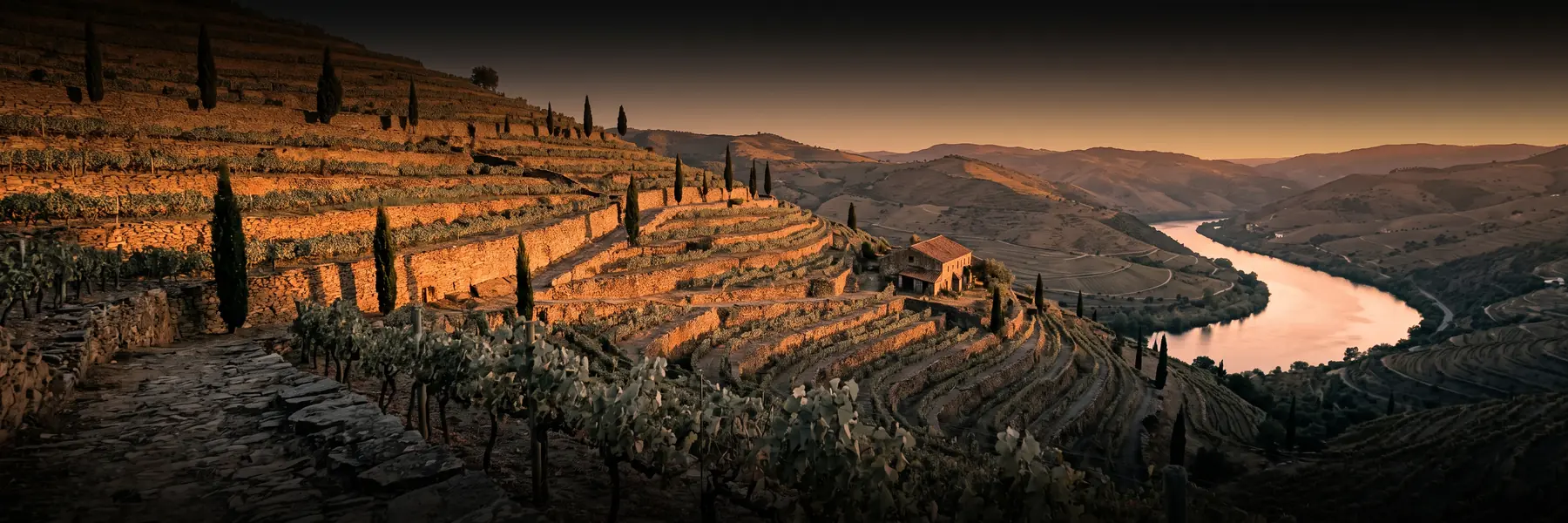
Rías Baixas — Albariño and Atlantic Spain
Rías Baixas — Albariño and Atlantic Spain
Galicia does not look or behave like the rest of Spain. It rains — well over a metre a year in the vineyard belt — the hills are green, the language is closer to Portuguese, and the wine that comes out is a taut, saline, high-acid white that has almost nothing in common with the country's warm-climate reputation. Rías Baixas is the appellation, Albariño is the grape, and together they are the benchmark for Atlantic white wine in Iberia.
Geography
The rías baixas are the drowned river valleys of the south-western Galician coast — long sea inlets that push maritime air far inland. Five sub-zones:
- Val do Salnés — the coolest, wettest and most coastal; the historic heart of Albariño; the most saline and highest-acid wines
- O Rosal — on the Miño river facing Portugal; slightly warmer; often blended with Loureiro and Treixadura
- Condado do Tea — furthest inland up the Miño; warmest and driest; riper, fuller wines
- Soutomaior — tiny, granite-dominated
- Ribeira do Ulla — the most northerly and newest
Soils are overwhelmingly granitic — sandy, acidic, free-draining decomposed granite. Combined with the rainfall, that gives you vigour without waterlogging.
Climate
Oceanic. Mild, humid, wet. Rainfall is concentrated in autumn and winter but summer humidity remains high, and that humidity is the region's central viticultural problem: downy and powdery mildew, and botrytis on ripe bunches. Everything about Galician vine training is a response to it.
The classic solution is the parra or pergola — vines trained high overhead on granite posts, historically over 2 m up, so that air moves freely under and through the canopy and the fruit sits well clear of damp ground. Modern plantings increasingly use vertical trellising with aggressive leaf removal, but the logic is identical: airflow beats fungicide.
Albariño
| Trait | Consequence for the winemaker |
|---|---|
| Thick skins | Good rot resistance in a wet climate; also meaningful phenolic content, so press gently |
| High natural acidity, malic-dominant | Crispness comes free; MLF is usually avoided |
| Moderate sugar accumulation | Alcohol typically 12–13%; the wine stays light on its feet |
| Aromatics: white peach, apricot, grapefruit, citrus zest, sometimes a faint saline or bitter-almond note | Preserve them with cool handling |
| Naturally low pH | SO₂ works well; microbial risk is low |
Albariño is genetically distinct from, though often confused with, Riesling — there is no relationship. It is the same variety as Portugal's Alvarinho, grown just across the Miño in Vinho Verde.
Wine Styles
Classic Rías Baixas Albariño: stainless steel, cool fermentation, bottled young. Pale with a green tinge; citrus, stone fruit, a distinctly saline finish; high acidity; medium body. Widely — and wrongly — treated as a wine to drink in its first year.
Lees-aged Albariño: the more serious modern style. Extended contact with fine lees, sometimes with bâtonnage, occasionally a fraction in large neutral oak or concrete. Adds breadth, a creamy texture and a nutty depth without touching the acid. These wines age genuinely well — five to ten years is not unusual, and they develop a waxy, honeyed complexity.
Blends: in O Rosal and Condado do Tea, Albariño with Loureiro, Treixadura and Caíño Blanco. Underrated.
Producers
- Pazo de Señorans — the benchmark; the Selección de Añada is aged for years before release and settles the question of whether Albariño can age
- Do Ferreiro — Val do Salnés; the Cepas Vellas comes from very old ungrafted vines
- Zárate — old-vine, site-focused, low intervention
- Bodegas Terras Gauda — O Rosal; excellent blends
- Martín Códax — the large cooperative-scale reference; consistent and widely available
Making an Atlantic-Style White
Fruit condition first. In a humid climate, sorting matters more than any cellar technique. Botrytis-affected white fruit brings laccase into the must, which will brown the wine and cannot be fully controlled by SO₂. Discard it.
Press gently, split fractions. Albariño's thick skins carry phenolics that turn bitter under pressure. Take the free run and the light press separately from the hard press, and blend afterwards by taste. Whole-bunch pressing is ideal if you can manage it.
Cool, clean fermentation. 13–16 °C in stainless or glass, with a strain chosen for aromatic preservation. See fermentation temperature and choosing your yeast.
No MLF. Malic acid is the wine's spine. Block it deliberately with SO₂ and cool storage rather than assuming it will not happen — see MLF explained for when the exception is worth making.
Use the lees. This is the single highest-value technique available to a small producer working with a high-acid white. Keep the wine on its fine lees for three to six months, stir occasionally, and taste as you go. You are adding mid-palate weight and a subtle savoury complexity for the price of not racking. Read racking for how to separate fine lees from the gross lees you do want gone.
Cold stabilise, then bottle under screwcap or good cork. High-acid, high-potassium whites deposit tartrates readily; see cold stabilisation and closure comparison.
Run any acid or SO₂ adjustment through the calculators rather than estimating.
Food Pairing
The obvious answer is the right one: Galician seafood. Percebes, razor clams, octopus with paprika (pulpo á feira), grilled sardines, scallops. It also handles fried food and fresh goat's cheese well. Serve at 10–12 °C, not colder — over-chilling closes down the aromatics that you paid for.
Tip: If your Albariño (or any crisp white) tastes correct but thin, do not reach for acid or sugar. Give it four months on fine lees and taste again. Texture, not flavour, is what most home-made whites are missing.