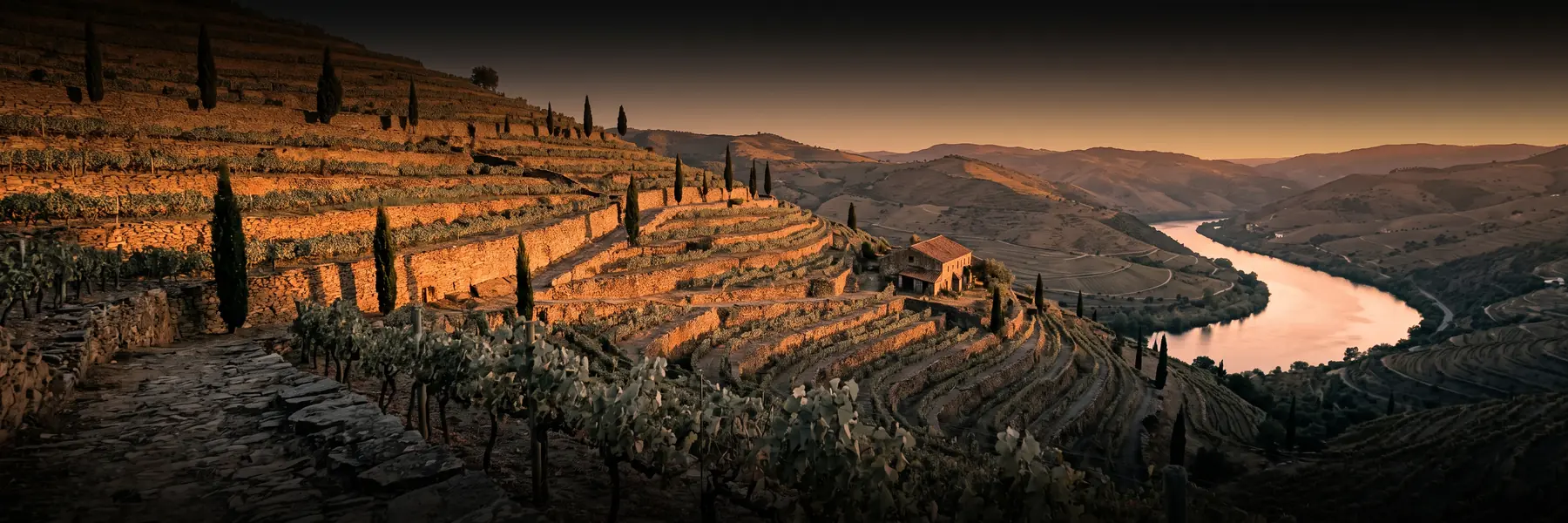
Valle de Guadalupe — Baja California, Water, and Mexico's Wine Boom
Valle de Guadalupe — Baja California, Water, and Mexico's Wine Boom
Mexico has the longest continuous winemaking history in the Americas — Spanish colonists planted vines in the sixteenth century, and Casa Madero in Coahuila claims a founding date in the 1590s that would make it the oldest winery on the continent. But Mexican fine wine as a commercial proposition is recent, and it is concentrated in one place: the Valle de Guadalupe, inland from Ensenada in Baja California, a short drive south of the US border.
What has happened there over the past three decades is as much a hospitality story as a wine story, and both halves are instructive.
The Site
The valley lies a modest distance inland from the Pacific, with the ocean's influence arriving through gaps in the coastal hills. The climate is Mediterranean and semi-arid: hot, cloudless, rainless summers, cool wet winters, and — critically — morning marine fog and an afternoon sea breeze that pull the temperature down from what the latitude would otherwise deliver.
Soils are varied: granitic and sandy in places, alluvial and clay-loam on the valley floor, mostly free-draining and low in fertility. The comparison people reach for is Napa or the Rhône, and on heat and sunshine it is fair. What is different is water.
Water Is the Constraint
The Valle de Guadalupe's fundamental limitation is not climate or soil — it is water, and it is worth being direct about it because it is the single biggest question hanging over the region's future.
Rainfall is far too low for dry-farming most varieties, so vineyards depend on groundwater. The aquifer has been drawn down by decades of agricultural and municipal demand, and as levels fall, salinity in the remaining water rises. Saline irrigation water is a serious viticultural problem:
- Sodium and chloride accumulate in the soil, damaging structure and reducing the vine's ability to take up water
- Vines show salt stress — leaf margin burn, reduced vigour, lower yields
- Wines can carry a salty or bitter finish at high enough exposure
The tools are leaching irrigation with better water where available, gypsum and soil amendment, salt-tolerant rootstocks, drip rather than flood irrigation, and above all reducing total water use.
The general lesson: if you irrigate, test your water, not just your soil. Electrical conductivity, sodium, chloride and boron are the numbers that matter, and they change over years as an aquifer is drawn down. Many growers discover a salinity problem only when the vines tell them — by which point the soil has already changed.
The Wines
Valle de Guadalupe reds are ripe, warm-climate wines: full-bodied, dark-fruited, generous, often high in alcohol, frequently with a dusty, herbal, slightly saline character that regulars identify as regional.
Blending is the norm. Field blends and unconventional multi-variety cuvées are common — partly tradition, partly mixed old plantings, and partly because the valley's producers have never been constrained by appellation rules dictating varietal composition. It is one of the more creatively free wine regions anywhere.
Nebbiolo deserves special mention. It rarely succeeds outside Piedmont, and Baja is one of the few places where it produces something genuinely worthwhile — riper and softer than Barolo, but with recognisable structure and tar-and-dried-cherry character.
Also planted: Cabernet Sauvignon, Merlot, Tempranillo, Grenache, Syrah, Mourvèdre, Zinfandel, Barbera, Sangiovese, and the historic Misión (the mission grape, Listán Prieto). Whites include Chardonnay, Chenin Blanc, Viognier, Sauvignon Blanc and Palomino.
Producers
- Monte Xanic — founded in the late 1980s, generally credited with launching modern Mexican fine wine
- Casa de Piedra — Hugo D'Acosta's estate; D'Acosta also founded a winemaking school in the valley that has trained a large share of its small producers
- L.A. Cetto — the largest producer, and the one most widely available internationally; its Nebbiolo is the best-known Mexican bottling abroad
- Adobe Guadalupe, Vena Cava, Bruma, Lechuza, Villa Montefiori — part of the wave of small estates that define the valley's current character
The Business Lesson: Selling at the Cellar Door
The Valle de Guadalupe's growth was not driven by export. It was driven by tourism from San Diego, Tijuana and Mexico City — restaurants, tasting rooms, hotels and the open-air campestre dining that the valley has become famous for. Many producers sell most of what they make on site, at full retail price, to people who drove there.
For a small winery anywhere, that model is worth studying. Cellar-door sales capture the distributor and retailer margin, so a small producer can be viable at volumes that would be hopeless through a three-tier chain — and the visitor experience becomes the primary sales channel rather than marketing spend.
Making Wine in a Hot, Dry Climate
Picking
- Flavour arrives before you expect it and sugar keeps climbing. Sample often in the last fortnight; a heat spike can add two Brix in three days.
- 24.5–26.5 °Bx, pH 3.5–3.7, TA 5.5–6.5 g/L is a realistic target. Run your numbers through the ABV calculator before you commit — 27 °Bx means a wine near 16%.
- Pick at night or dawn. Fruit arriving at 30 °C ferments hot and fast and loses aromatics.
Acid
Warm-climate musts frequently arrive at pH 3.8 or above. Acidify pre-ferment with tartaric — high-pH reds hold colour poorly, are harder to protect with SO₂ and are far more prone to spoilage. Use the acid adjustment calculator and read pH and TA.
Fermentation
- Keep the ferment under control: 24–28 °C. Hot ferments raise volatile acidity and strip aroma. See fermentation temperature and volatile acidity.
- Very ripe fruit is often nitrogen-poor relative to its sugar. Stage nutrients using the YAN / nutrients calculator — a 26 °Bx must with low YAN is the classic stuck fermentation.
- Gentle extraction: thick-skinned, sun-exposed fruit needs less cap work, not more.
Blending
The valley's habit of blending across varieties is a genuinely useful practice for warm-climate producers. An earlier-picked, higher-acid parcel used as a freshening component does more for balance than any cellar additive. See blending theory.
Food Pairing
Valle de Guadalupe reds: grilled ribeye, birria, carnitas, mole, lamb barbacoa, aged Chihuahua or Cotija. Baja whites: fish tacos, Ensenada oysters, ceviche, grilled octopus.
Tip: If your fruit routinely arrives at 26 °Bx and pH 3.8, the fix is a vineyard decision more than a cellar one: more shade in the fruit zone, deficit irrigation timed to the right growth stage, and picking a portion of the block earlier for blending. Chasing balance with acid additions and alcohol removal after the fact is expensive and never quite works.