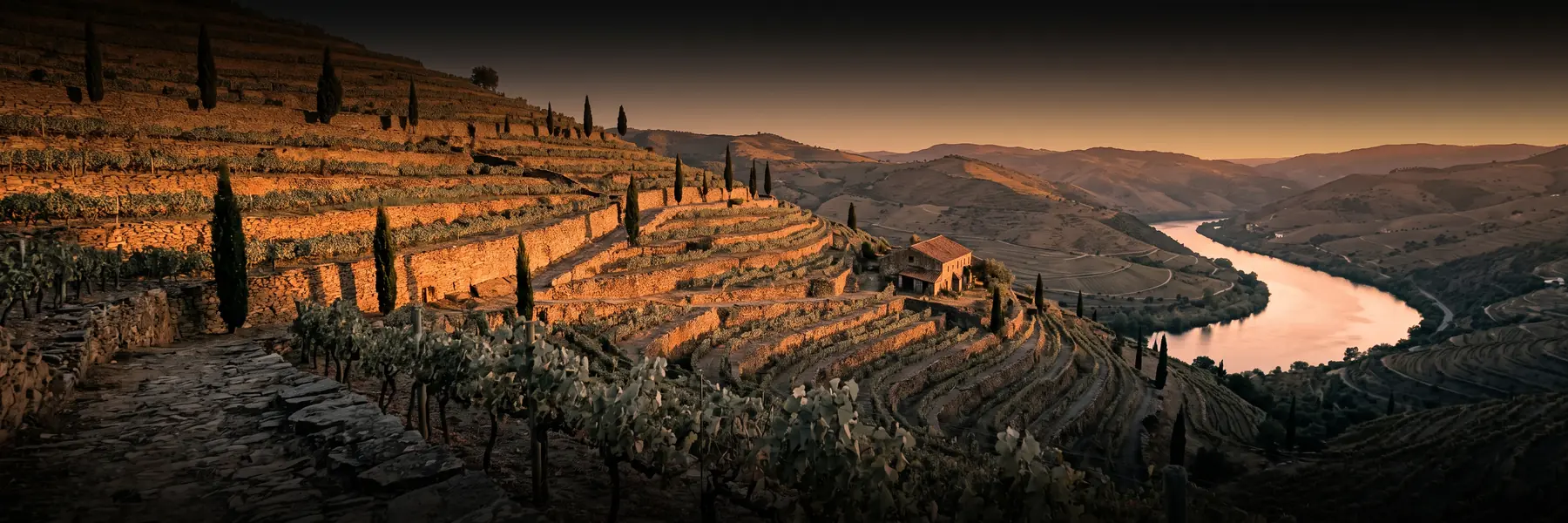
Oakville AVA — To Kalon, the Benchlands, and Napa's Golden Mile
Oakville AVA — To Kalon, the Benchlands, and Napa's Golden Mile
If you drew a shortlist of the most valuable farmland on earth by the value of what comes off it, a two-kilometre-wide slice of the Napa Valley floor around the hamlet of Oakville would be near the top. Opus One, Screaming Eagle, Harlan Estate and Robert Mondavi's flagship wines all come from here. It is the appellation that made Napa Cabernet Sauvignon a luxury good rather than an agricultural product.
Why Oakville Works
Oakville sits in the middle of the valley — far enough north that the cold marine air pushing up from San Pablo Bay has weakened, far enough south that it still arrives. The result is a warm site with a reliable evening cool-down: enough heat to ripen Cabernet Sauvignon fully, enough night-time relief to keep tannins fine and acids from collapsing entirely.
Within the appellation, the side of the valley you are on matters:
- The western benchlands — gravelly, well-drained alluvial soils on fans washed out of the Mayacamas. Low water-holding capacity, moderate vigour, and the classic source of Oakville's most structured, perfumed Cabernet. To Kalon, first planted in the nineteenth century and now divided between several owners, sits here.
- The valley centre and eastern side — heavier, more clay-rich and more fertile, generally producing rounder, plusher, fruit-forward wines. The eastern hillsides above the floor return to volcanic soils and give firmer, denser wines again.
The Style
Oakville Cabernet at its best combines power with lift: cassis and black cherry, violets, graphite and cedar, with a broad, ripe, velvet-textured tannin structure and a long finish. It is riper and more overtly fruited than Bordeaux, but the best examples are not merely big — they have aromatic detail and can age for two to three decades.
Producers
- Robert Mondavi Winery — the modern valley's most influential estate; the To Kalon Reserve is its serious wine
- Opus One — the Mondavi–Rothschild joint venture; a Bordeaux-blend interpretation of Oakville
- Screaming Eagle — the archetype of the allocation-only cult wine
- Harlan Estate — from the hills on the western edge; dense, structured, long-lived
- Groth, Silver Oak, Far Niente, Plumpjack — the established quality core
- Dalla Valle — eastern hillside; Maya, a Cabernet Franc–inflected blend, is a Napa landmark
- Heitz Cellar — the Martha's Vineyard bottling, one of California's first single-vineyard Cabernets
The Winemaking Problem Oakville Poses
Everything Oakville teaches comes down to a single tension: the ripeness that gives Napa Cabernet its texture also gives it an alcohol problem.
Cabernet Sauvignon needs genuine phenolic ripeness to lose its green edge — brown, nutty seeds and soft skins. In a warm site, sugar accumulates faster than that ripeness arrives, so waiting for the tannins means waiting past 26 °Bx. At 27 °Bx you are looking at roughly 15.5% potential alcohol; at 29 °Bx you are past 16.5%.
Your options, honestly stated
- Pick earlier and accept a firmer, greener style. Legitimate, and increasingly fashionable — but on some sites Cabernet simply does not shed its pyrazine character at lower sugar.
- Water addition ("watering back"). Permitted in California within limits, widely used, rarely discussed. It dilutes everything, not just sugar. Check your own jurisdiction's rules — it is not legal everywhere.
- Alcohol removal after fermentation — reverse osmosis or spinning cone. Effective, expensive, and it takes aroma with it unless done carefully.
- Blending. An earlier-picked parcel blended with a fully ripe one can deliver both freshness and texture. This is the most under-used tool available to a small producer.
Whichever you choose, decide before harvest, not during. Run the numbers with the ABV calculator and the dilution calculator so the decision is arithmetic rather than panic.
Making Oakville-Style Cabernet
Harvest
- Target 25–27 °Bx for a ripe but balanced style; pH will often arrive at 3.6–3.9 and TA at 5–6.5 g/L.
- At pH above 3.7, add tartaric acid pre-ferment. High-pH reds are microbiologically vulnerable and SO₂ is far less effective at protecting them — see pH and TA and the acid adjustment calculator.
Fermentation
- 26–30 °C, with pump-overs twice daily through the active phase.
- 14–21 days on skins for a premium wine; extended maceration of 25–35 days is common at the top end and does soften tannin — but only when the seed tannin was ripe to begin with.
- Watch YAN. Very ripe fruit is often nitrogen-deficient relative to its sugar load, and a 27 °Bx must with low YAN is a stuck fermentation waiting to happen. Use the YAN / nutrients calculator and stage your additions.
Oak
French oak, 50–100% new for a flagship wine, 18–22 months. Napa's fruit weight can carry more new oak than most regions — but the wines that age best are usually not the most heavily oaked.
Food Pairing
Oakville Cabernet: dry-aged ribeye, rack of lamb, braised short rib, aged Gouda, dark chocolate.
Tip: If your Cabernet is heading for 16% alcohol, blending is the tool to reach for before any machine. Pick a portion of the block a week to ten days early, ferment it separately, and use it as a freshening component at assemblage. You get lower alcohol, higher acid and better aromatics — and you have not diluted anything. See blending theory.