Khvanchkara — Racha's Semi-Sweet Mountain Red
Khvanchkara — Racha's Semi-Sweet Mountain Red
Khvanchkara comes from a place that makes almost no sense as a commercial wine region: a narrow, high valley in Racha, in the western Caucasus foothills, reachable by one road, where winter arrives early and hard. That inconvenience is precisely what created the wine. The cold that made the region difficult to farm is the cold that stopped its ferments and left sugar in the wine — and the two grapes that grow there are found essentially nowhere else.
Where It Is
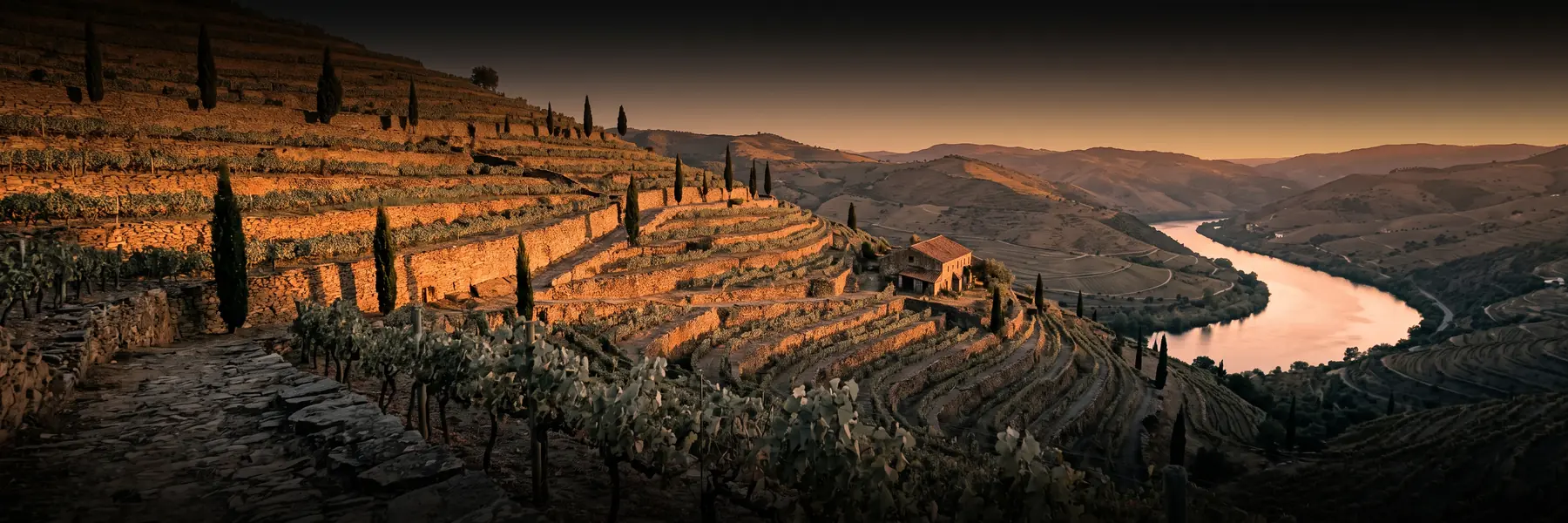
The Khvanchkara zone sits in the Ambrolauri district of Racha, on terraced slopes above the Rioni river in western Georgia. This is a different world from Kakheti: higher, cooler, wetter, greener, with vines on small plots between forest and rock rather than across a broad valley floor. Production is tiny — a fraction of what a single large Kakhetian appellation makes.
Climate
Cool mountain continental. Shorter growing season, more rainfall than the east, and an autumn that turns cold quickly. Two consequences matter:
- Ripening is marginal in poor years, which is why the varieties here are early-ish and aromatic rather than late and tannic.
- The temperature crash in late autumn is reliable, which is what allowed fermentation to be arrested naturally before yeast finished the sugar.
Compare this to Racha's neighbour Lechkhumi, home of the semi-sweet white Tvishi — same mechanism, white grape.
The Grapes
Khvanchkara is a blend of two rare Rachan reds:
| Grape | Contribution |
|---|---|
| Aleksandrouli | The aromatic lead. Raspberry, cranberry, rose petal; moderate colour and light tannin; good acidity |
| Mujuretuli | More flesh and depth. Deeper colour, rounder body, softer acid; fills the mid-palate |
Neither has meaningful plantings outside Racha. If you ever get to taste them separately, do — the blend logic is unusually easy to hear.
Note that the wine's fame rests partly on politics: Khvanchkara was reportedly Stalin's preferred wine, which guaranteed it prestige, protected supply and rampant counterfeiting across the Soviet Union. That legacy is still visible in export markets.
Wine Style
Medium ruby, rarely opaque — this is not Saperavi and should not look like it. The nose is the point: raspberry, redcurrant, wild strawberry, dried rose. On the palate it is silky, lightly sweet, with fresh acidity holding the sugar up and a short, clean, red-fruited finish. Body is medium at most; alcohol is modest.
Anyone expecting a rich dessert red will be surprised. Khvanchkara is more like a lightly sweet, aromatic, mountain-grown red — closer in weight to a Beaujolais than to a Port.
Drink young. There is no reward for cellaring these.
Producers
- Khvanchkara Winery and other Ambrolauri-based houses working within the zone
- Racha Wine — regional producer of the traditional style
- Small growers across the Ambrolauri terraces, much of whose fruit is sold on
Volumes are genuinely small, and demand for the name far exceeds supply. Bottles labelled Khvanchkara that are cheap and abundant are usually neither from Racha nor naturally sweet.
What Khvanchkara Teaches
Two lessons, both directly useful.
Aromatic reds need protection, not extraction. Aleksandrouli's appeal is volatile — rose and raspberry aromatics that heavy handling destroys. That means:
- Short, cool maceration. Five days of gentle work beats two weeks of vigorous punch-downs. Read tannin management for why more extraction is not more quality.
- Cooler fermentation than you would use for a big red — mid-20s °C at most, and lower if you can hold it steady. See fermentation temperature.
- Minimal oak, or none. New wood will simply cover the wine.
- Careful SO₂ and tight topping-up; oxidation flattens delicate red aromatics faster than it does tannic ones. See understanding SO₂.
Cold is a legitimate fermentation control. The Rachan method is worth copying if you have an unheated space and a Georgian-style winter: ferment in autumn, let the vessel find ambient temperature, and let the yeast slow as the cellar cools. The catch is that "slowed" is not "finished". A wine arrested by cold still carries a live, viable yeast population, and it will restart the moment it warms up.
That makes stabilisation the whole game, and the procedure is the same as for Kindzmarauli: rack off the lees while cold, then either sterile filter or use sorbate with adequate free SO₂ — with a proper understanding of the limits of the latter, set out in our back-sweetening guide. Cold stabilise before bottling too; a lightly sweet, low-alcohol red will drop tartrates in the bottle otherwise (cold stabilisation).
Use the calculators to convert your target residual sugar to a stopping gravity before you start, so the decision is made on a number rather than on taste under pressure.
Food Pairing
Fresh sheep's cheese, cured meats, walnut pastries, ripe summer fruit. Serve lightly chilled — 12–14 °C — which tightens the sweetness and lifts the perfume. Warm, it reads as flabby.
Tip: If you are making a light, aromatic, lightly sweet red, bottle it in the smallest format you find practical. This is a style with a short life and no cellar upside, and a half-bottle drunk fresh is better than a full one finished on day three.