Franciacorta — Italy's Traditional-Method Sparkling Wine
Franciacorta — Italy's Traditional-Method Sparkling Wine
Italy makes two famous sparkling wines and they have almost nothing in common. Prosecco is tank-fermented, fruit-driven and made to be drunk immediately. Franciacorta is bottle-fermented, lees-aged, and made in direct, deliberate competition with Champagne — with lees-ageing minimums that in some categories exceed Champagne's own.
It is also the appellation to study if you want to make serious traditional-method sparkling wine yourself, because its rules spell out, in months, exactly what the process requires.
Geography
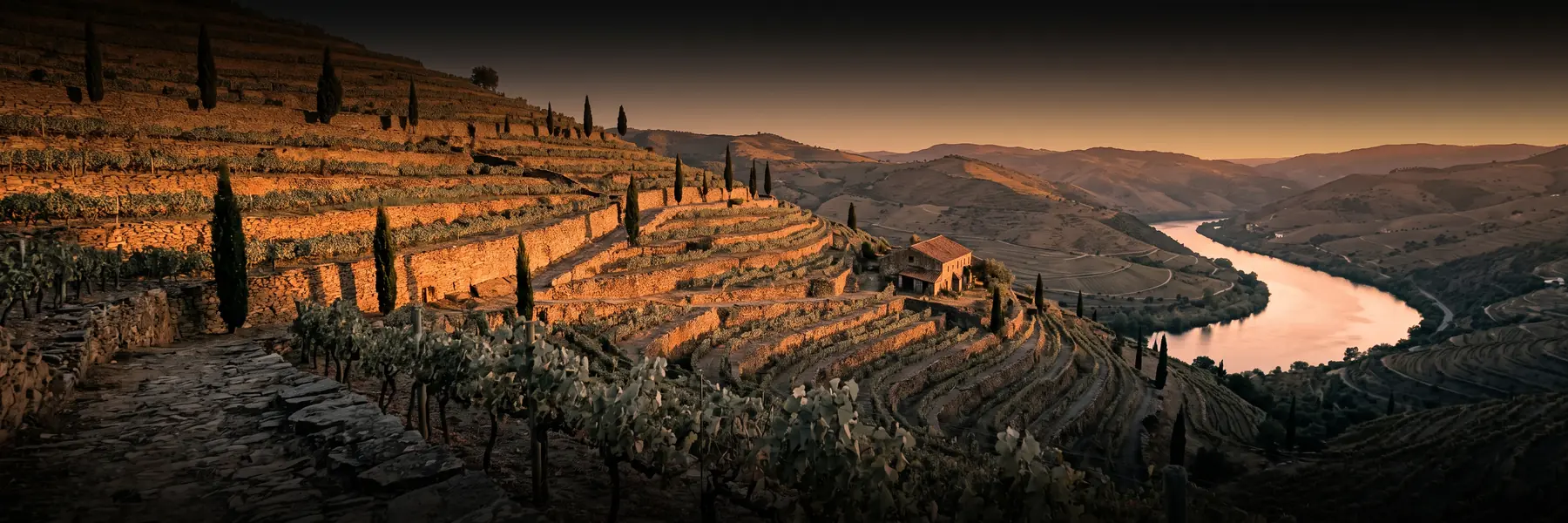
Franciacorta lies in Lombardy, between the city of Brescia and the southern shore of Lake Iseo, roughly halfway between Milan and Verona. The zone occupies a bowl of low hills formed by glacial moraine — gravelly, stony, well-drained deposits left by a retreating Alpine glacier.
Lake Iseo is the climatic key. It moderates temperature in both directions: it holds off spring frost and it keeps summer nights cool, which is what allows the grapes to reach physiological ripeness while retaining the high acidity that a sparkling base wine requires.
The grapes
- Chardonnay — the dominant variety; body, citrus, the capacity to age on lees
- Pinot Nero (Pinot Noir) — structure, red-fruited depth, and the basis of the rosé
- Pinot Bianco (Pinot Blanc) — a supporting role, adding freshness
- Erbamat — a local white variety, late-ripening and very high in acid, admitted to the rules in 2017 in a small permitted proportion as a response to warming vintages
Erbamat is worth noting as a piece of climate adaptation in action: a variety rescued from near-obscurity specifically because it holds acidity in hot years.
The categories and their lees requirements
This is where Franciacorta gets serious. All of these are minimums, counted as time on the lees after the second fermentation in bottle:
| Category | Minimum on lees |
|---|---|
| Franciacorta (non-vintage) | 18 months |
| Franciacorta Rosé | 24 months |
| Franciacorta Satèn | 24 months |
| Franciacorta Millesimato (vintage) | 30 months |
| Franciacorta Riserva | 60 months |
For comparison, non-vintage Champagne requires 12 months on lees (and 15 months total before release). Franciacorta's baseline is longer.
Satèn is the appellation's own invention and its most distinctive style: a white-grapes-only wine (Chardonnay, with Pinot Bianco permitted) bottled at a lower pressure than the other categories — a maximum of 5 bar rather than the usual 6. The gentler mousse gives a softer, creamier, silkier texture, which is where the name comes from. It is a genuinely different sensory experience and cannot be made by any other appellation under that name.
Climate
Sub-continental, strongly moderated by Lake Iseo. Warm summers with cool nights, and enough of a diurnal swing to preserve acidity. Warming vintages are the appellation's central challenge — sparkling wine depends on picking at low sugar and high acid, and that window is closing earlier each decade.
Producers
- Ca' del Bosco — the most technically ambitious estate; the Cuvée Prestige is the workhorse, and Annamaria Clementi is the long-aged flagship
- Bellavista — elegant, refined, the traditional benchmark
- Guido Berlucchi — the house credited with starting Franciacorta's modern sparkling production in the early 1960s
- Contadi Castaldi, Barone Pizzini (a pioneer of organic viticulture in the zone), Gatti, Uberti — the depth of the appellation
Style
Fine, persistent bead. Green apple, citrus, white peach, and — from the extended lees ageing — brioche, toasted hazelnut, and a creamy autolytic depth. Generally a shade rounder and riper-fruited than Champagne, with slightly lower acidity and a fuller mid-palate. Riserva bottlings develop remarkable complexity.
What Franciacorta teaches your winemaking
The base wine is the whole game
Traditional-method sparkling wine is not a way to rescue a bad still wine. The base must be picked early, at low sugar and high acid — typically far less ripe than you would ever pick for a still white. If your base wine tastes pleasant and balanced as a still wine, it is probably too ripe for sparkling. Track it with the calculators and see harvest timing.
Lees time is the flavour, and it is not optional
The bready, brioche, hazelnut character of good traditional-method sparkling wine comes from yeast autolysis — the breakdown of dead yeast cells releasing mannoproteins, amino acids and aroma compounds into the wine, under pressure, over years. Franciacorta's 18-to-60-month minimums are a statement about how long that actually takes.
The practical consequence for a home winemaker: if you disgorge at six months, you have made a fizzy white wine, not a sparkling wine. Leave it. Eighteen months is a reasonable minimum and three years is better.
Understand the dosage
The liqueur d'expédition added at disgorging sets the final sweetness. Even a "Brut" wine usually has a few grams per litre, which rounds the acidity and makes the wine drinkable. A bone-dry, zero-dosage sparkling wine from anything less than superb fruit is austere to the point of being unpleasant. Bench-trial your dosage on individual bottles before committing the batch.
Pressure is a stylistic lever, not just a number
Satèn proves the point: the same wine at 5 bar rather than 6 feels materially different in the mouth — softer, creamier, less aggressive. If you are bottle-conditioning, your sugar dose sets your pressure, so it sets your texture as well as your fizz. Calculate it deliberately.
Safety, seriously
A bottle-fermented sparkling wine must go into a sparkling-rated bottle with a crown cap or wired closure. Still-wine bottles fail explosively under pressure, and an over-dosed batch is genuinely dangerous. Work out your sugar addition, check it, and store the bottles somewhere a failure would not injure anyone. See bottling guide and closure comparison.
Erbamat's lesson: acidity can be a planting decision
Franciacorta's response to warming vintages was to bring back a late-ripening, high-acid local variety rather than to acidify in the cellar. If you are planting and you are in a warming region, variety choice is the most durable acidity strategy you have. See planting your first vineyard.
For the full traditional-method process see our Champagne guide; for Italy's tank-method alternative, Prosecco Superiore; for the wider region, the Veneto guide.
Food pairing
Fritto misto, risotto, freshwater fish from the lake, prosciutto, and — for a Riserva — roast poultry or a mature hard cheese. Satèn's softer mousse makes it particularly good with delicate fish.
Tip: If you are making traditional-method sparkling wine, the hardest discipline is not the disgorging — it is waiting. Put a date on the crate that is eighteen months out and do not open a bottle before it. Almost every disappointing home-made sparkler was simply opened too soon.