Eger and Egri Bikavér — Hungary's Bull's Blood Blend
Eger and Egri Bikavér — Hungary's Bull's Blood Blend
Most appellations define a place and permit a list of grapes. Egri Bikavér does something rarer: it requires a blend, and it forbids any single variety from carrying the wine. That is an unusual thing to write into law, and it makes Eger the most useful European region to study if you want to understand blending as a discipline rather than as a way of using up leftovers.
Geography
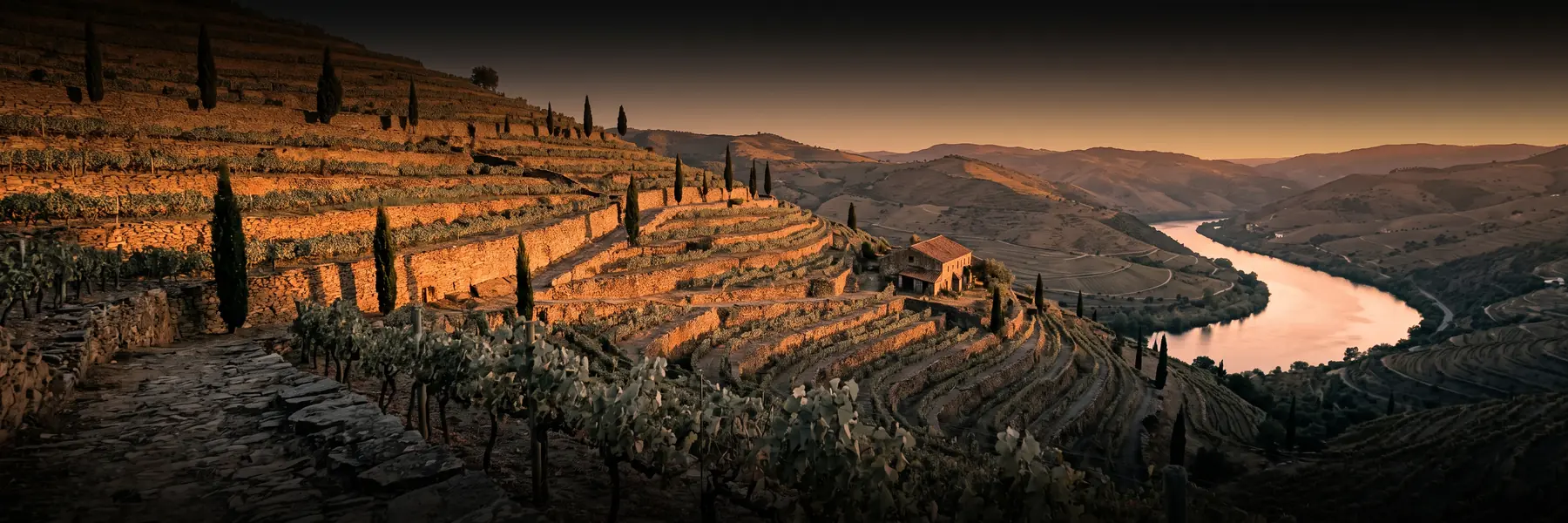
Eger sits in northern Hungary, in the foothills of the Bükk mountains, roughly two hours north-east of Budapest and west of Tokaj. Vineyards occupy south-facing slopes at 160–400 m.
The bedrock is volcanic tuff, and as in Tokaj it is soft enough to excavate. Eger's Szépasszony-völgy ("Valley of the Beautiful Woman") is a hillside honeycombed with cellars cut into the rock, cool and humid year-round. Soils above are volcanic-derived clays with limestone patches.
Climate
Continental, moderated by the shelter of the Bükk range: warm summers, cold winters, and a reasonably long autumn. Eger is cooler than most of Hungary's red wine regions, which is why its reds are medium-bodied and fresh rather than heavy — and why they are so often compared to cooler-climate European reds rather than to Mediterranean ones.
Spring frost is a genuine risk on the lower ground.
Key Grapes
| Grape | Character |
|---|---|
| Kékfrankos (Blaufränkisch) | The region's backbone. High acidity, medium tannin, sour cherry, blackberry, black pepper and a savoury-earthy edge; medium-bodied and fresh |
| Kadarka | Historic Hungarian variety, nearly lost, now being revived. Pale, spicy, aromatic, light tannin — Eger's equivalent of a perfumed grape |
| Blauburger, Kékoportó (Portugieser) | Soft, fruity, low-tannin; volume and roundness |
| Zweigelt | Cherry fruit, reliable, easy |
| Cabernet Franc, Cabernet Sauvignon, Merlot, Syrah | Permitted; Cabernet Franc in particular does very well in Hungary and adds structure |
| Pinot Noir | Grown, and increasingly interesting on the cooler sites |
For whites, Egri Csillag ("Star of Eger") is the deliberate white counterpart — also a mandatory blend, typically built on Hungarian varieties such as Leányka, Királyleányka and Olaszrizling.
The Blend Rule
Egri Bikavér must be a blend of several permitted varieties, with Kékfrankos as the leading component and limits that prevent any one variety from dominating the wine. There are three quality tiers — Classicus, Superior and Grand Superior (the base tier appears as "Egri Bikavér Classicus" on labels) — with progressively tighter requirements on yield, origin within the district, minimum ageing, and the range of varieties involved.
The exact percentages, minimum variety counts and ageing periods have been revised several times as the district has tightened its rules, so if you need them precisely, consult the current Eger district regulation rather than a secondary source. What has been consistent since the modern rules were introduced is the principle: Bikavér is defined by assembly, not by a single grape.
The Name
The legend is that in 1552, during the Ottoman siege of Eger castle, the defenders drank so much of the local red that their beards ran with it, and the attackers concluded they were being strengthened with bull's blood. It is a good story with no contemporary documentation, and the name itself appears much later. Take it as folklore rather than history — the wine does not need it.
More relevant to what is in the bottle: Bikavér spent the socialist era as a mass-market export brand of very variable quality, and the modern tiered classification exists precisely to repair that.
Wine Style
Medium to deep ruby. Sour cherry, blackberry, plum, black pepper, dried herbs, a savoury earthiness, and — from the Superior tiers — cedar and sweet spice from oak. Medium-bodied with fresh acidity and moderate, well-defined tannin. Alcohol typically 13–14%.
The consistent character is freshness with savoury depth rather than power. Good Bikavér drinks well from three years and the top tiers hold for a decade or more.
Producers
- St. Andrea — the region's most acclaimed estate; Merengő and Áldás are references
- Thummerer — long-established; excellent across the range
- Bolyki — young, dynamic, working in a spectacular quarry cellar
- Gál Tibor — the estate founded by the late Tibor Gál, who made wine at Ornellaia; strong Bikavér
- Kovács Nimród, Juhász — good modern producers
What a Mandatory Blend Teaches
This is the reason to read about Eger even if you never drink a Bikavér.
Blend to fill gaps, not to add mass. Kékfrankos is fresh, peppery and firm but can be lean in the middle. Portugieser and Blauburger add flesh and soften the finish. Kadarka adds perfume. Cabernet Franc adds structure and length. Each component is chosen for something the base lacks. See blending theory.
Vinify separately, assemble later. The practical implication of a blend rule is that you ferment small lots and decide afterwards. That is genuinely good practice at any scale: four 30-litre ferments give you far more options than one 120-litre ferment, and the cost is only in vessels and labels.
Bench-blend on numbers and on taste. Make trial blends in measured glass increments — 70/20/10 and so on — and taste them blind against each other before committing. Record the acid and pH of each component; a high-acid, low-pH lot is a structural asset and worth holding back as a correction tool. See pH and TA and run the arithmetic with the calculators.
Keep the freshest lot unoaked. In a cool-climate blend of this kind, oak is best applied to part of the wine rather than all of it. Age your most structured lot in wood and blend it into fresh, steel-raised components — you get complexity without covering the peppery aromatics that make Kékfrankos distinctive. See barrel ageing basics.
Complete MLF on everything. With acidity this high, MLF is what makes the wine drinkable, and it should be finished and confirmed before you start blending, or your trial ratios will shift underneath you. See MLF explained.
Food Pairing
Goulash and paprika-driven stews, roast duck, venison, grilled sausage, mushroom dishes, and Hungarian smoked cheeses. Bikavér's freshness handles paprika far better than a heavier red does; serve at 15–16 °C.
Tip: If you make one red wine a year, split the ferment into three vessels and treat them differently — different maceration length, one with some whole bunches, one in oak. Blend them at bottling. You will make a better wine than a single batch, and you will learn what each variable actually does.