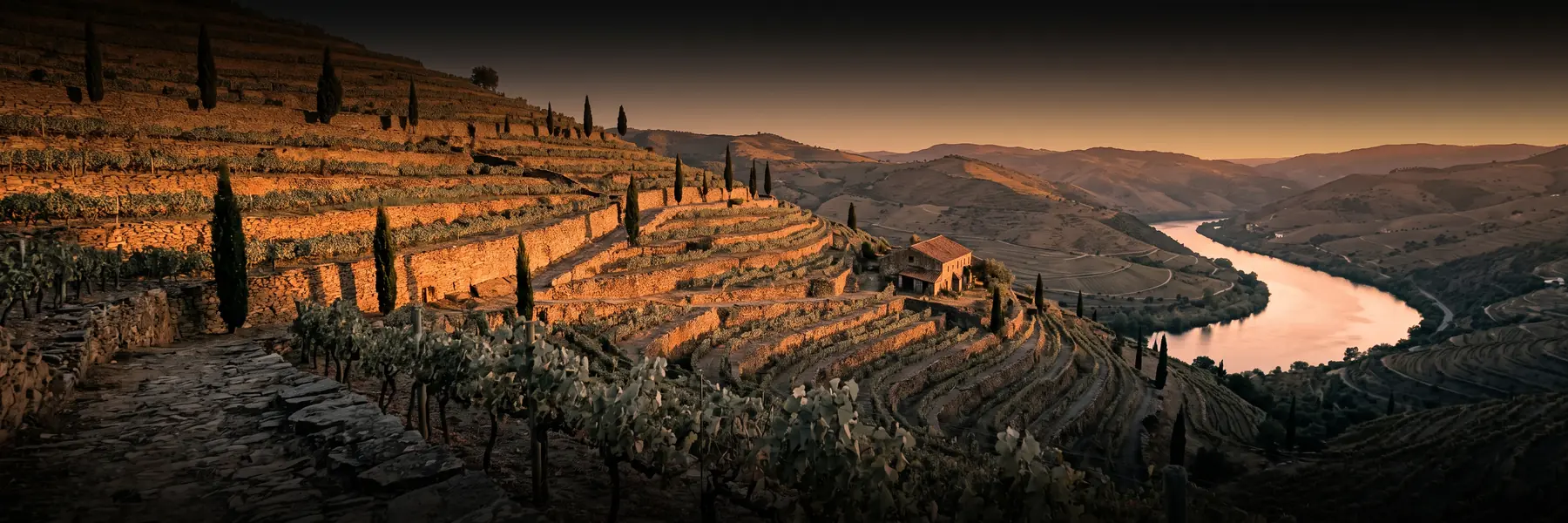
Hawke's Bay — Gimblett Gravels, Syrah, and New Zealand's Red Wine Region
Hawke's Bay — Gimblett Gravels, Syrah, and New Zealand's Red Wine Region
New Zealand is a cool, maritime country, which is why it is famous for Sauvignon Blanc and Pinot Noir. Ripening Cabernet Sauvignon and Syrah here requires a genuinely warm site, and Hawke's Bay — on the east coast of the North Island, sheltered by ranges from the prevailing westerlies — is where the country found one. It is New Zealand's oldest significant wine region and its only reliable source of serious Bordeaux-variety reds.
It has also, over the past twenty-five years, become one of the best places in the world to look for cool-climate Syrah.
Gimblett Gravels
The region's most celebrated vineyard land is a stretch of old riverbed exposed when the Ngaruroro river changed course. The Gimblett Gravels is a bed of deep, free-draining greywacke stones with very little topsoil, and it works because of what stones do:
- They absorb heat during the day and radiate it back into the fruit zone at night, effectively adding warmth to a marginal climate
- They drain freely, so vine vigour is naturally low and the canopy does not run away in a wet season
- They are poor in organic matter and nutrients, which keeps crops small and berries concentrated
The boundary of the Gimblett Gravels is unusual in wine: it is defined by soil type rather than by political lines, and producers organised around it as a formally delimited, trademarked designation.
Immediately nearby, the Bridge Pa Triangle sits on similar alluvial material with more sand and loam over the gravel, giving slightly softer, more approachable wines. Cooler coastal sub-areas such as Te Awanga favour Chardonnay and Syrah of higher tension.
Climate
Warm by New Zealand standards, with high sunshine hours, and dry enough through summer that irrigation is often needed on the gravels. The serious risk is autumn rain — the region can be reached by the tail of tropical cyclones during harvest, which puts a premium on being ready to pick fast and on varieties that do not need to hang forever.
The Wines
Syrah is the region's most distinctive wine and, for many tasters, its best. Hawke's Bay Syrah is medium-bodied, floral and intensely peppery, with dark plum, violet and a savoury olive edge — much closer to the Northern Rhône than to Australia. Trinity Hill's Homage and Craggy Range's Le Sol are the reference bottles.
Merlot, Cabernet Sauvignon and Cabernet Franc, usually as blends, give structured, cedary reds with real fine tannin and blackcurrant fruit. Te Mata's Coleraine is the region's long-standing benchmark.
Chardonnay is outstanding and undervalued: citrus and stone fruit, mineral length, and enough acidity to carry barrel and lees work.
Producers: Te Mata (one of the country's oldest estates), Craggy Range, Trinity Hill, Villa Maria, Elephant Hill, Sacred Hill, Esk Valley, Vidal.
Making Reds in a Marginal Climate
Hawke's Bay is a masterclass in getting Bordeaux and Rhône varieties ripe where the climate does not guarantee it. Four things matter more than anything you do in the cellar.
1. Variety and site matching
Cabernet Sauvignon needs the warmest stony ground; Merlot and Cabernet Franc ripen earlier and tolerate cooler, heavier sites; Syrah sits between them. Planting Cabernet on a cool site is a decision you cannot fix later.
2. Fruit exposure
Pyrazines — the green-pepper, tomato-leaf compounds in Cabernet, Merlot and Carménère — degrade with sunlight and warmth in the fruit zone. Leaf plucking and a well-managed, open canopy are the difference between herbaceous and cedary. This is vineyard work, not winemaking.
3. Crop level
An over-cropped vine in a marginal climate does not ripen. Thin early, at or shortly after fruit set, not in the final weeks when it is too late to matter.
4. A picking plan for rain
If a rain event is forecast at harvest, the choices are pick before, pick after, or accept the dilution. Dilution reduces sugar and acid together and swells berries, lowering the skin-to-juice ratio — and it can trigger botrytis within days. Deciding quickly is more valuable than deciding perfectly.
In the Cellar
Syrah
- Pick at 23–25 °Bx, pH 3.4–3.6, TA 5.5–6.5 g/L. The pepper compound (rotundone) accumulates late in ripening and is favoured by cool sites, cool seasons and moderately shaded fruit — so the peppery style is set by site and season more than by the picking date, and picking very early forfeits it.
- A small proportion of whole bunches (10–30%) adds lift; co-fermenting a little Viognier is a Rhône technique that works here.
- Ferment 24–28 °C, gentle cap work, 10–16 days on skins, MLF, then French oak at 20–35% new for 12–16 months. Heavy new oak destroys the perfume that makes this style worth making.
Bordeaux blends
- 24–26 °Bx, ferment 26–30 °C, 12–20 days on skins, French oak 30–50% new for 16–20 months.
- Blend by tasting at assemblage. Cabernet Franc for perfume, Merlot for flesh, Petit Verdot for colour and grip; see blending theory and the Cabernet Sauvignon guide.
Chardonnay
Whole-bunch press, barrel ferment, partial MLF, lees stirring, 20–35% new oak. See Chardonnay styles.
Food Pairing
Hawke's Bay Syrah: lamb with herbs, peppered venison, grilled aubergine, charcuterie. Bordeaux blends: roast beef, lamb rack, mushroom dishes, aged cheddar. Chardonnay: crayfish, snapper, roast chicken, Gruyère.
Tip: Stony soils are the most underrated tool available to anyone growing grapes in a cool place. If you are choosing between two blocks, take the one with less topsoil and more gravel. Heat radiation and low vigour together will do more for your ripeness than a warmer year would.