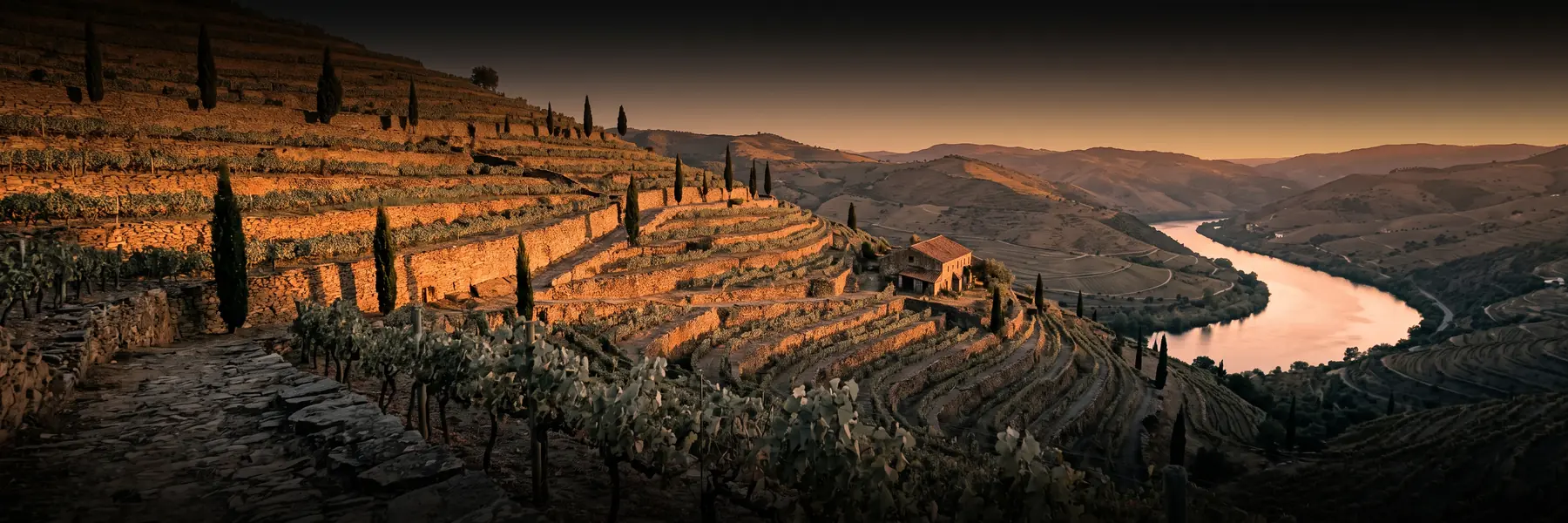
Bulgaria — Thrace, Mavrud, and Rebuilding a Wine Industry
Bulgaria — Thrace, Mavrud, and Rebuilding a Wine Industry
Bulgaria is one of the few wine countries whose modern history is genuinely instructive as a business case, not just a tasting note. In the 1970s and 1980s it was one of the largest wine exporters in the world: state-run cooperatives planted enormous quantities of Cabernet Sauvignon and Merlot, and cheap, competent Bulgarian Cabernet became a fixture on British and Soviet shelves. It was a volume industry, and it was successful on those terms.
Then the state system ended. Vineyards were returned to thousands of individual owners in small fragments, the export machine broke, plantings aged and were abandoned, and quality collapsed. What has happened since — slow rebuilding around modern estates, EU funding after accession, and a rediscovery of indigenous varieties — is the story worth reading if you make wine anywhere that is trying to establish or re-establish a reputation.
Thrace
The Thracian Valley, in southern Bulgaria, is the country's most important quality region. It is a broad lowland running east from around Plovdiv toward the Aegean, framed by the Rhodope Mountains to the south and the Balkan range to the north, with the Sakar hills near the Turkish border.
The climate is warm continental with a Mediterranean influence reaching up from the Aegean — hot summers, mild autumns, and enough warmth to ripen late varieties fully. Bulgaria's other regions differ substantially: the Danubian Plain in the north is more continental, the Black Sea zone in the east is maritime and white-wine focused, and the Struma Valley in the south-west is the warmest of all and the home of the Melnik grape.
The Indigenous Varieties
This is where Bulgaria has something nobody else has.
Mavrud is the flagship: a late-ripening red grown mainly in the Thracian Valley, particularly around Asenovgrad. It gives deeply coloured, powerfully tannic wine with dark plum, blackberry, tobacco, dried herb and a firm acid line. It needs a warm site to ripen and it needs handling — badly made Mavrud is astringent and rustic; well made it is structured and long-lived.
Rubin is a Bulgarian crossing of Nebbiolo and Syrah, created domestically in the twentieth century. It has become genuinely useful — deep colour, spice and structure, and it blends well with both Mavrud and international varieties.
Melnik (Shiroka Melnishka Loza) belongs to the Struma Valley rather than Thrace, and gives lighter, aromatic, spicy reds.
Pamid is the old, light, everyday red; Gamza (Kadarka) is grown in the north.
Among whites, Dimyat and Red Misket are the local specialities, and Rkatsiteli, the Georgian variety, is widely planted.
Producers
- Bessa Valley — founded with investment from Stephan von Neipperg of Saint-Émilion; the Enira wines demonstrated that Bulgaria could make internationally credible reds
- Castra Rubra — a high-profile modern estate in the Thracian Valley near Sakar, made with French consulting input
- Katarzyna Estate — large, modern, near the southern border; consistent quality across a broad range
- Zelanos, Rossidi, Villa Melnik, Maryan — part of the newer wave, several working with indigenous varieties and low-intervention methods
What Bulgaria Teaches About Reputation
Bulgaria's export success in the 1980s was built entirely on price. When the price advantage went, so did the customers, because the wines had no identity to fall back on. The estates rebuilding the industry now are doing the opposite: small volumes, named vineyards, indigenous grapes, and a story that cannot be replicated by whoever is cheapest next year.
That is a strategic lesson for any small producer. Being the low-cost option is a position you can lose overnight. Being the only source of something is not.
Making Mavrud — or Any High-Tannin, Late-Ripening Red
Mavrud belongs to the same practical family as Tannat, Saperavi and Nebbiolo: thick skins, abundant tannin, high acid, late ripening. The winemaking discipline is the same.
Picking
- Wait for phenolic ripeness. Late varieties picked on sugar alone give hard, green tannin — chew the seeds, and look for brown, brittle seeds and soft skins.
- Target 24–26 °Bx, pH 3.4–3.6, TA 5.5–7 g/L. High-tannin varieties usually hold acid well, so acidification is rarely needed.
- Long autumns are the asset here: use the hang time.
Extraction — less than you think
The instinct with a tannic grape is to extract hard because the wine will be big anyway. It is the wrong instinct.
- Cold soak 2–4 days for colour and aroma before alcohol appears; anthocyanins extract in water, tannin needs alcohol.
- Ferment 24–28 °C, one or two gentle pump-overs a day at peak, then taper. Late-ferment cap work pulls seed tannin, which is the harsh kind.
- 8–14 days on skins is often enough. Extended maceration on already-tannic fruit is for exceptional years only, and only when the tannin already tastes fine.
- Press gently and keep the hard press fraction separate — it is a blending decision. See press fractions.
- Read tannin management for the full mechanism.
Softening in élevage
- MLF always. It softens acid perception as well as converting malic acid — see MLF explained.
- Barrel ageing with controlled, slow oxygen exposure polymerises tannin and makes it feel finer. Rack with a modest amount of air rather than fully reductively, and keep barrels topped.
- French oak, medium toast, 12–18 months, 20–40% new. Oak tannin adds structure — on an already tannic wine, that is often the wrong direction.
- Blending is the most effective softener available: Merlot or Rubin for flesh, a small Syrah component for spice. See blending theory.
Food Pairing
Mavrud: grilled lamb, kavarma, stuffed peppers, kebapche, sheep's milk cheese, aged kashkaval. Rubin: beef stews, grilled sausage, mushroom dishes. Dimyat and Red Misket: shopska salad, grilled vegetables, fresh white cheese, river fish.
Tip: When you meet an unfamiliar high-tannin local variety, treat your first vintage as a calibration exercise. Split the fruit into two lots and ferment one with your normal red protocol and one with half the cap work and a shorter maceration. The gentler lot is very often the better wine — and you will have learned in one season what would otherwise take five.