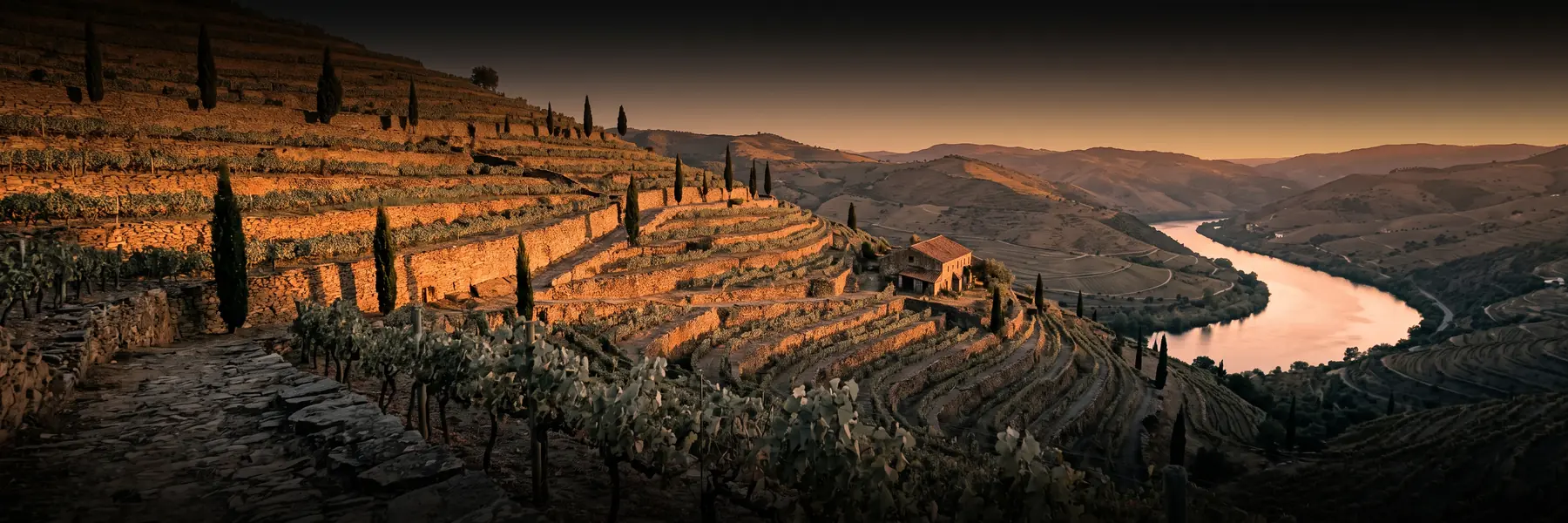
Yamanashi — Koshu, Monsoon Rain, and Japanese Wine
Yamanashi — Koshu, Monsoon Rain, and Japanese Wine
Japan is a difficult place to grow wine grapes, and Yamanashi has been doing it longer than anywhere else in the country. The prefecture sits in a mountain basin west of Tokyo, in the shadow of Mount Fuji, and the district of Katsunuma within it has been a grape-growing centre for centuries. What Yamanashi makes is unlike anything else: pale, low-alcohol, quietly savoury white wine from a grape variety that exists nowhere else in commercial quantity.
The Climate Problem
Japan's summer is warm, wet and humid. The rainy season arrives before ripening, typhoons arrive during it, and the annual rainfall is several times that of most classic wine regions. Every consequence is bad for wine grapes:
- Fungal disease pressure is extreme — downy and powdery mildew, anthracnose, botrytis and ripe rot
- Dilution from rain in the ripening period reduces sugar and flavour concentration
- Berry splitting after heavy rain opens the door to rot within days
- Sugar accumulation is limited, so alcohol is naturally low
Yamanashi partly offsets this: the Kōfu Basin is relatively dry by Japanese standards, ringed by mountains that intercept rainfall, with a large diurnal range and cool nights.
Pergola Training — a Genuine Adaptation
The traditional Japanese training system is an overhead pergola — tana — where the canopy is trained onto a horizontal trellis well above head height and the fruit hangs below it. It exists for the climate: raising the fruit high off the ground gets it away from soil-borne moisture and splash, maximises air movement through the fruit zone, and lets rain run off a sloping canopy.
For wine quality it has drawbacks: high yields, dense shade, and less direct sun on the fruit. Quality-focused producers have shifted many blocks to vertical shoot positioning with tighter spacing and lower yields — often with rain covers over the fruit zone, a distinctly Japanese piece of viticultural engineering. Both systems are rational answers to the same question; which you choose depends on whether you are optimising for a reliable crop or a concentrated one.
Koshu
Koshu is Japan's signature wine grape. It is a pink-skinned variety with unusually thick skins, long grown in Japan, and DNA work indicates it is predominantly Vitis vinifera with some East Asian wild-vine ancestry — a plausible story for a variety that travelled east along the Silk Road and then adapted, over centuries, to a climate no European variety would tolerate. Those thick skins are the key to its survival in humidity.
The style: pale, delicate, low in alcohol, with citrus peel, white peach, green herbs, a stony minerality and a faint pithy bitterness from the skins. There is often a subtle savoury or umami quality that makes it an extraordinarily good match for Japanese food.
Koshu is naturally so understated that its modern development has largely been a search for texture:
- Sur lie ageing on fine lees, adding weight without flavour, is now a well-established Koshu style
- Barrel-fermented versions exist and can work, though oak easily overwhelms the fruit
- Skin-contact Koshu takes advantage of the pink skins and thick phenolics — see skin contact and orange wine
- Sparkling Koshu suits the low alcohol and high acid
Muscat Bailey A
The main red is Muscat Bailey A, a hybrid created in Japan by Kawakami Zenbei by crossing Bailey with Muscat Hamburg. Its American-vine ancestry shows: light body, low tannin, bright acidity and a distinctly candied, strawberry-and-cotton-candy aroma that is characteristic of labrusca-derived grapes.
That aroma is worth understanding if you work with hybrids anywhere. Muscat Bailey A's candied-strawberry note comes largely from furaneol, released during fermentation (methyl anthranilate is the classic "foxy" compound of Concord and other labrusca grapes); it varies with parentage, and is essentially impossible to remove. Work with it: pick early to keep acid, ferment cool, use minimal oak, and consider a lighter, chilled presentation rather than a serious structured red.
Producers
Grace Wine (Château Grace) in Katsunuma, whose Koshu — particularly the higher-altitude cuvées — is the international reference; Château Mercian, Japan's most historically significant wine company; Lumière; Kurambon; Marufuji (Rubaiyat); Katsunuma Jyozo; and Suntory's Tomi vineyard.
Japanese labelling rules introduced in the 2010s distinguish wine made from domestically grown grapes — "Japan Wine" — from wine blended or made from imported bulk and juice, a distinction that had previously confused the market considerably.
Making Wine in a Wet Climate
This is the transferable part, and it applies as much to Ireland, England or the eastern USA as to Japan.
In the vineyard
- Airflow beats everything. Open canopies, leaf removal in the fruit zone, wider row spacing and higher trellising all reduce disease pressure more reliably than extra spraying.
- Choose varieties with loose bunches and thick skins. Tight-clustered thin-skinned varieties rot in wet autumns, full stop.
- Spray timing matters more than spray choice. Protective coverage before a rain event is worth several curative applications after one.
At harvest
- Be prepared to pick early and accept lower sugar. A clean wine at 10.5% alcohol beats a rot-tainted wine at 12.5% every time.
- Sort out botrytis-affected fruit rigorously — it carries laccase, which browns white wine fast and resists normal SO₂ additions.
- If rain has diluted the crop, check both sugar and acid; both fall together, and the wine may need acid as well as sugar.
In the cellar
- Chaptalisation is legal in some jurisdictions and not others — check yours. Where permitted, the sugar / chaptalisation calculator sizes the addition; add early in fermentation, in stages.
- Protect delicate whites from oxygen: SO₂ at the crusher, cold settling, cool ferments at 13–16 °C, full vessels. See understanding SO₂.
- Lees contact is your best friend for texture in a low-alcohol white — it builds body without alcohol or oak.
- No MLF for a Koshu-style wine; the acidity is the structure.
Food Pairing
Koshu: sashimi and sushi, tempura, delicate simmered dishes, tofu, grilled white fish — one of the very few wines that works with raw fish without fighting it. Muscat Bailey A (chilled): yakitori, teriyaki, soy-glazed pork, gyoza.
Tip: If your climate limits ripeness, stop treating low alcohol as a deficiency and design for it. A 10.5% wine with high acid, real texture from lees, and no oak is a coherent, saleable style — and it is what Yamanashi has built a reputation on. Trying to imitate a 14% warm-climate wine from cool wet fruit produces something that is neither.