Skin Contact (Orange Wine) — Method and Flavour Profiles
Skin Contact (Orange Wine) — Method and Flavour Profiles
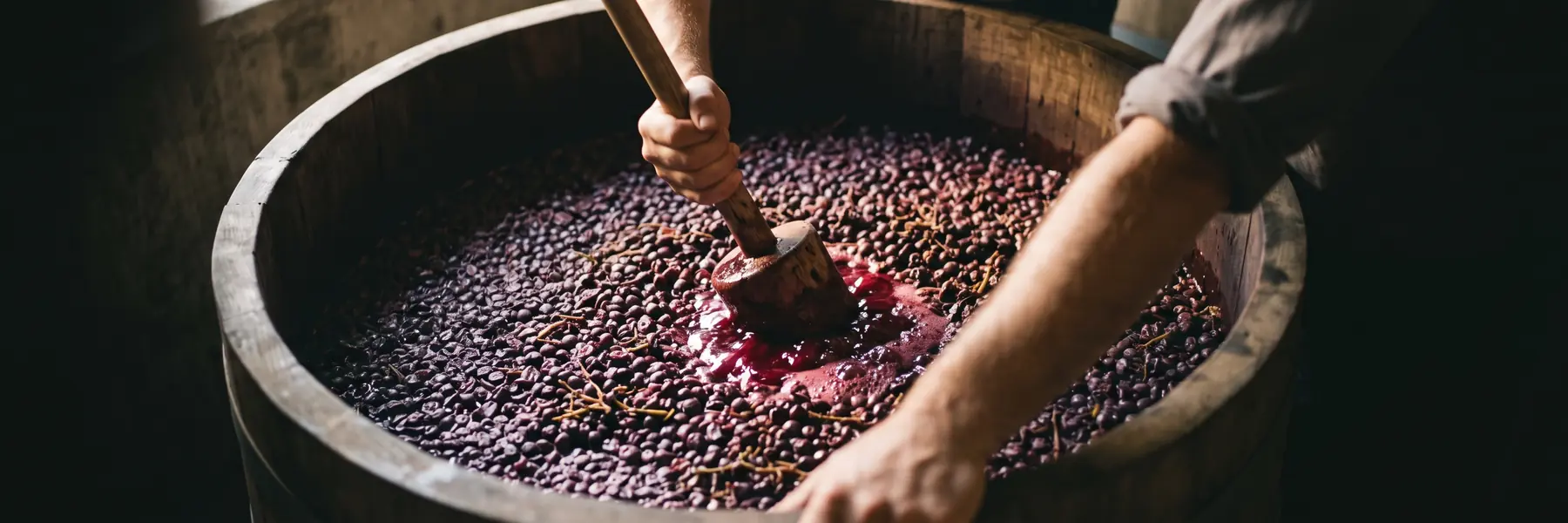
Orange wine is white wine made like red wine — with extended skin contact. The result is one of the most unusual and polarising wine styles: amber to deep copper in colour, grippy with tannin, complex with oxidative and dried-fruit characters that no conventional white wine can produce.
What Is Orange Wine?
The term "orange wine" describes a white or rosé grape variety fermented or macerated on its skins for an extended period. The colour comes from phenolic compounds (flavonols, tannins) extracted from the skins, seeds and stems, which oxidise over time into golden-amber pigments — white grape skins contain virtually no anthocyanins, the red-wine pigments.
Skin-contact wines exist on a spectrum:
- A few hours: barely perceptible phenolic grip, slight depth of colour — "skin-contact rosé" territory
- 2–7 days: distinct golden colour, noticeable tannin, dried fruit and honey notes
- 2–4 weeks: full amber colour, significant grip, complex oxidative character
- Several months: deep orange/amber, very high tannin, pronounced oxidative/nuts/dried fruit — traditional Georgian qvevri style
History and Geography
Skin-contact winemaking is one of the oldest techniques in the world. The traditional Georgian qvevri method — grapes crushed and fermented on their skins, seeds and often stems in buried clay vessels, with months of skin contact — dates back thousands of years.
Current production centres:
- Georgia (Kakheti): traditional amber wine in qvevri — the origin
- Friuli-Venezia Giulia (Italy): Josko Gravner, Radikon — the wine world's reintroduction to the style in the 1990s
- Brda (Slovenia): similar tradition to Friuli
- Alsace, Austria, Australia, South Africa: growing natural wine movement producers
Which Grapes Work Best
Not all white varieties respond equally to skin contact.
| Variety | Why it works | Expected character |
|---|---|---|
| Pinot Grigio | Pink-tinted skins contain anthocyanins | Copper colour, deep stone fruit, tannic structure |
| Gewurztraminer | Thick skins, intense terpenes | Intensely aromatic even with tannin overlay |
| Ribolla Gialla | Traditional for Friuli amber wines | Citrus, nuts, phenolic grip |
| Muscat | High terpenes, fragrant even with tannin | Floral, dried flowers, complex |
| Chardonnay | Widely available | More neutral but still interesting |
| Sauvignon Blanc | Strong aromatics integrate well | Less typical but works |
| Riesling | High natural acidity balances tannin | More delicate, often better short maceration |
Thin-skinned varieties (e.g. Pinot Blanc) produce less colour and tannin; thick-skinned varieties (Pinot Grigio, Gewurztraminer) produce more.
Equipment and Vessel Choice
The traditional Georgian method uses qvevri (buried clay amphorae), which provide:
- Micro-oxygenation through porous clay
- Very stable temperature (buried in earth)
- Mild reductive then oxidative character
For home winemakers:
- Open-top plastic fermenter: simple and effective for first trials
- Glass carboy with wide-mouth: allows punch-down access
- Stainless tank: controllable, easy to clean
Avoid vessels you can't fully access for punch-downs.
Making Your First Orange Wine
Harvest targets
Pick slightly earlier than for conventional white wine — you want higher acidity to balance the tannin you're about to extract. pH 3.1–3.4, TA 7–9 g/L.
Pre-ferment SO₂
Keep low if you want wild fermentation. For controlled skin contact, add 20–30 mg/L free SO₂ and inoculate with commercial yeast.
Whole-bunch or crushed?
- Whole bunch in the vessel: Carbonic maceration develops naturally, producing aromatic complexity. Bunches later crushed by the weight above them.
- Crushed and destemmed: More conventional; more surface area; faster tannin extraction. Remove stems unless fully lignified.
Temperature during maceration
- Cold maceration (8–12°C, pre-ferment): Slower extraction, more delicate tannin. 3–7 days common.
- Warm fermentation (18–22°C): More vigorous extraction, more structure.
Cap management
Exactly like red wine pigeage — push the skin cap down 2–3 times daily. White grape skins form a more fragile cap than red varieties.
How long to macerate?
Taste the wine daily. Tannins should be detectable but not harsh. For first attempts, stop maceration when:
- Colour is the amber/orange shade you desire
- Tannins are present but velvety (not harsh or drying)
- Aromatics are still present under the phenolic layer
For a first attempt, 5–10 days is a safe range. Longer maceration is a more advanced technique.
Pressing
Press gently. Skin-contact wines are typically pressed to free-run + P1 only; heavy press fractions will be too harsh.
Post-press handling
Contrary to conventional white winemaking, skin-contact wines are often:
- Racked with some lees present (oxidative protection, complexity)
- Aged with minimal SO₂ additions (deliberate oxidative character)
- Not filtered or fined (preserving natural texture)
That said, higher SO₂ and filtration produce cleaner, more stable orange wines — a valid commercial choice.
Flavour Profile
A well-made orange wine is unlike any other category:
- Aromatics: Dried apricot, marmalade, chamomile, beeswax, mushroom, dried flowers, nuts
- Palate: Tannic grip, full body, texturally more like a red wine than a white
- Acidity: Present but often less prominent than conventional white
- Finish: Long, savoury, sometimes slightly oxidative
- Faults (to avoid): Excessive VA (vinegar), excessive brett (barnyard), or excessive oxidation (flat, brown, "old sherry" character without fruit)
Common First-Time Mistakes
Using under-ripe stems: Adds harsh, green tannin. Destem or confirm stem lignification.
Insufficient acidity: Without enough acid, the tannin overwhelms the palate. Pick earlier or acidify.
Poor sanitation: Wild acetobacter on unwashed skins converts alcohol to acetic acid. Sanitise all equipment; optionally add low-dose SO₂ to the must pre-ferment.
Tasting too rarely: Without regular tasting, you can't judge when to press. Taste daily from day 3.
Tip: For a side-by-side comparison, take the same grape variety and make two batches: one conventional white (pressed immediately) and one 7-day skin-contact. The difference between them will teach you more about tannin extraction than any article.