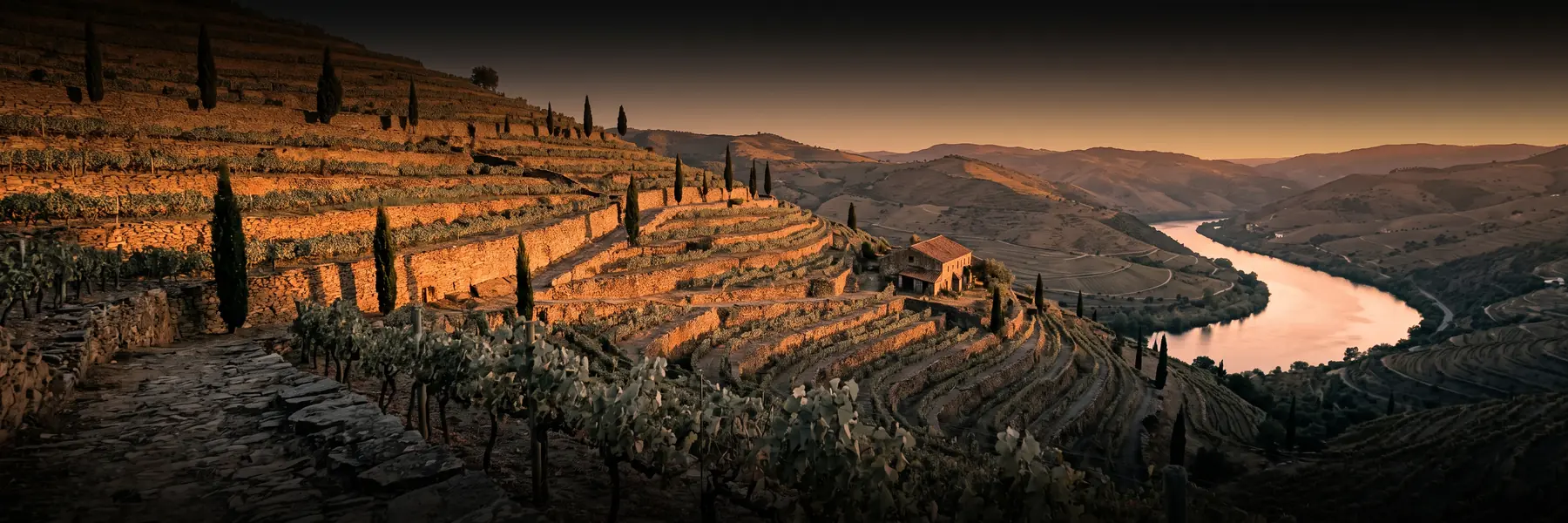
Russian River Valley — Fog, Pinot Noir, and California's Cool Heart
Russian River Valley — Fog, Pinot Noir, and California's Cool Heart
Most California wine regions are defined by heat. Russian River Valley is defined by its absence. Cold Pacific air and fog pour in through the gaps in the coastal hills and sit in the valley overnight and well into the morning, sometimes not clearing until midday. Growers here measure the season partly in fog hours, and the consequence is a genuinely cool, long ripening period in a state better known for the opposite.
That fog is why Russian River Valley, in Sonoma County, is one of the New World's most reliable sources of serious Pinot Noir and Chardonnay.
How the Fog Works
The mechanism is straightforward and worth understanding because it applies to cool coastal sites everywhere. Inland California heats up during the day; hot air rises; cold, moist marine air is drawn in to replace it. Where the coastal hills have a gap, that air funnels through — and the Russian River's course provides one.
The practical effects:
- Long hang time. Fruit can hang for weeks longer than in Napa, developing flavour at moderate sugar.
- Acid retention. Cold nights and cool mornings slow respiration of malic acid, so musts arrive with real acidity.
- Disease pressure. Persistent morning moisture means botrytis and mildew risk. Open canopies and good airflow matter.
- Site variation. Fog is not uniform — the southern and western reaches are markedly cooler than the warmer northern end, and the difference shows in the wines.
Soils
The signature soil is Goldridge — a fine, sandy loam of ancient marine origin, well drained and low in fertility, giving moderate vigour and small crops. Other parts of the appellation sit on gravelly river benches and heavier clays, which is one reason the AVA supports styles as different as delicate Pinot and hefty old-vine Zinfandel.
What the Region Makes
Pinot Noir is the calling card: bright red cherry, cranberry, rhubarb and blood orange, with baking spice, forest floor and a silky, sappy texture. Riper sites lean darker — plum, cola, black cherry.
Chardonnay is arguably just as good and better value: citrus, white peach, oatmeal and a saline, mineral finish when handled with restraint.
Old-vine Zinfandel persists in pockets, mostly on warmer benches, and can be excellent — brambly and spicy rather than jammy, with the acidity that Zinfandel usually lacks.
Sparkling wine. The cool sites make outstanding traditional-method base wine.
Producers: Rochioli and Williams Selyem (whose reputations were built on the same handful of vineyards), Dehlinger, Kistler, Merry Edwards, Kosta Browne, Gary Farrell, Dutton-Goldfield and the widely-sourced Dutton Ranch vineyards, Lynmar, Joseph Swan.
Green Valley of Russian River Valley, nested in the cool south-western corner, is the appellation's coldest and one of California's best sub-zones for Pinot and sparkling base.
Making Cool-Climate Pinot Noir
Pinot is the least forgiving red grape in the cellar, and the Russian River style — perfumed, silky, savoury, not heavy — depends more on restraint than on technique.
Picking
- 22.5–24.5 °Bx is a productive range. pH 3.3–3.5, TA 5.5–7 g/L.
- Pinot loses aromatic complexity above roughly 25 °Bx and gains mostly alcohol. If it does not taste interesting at 24, another week rarely fixes it.
- Sort at the sorting table, not in the tank. Any botrytis-affected berries carry laccase and will haunt the wine's colour.
Whole bunch
Russian River producers use whole-cluster fractions from zero to a hundred percent. Stems add spice, aromatic lift, a firmer tannin frame and — usefully in a warm year — a slight dilution of alcohol. They must be lignified and brown; green stems give a raw, stalky bitterness. Start at 20–30% and read whole cluster fermentation first.
Fermentation
- Cold soak 3–5 days at 8–12 °C. Colour and aroma extract well in the near-absence of alcohol; tannin does not.
- Ferment warm at peak — 28–32 °C is normal for Pinot and helps fix colour — with one or two gentle punch-downs a day.
- Indigenous ferments are common here and give complexity, but they are slower and riskier. If you use one, watch nitrogen closely; see the YAN / nutrients calculator.
- Press at or just after dryness. Extended maceration is not part of this style.
Élevage
- MLF in barrel over the following months, then 10–16 months in French oak with 20–35% new. Pinot shows oak more readily than any other red — over-oaked Pinot reads as sawdust and vanilla over thin fruit.
- Handle gently and rack rarely; Pinot bruises.
For Chardonnay from the same vineyards, see Chardonnay styles — whole-bunch press, barrel ferment, partial MLF and lees stirring, with less new oak than the region used in the 1990s.
Food Pairing
Russian River Pinot Noir: duck, salmon, mushroom risotto, roast pork, Comté. Russian River Chardonnay: Dungeness crab, scallops, roast chicken, chowder. Russian River Zinfandel: barbecued ribs, spiced sausage, aged cheddar.
Tip: In a cool, foggy site your enemy at harvest is not sugar — it is rot. Walk the block in the last two weeks looking for the first split and mouldy berries, and be prepared to pick a fortnight "early" if botrytis takes hold. A fresh, slightly lean Pinot is a good wine; a Pinot with 5% rotten fruit in it is not recoverable.