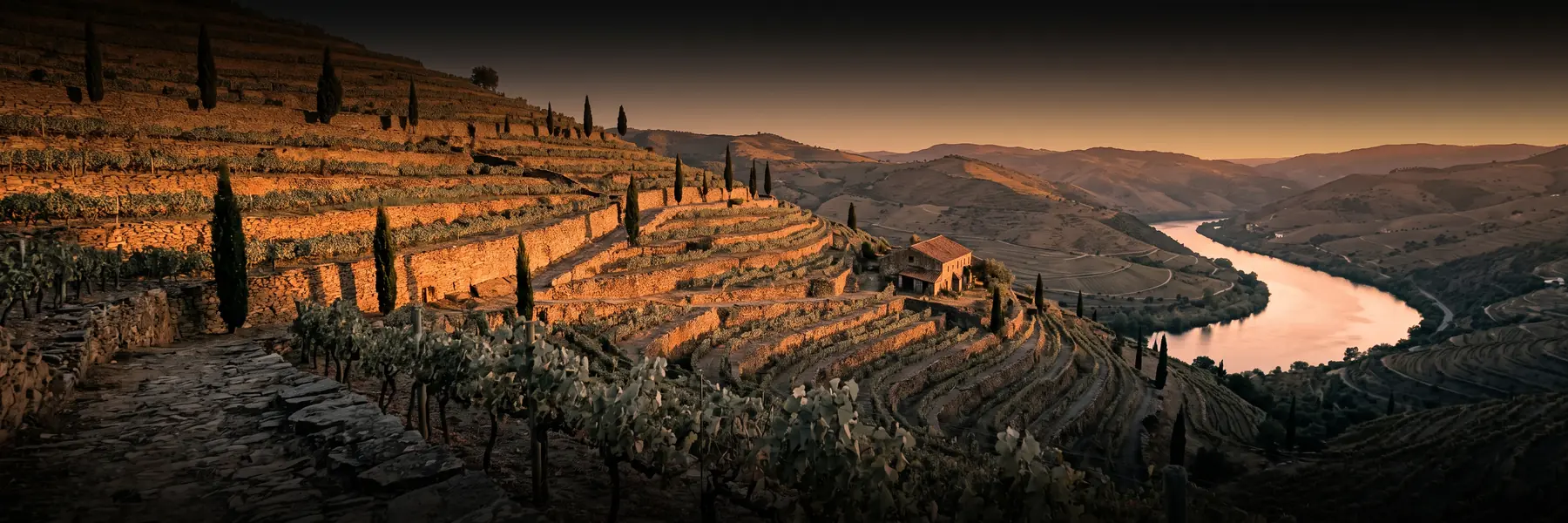
Rueda — Verdejo and the Art of Protecting a Fragile White
Rueda — Verdejo and the Art of Protecting a Fragile White
Rueda is the most useful Spanish white wine region for a home winemaker to study, and the reason is almost accidental. Verdejo is unusually prone to oxidation, so the entire modern Rueda playbook — night picking, cold must handling, inert gas, reductive fermentation — was built around keeping oxygen away from a fragile juice. Every one of those techniques transfers directly to whatever white you are making in your own cellar.
Geography
Rueda lies on the high plateau of Castilla y León, along the Duero south-west of Valladolid, in the same Duero valley as Ribera del Duero (though the two do not actually share a border). Vineyards sit at roughly 700–800 m, which is the region's saving grace — at that altitude, nights are cold even in a Castilian August.
Soils are varied: sandy and stony on the terraces, with gravel and some limestone. The sandy ground preserved a scattering of pre-phylloxera ungrafted Verdejo, most famously the old parcel behind Martinsancho.
Climate
Continental with Atlantic influence. Hot dry days, cold nights, low rainfall, hard winters, real spring frost risk. The diurnal swing is the mechanism that lets a hot region produce a fresh white: sugar accumulates by day, acid is preserved at night.
Verdejo
| Trait | Consequence |
|---|---|
| Very oxidation-prone must and juice | The defining handling problem; browns quickly if left exposed |
| Moderate to good acidity, well retained at altitude | The freshness is real, not added |
| Distinctive bitter finish from natural phenolics | Charming in balance, harsh if over-extracted |
| Aromas: fennel, bay, citrus zest, white peach, green almond, sometimes a herbal-grassy note | Preserve with cool, reductive handling |
| Vigorous, drought-tolerant, well adapted | Easy in the vineyard, demanding in the cellar |
Rueda's other grapes: Viura, Sauvignon Blanc (which is genuinely good here), Palomino in old field blends (planted post-phylloxera for the oxidative Dorado style — no relation to Verdejo, which is also unrelated to the similarly named Verdelho of Madeira despite the confusion the names invite), and small red plantings.
Labelling a wine as varietal Verdejo requires the large majority of the blend to be that grape — the standard EU varietal threshold. Wines simply labelled "Rueda" may carry more of the other permitted whites.
The Reinvention
Until the 1970s Rueda was known for Dorado — a deliberately oxidised, sometimes fortified, golden wine aged in glass demijohns and old wood, closer in spirit to a rustic Sherry than to a modern white. It is still made in tiny quantities and is worth seeking out.
The modern region dates from the arrival of temperature-controlled stainless steel and the realisation that Verdejo, protected properly, gives an aromatic, crisp, distinctive white. The DO was created in 1980 — the first in Castilla y León. What is instructive is that the grape did not change; only the oxygen management did.
Wine Styles
Rueda Verdejo (the mainstream): stainless steel, cool ferment, early bottling. Pale, aromatic, crisp, with a citrus-and-fennel signature and a slightly bitter almond finish. Best in its first two years.
Barrel-fermented Verdejo: the serious end. Fermented and aged in oak on lees. Textured, nutty, structured, and capable of eight to ten years. Belondrade y Lurton is the reference and largely created this category.
Rueda Espumoso: traditional-method sparkling, a small but growing category.
Dorado: the surviving oxidative tradition.
Producers
- Belondrade y Lurton — the barrel-fermented Verdejo that created the appellation's serious category
- Hermanos Lurton — reliable, well-made, widely distributed
- Martinsancho — Verdejo from an old ungrafted parcel; the historic reference
- Protos — large-scale, dependable
- Ossian — in Nieva (Segovia), within the DO zone but bottling outside the DO as Vino de la Tierra de Castilla y León; the most ambitious old-vine Verdejo being made
What Rueda Teaches: Reductive White Winemaking
If your whites come out golden, flat and short-lived, this section is the fix.
Pick cold. Rueda harvests Verdejo at night, and this is not affectation. Fruit at 12 °C oxidises far more slowly than fruit at 28 °C, ferments cleanly, and needs less SO₂. If night picking is impossible, pick at dawn and chill the fruit before crushing.
Minimise the time juice spends exposed. Crush, press and get the juice into a closed vessel quickly. Every transfer is an opportunity for oxygen pick-up. Fill hoses and vessels from the bottom; avoid splashing.
Add SO₂ at the crusher, not later. Verdejo carries polyphenol oxidase which begins browning the juice within minutes. SO₂ at the crush inhibits it. Read understanding SO₂ and calculate the addition properly with the calculators.
Settle cold, then rack off the gross lees. Cold settling for 24–48 hours before fermentation removes solids that would otherwise contribute coarse and bitter characters. See racking.
Press gently and split the fractions. Verdejo's phenolics are the source of its attractive bitterness in small doses and its harshness in large ones. Keep free run separate from hard press and blend by taste.
Ferment cool. 13–16 °C. See fermentation temperature.
No MLF. Malic acid is structural here. See MLF explained.
Then choose your texture. Once you have a clean, protected, crisp base wine, lees contact is how you add breadth without losing freshness — the same lesson as in Rías Baixas. For the oak version, ferment in barrel rather than ageing in it; barrel-fermented whites integrate wood far better than tank-fermented wines racked into oak. See barrel ageing basics.
Bottle early and protect it. Verdejo does not benefit from sitting in tank. Cold stabilise (cold stabilisation), check free SO₂ at bottling, and use a closure with low oxygen transmission (closure comparison).
Food Pairing
Asparagus, artichokes and other awkward vegetables that most wines cannot handle — the herbal-bitter edge is the reason. Also grilled fish, fresh goat's cheese, ceviche, and Castilian roast vegetables. Serve at 9–11 °C.
Tip: The single biggest quality gain available to most home white-winemakers costs nothing: chill the fruit before you crush it. A night in a cold room, or picking at first light, will do more for the wine's colour, aroma and shelf life than any additive you can buy.