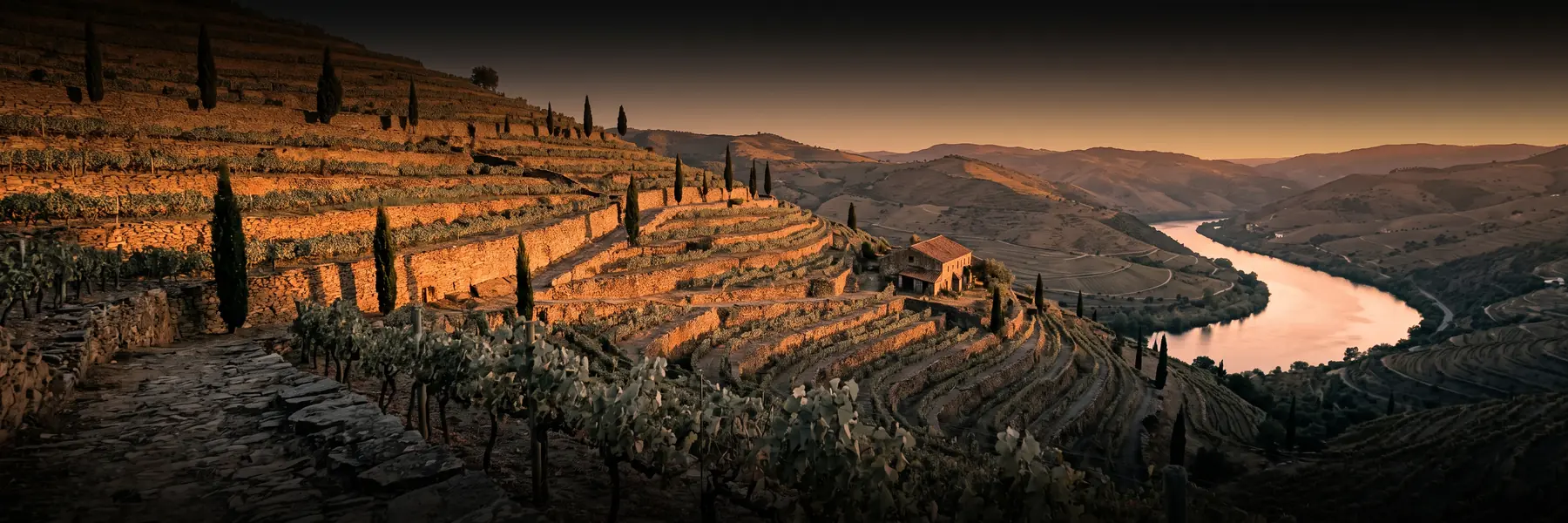
Ningxia — Burying Vines, Helan Mountain, and China's Wine Frontier
Ningxia — Burying Vines, Helan Mountain, and China's Wine Frontier
Every autumn in Ningxia, after the harvest, thousands of workers move down the vine rows with shovels and hoes and bury the vineyard. The vines are trained low for exactly this purpose: the trunks are laid down and covered with soil, and there they stay through a winter that regularly drops far below freezing. In spring the soil is pulled back and the vines are lifted and tied up again.
It is the most labour-intensive routine practice in modern viticulture, and it is the price of growing wine grapes on the eastern slopes of the Helan Mountain in north-west China. It is also the reason Ningxia is the most interesting cold-limit wine region in the world.
Where and Why
Ningxia is an autonomous region on the edge of the Gobi, where the Yellow River bends north. The vineyards run along the alluvial fans at the foot of the Helan range at around a thousand metres and above. The site works because of a specific combination:
- The mountain blocks the desert. The Helan range shelters the vineyard strip from the worst of the sand and wind coming off the Gobi.
- The Yellow River supplies water. Rainfall is far too low for viticulture; everything is irrigated from a canal system that predates the wine industry by centuries.
- The soils are poor and stony — gravelly, sandy alluvial material, free-draining and low in organic matter, which keeps vigour and crops down naturally.
- The diurnal swing is enormous. Hot, intensely sunny days and cold nights ripen fruit fully while retaining acidity and colour.
- Humidity is very low, so fungal disease pressure is minimal.
And then there is the winter, which is the constraint everything else is organised around.
Winter Protection — The Real Lesson
Vitis vinifera is damaged at cold-season temperatures that Ningxia reaches routinely, and killed at temperatures it sometimes reaches. Burial works because soil is an excellent insulator: under thirty or forty centimetres of earth, the trunk experiences a fraction of the air temperature's swing.
The consequences shape everything:
- Training systems must be low and flexible. Vines are trained with a short, bendable trunk near the ground so they can be laid down each year. High cordons and tall trunks are impossible.
- Vine lifespan is shortened. Repeated bending and burying damages trunks, so vineyards are replaced more often than in a temperate region.
- Labour is the dominant cost, and the availability of it is a strategic question for the region.
- Spring is dangerous. Uncovering too early exposes vines to late frost; too late risks smothering and delayed budbreak.
If you grow grapes anywhere with severe winters — the northern USA, Canada, central Europe, the steppes — the general principles transfer: low training, hilling up soil around graft unions, multiple trunks so you can lose one, careful timing of winter pruning, and choosing cold-hardy rootstocks and varieties. See planting your first vineyard for how these decisions cascade.
The Grapes
Cabernet Sauvignon dominates and performs well — deep, structured, cassis-driven, with the region's firm acidity.
Cabernet Gernischt was long grown in China under that name and has been identified as Carménère. It ripens late and is green if picked early — an important practical point in a region where the season is bounded at both ends.
Marselan, a crossing of Cabernet Sauvignon and Grenache, has become the variety most often nominated as China's future signature. It ripens reliably, keeps colour and acid, and gives plush dark fruit without the herbaceous risk of the Cabernets.
Merlot, Chardonnay, Welschriesling (Italian Riesling) and Petit Manseng are all planted; sparkling wine is a growing category.
Producers
- Silver Heights — Emma Gao's estate, one of the first Ningxia wines to be taken seriously internationally
- Helan Qingxue — whose Jia Bei Lan Cabernet blend won a major international trophy at the Decanter World Wine Awards in 2011, the result that made the wine world pay attention
- Kanaan Winery — Fang Fang's estate, known for both Cabernet and a Riesling
- Chateau Changyu Moser XV — the Austrian winemaker Lenz Moser's collaboration with China's oldest large wine company
- Jade Vineyard, Legacy Peak, Xige Estate, and the Ningxia sparkling operation of Domaine Chandon
Ningxia has had substantial public investment and support, and the regional government has actively promoted it as China's premier wine region — an unusual amount of institutional backing by international standards.
Making Ningxia-Style Reds
Picking
- The season is compressed by frost at both ends. Late-ripening varieties can run out of time in a cool year — which is part of Marselan's appeal.
- Intense sunlight and low humidity mean fruit can reach high sugar quickly. 24–26 °Bx, pH 3.4–3.6, TA 5.5–6.5 g/L is a reasonable target.
- Thick skins from high UV mean plenty of colour and tannin available — plan for gentle extraction, not aggressive.
Fermentation
- 24–28 °C. Two gentle pump-overs a day at peak, tapering as the wine dries.
- 10–16 days on skins. Extended maceration only where the tannin already tastes fine.
- MLF standard; see MLF explained.
Water and salinity
Irrigated desert viticulture carries a long-term risk that is worth naming: where drainage is poor and evaporation high, salts accumulate in the soil profile. Growers manage it with leaching irrigation and drainage. If you farm irrigated ground in an arid climate, test your irrigation water and your soil periodically rather than assuming.
Oak
French oak, 30–50% new, 12–18 months for premium wines. Ningxia's fruit weight carries oak well, but the more interesting recent wines have used less of it.
Food Pairing
Ningxia Cabernet and Marselan: lamb skewers with cumin, braised beef, Peking duck, hand-pulled noodles with chilli oil, aged hard cheese.
Tip: If you farm anywhere with hard winters, the cheapest insurance available is training multiple trunks per vine and keeping a spare renewal cane low down. When a cold event kills a trunk, a vine with a low, protected spare recovers in a season; a vine with one high trunk has to be replanted and you lose three years.