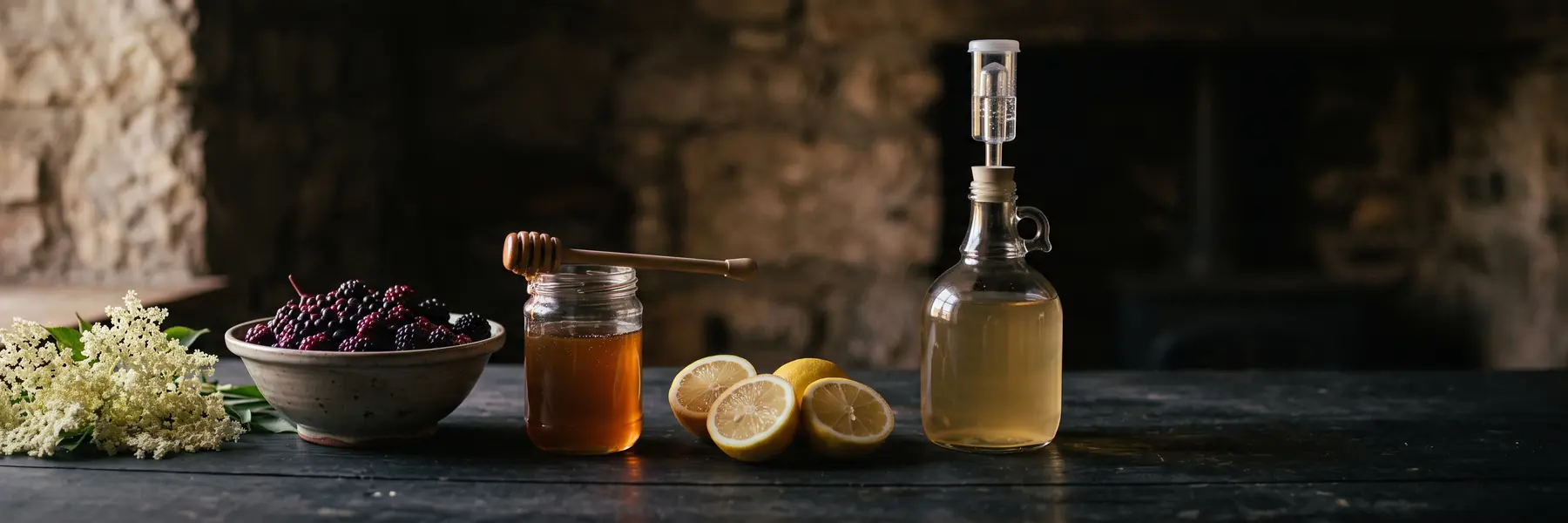
Elderberry Wine: A Rich Country Wine Guide
Elderberry Wine: A Rich Country Wine Guide
Elderberry wine occupies a unique place in country winemaking — it's the one fruit wine that genuinely rivals grape wine in depth, colour, and structure. A well-made elderberry wine aged for two years is dark ruby, full-bodied, and complex with flavours of blackcurrant, dried fruit, and spice. It's the country wine most likely to fool a grape wine drinker.
Picking Elderberries
When: August–October (UK), depending on variety and location. Berries ripen in stages — the same elder tree can have ripe clusters and unripe clusters at the same time. Pick when the berries are deep purple-black, fully round, and heavy with juice. Underripe red berries are both sharp and potentially mildly toxic.
Quantities: For a 5-litre batch: 1–1.5kg of stripped berries. More berries produce a more intense, structured wine; fewer produce something lighter and more approachable.
Safety note: Raw elderberries — and especially their stems, leaves and unripe green berries — contain sambunigrin, a cyanogenic glycoside that can cause nausea. Cyanogenic glycosides are broken down by heat, which is why many recipes simmer the berries first. This recipe ferments them raw, so it relies on two things instead: use only fully ripe berries (fully ripe Sambucus nigra is low in glycosides) and strip out every stem and green berry, as described below. Removing the toxic parts is what keeps the wine safe — do not count on fermentation to neutralise a poor pick. Always ferment fully before drinking.
Removing berries from stems: Use a fork to strip berries from the stalks. Remove all visible green, unripe berries. Some small stem fragments are acceptable — but large amounts of green stem contribute bitterness.
Ingredients (5-litre batch)
| Ingredient | Amount |
|---|---|
| Fresh elderberries (stripped) | 1.25kg |
| Water | 4L |
| Sugar | 800g |
| Red grape juice or concentrate (optional, adds body) | 500mL |
| Yeast (Lalvin 71B or RC212) | 1 sachet |
| Yeast nutrient (Fermaid-K) | 2g |
| Pectic enzyme | 0.5g |
| Potassium metabisulphite | 0.5g |
| Tartaric or citric acid | 2–4g (to adjust pH) |
| Campden tablet | 1 |
Preparation
Crushing the berries
Crush the stripped berries by hand (wear gloves — elderberry juice stains intensely and permanently) or with a potato masher. The goal is to break the skins and release juice without pulverising the seeds (which are bitter).
Pre-ferment SO₂
Add 1 Campden tablet (crushed) or 0.5g KMS to the crushed berries and water. This inhibits wild bacteria and some wild yeast. Add pectic enzyme immediately (enzyme is inactivated by SO₂ if left for days). Wait 12–24 hours before pitching yeast.
pH and acid adjustment
Elderberry juice is typically pH 3.2–3.8 — measure and adjust to 3.3–3.5 with tartaric acid if needed. TA should be 6–8 g/L. Elderberries can be surprisingly high in acid; taste before adding more.
OG check and sugar addition
Target OG: 1.090–1.095 for a 12–12.5% table wine. Add sugar dissolved in warm water to reach target.
Fermentation
RC212 is excellent for elderberry — it enhances colour, adds spice character, and builds structure appropriate to the wine's depth. 71B is also excellent for a softer, fruitier style.
Unlike grape wine, elderberry ferments in a pulp mass — the berry solids float on top as a cap. Press this cap down (pigeage) 1–2 times daily to extract colour and prevent acetobacter from colonising the dry surface. This phase typically lasts 5–7 days.
Temperature: 20–24°C. Elderberry benefits from slightly warmer fermentation to extract colour.
When gravity reaches 1.010–1.020 (approximately 5–7 days), strain the must through muslin or a press bag, pressing the pulp gently. Don't over-press — the seeds and coarse plant material contribute harsh bitterness.
Rack the strained juice into a clean demijohn and continue fermentation to dryness.
Post-Fermentation and Maturation
Elderberry wine needs time more than almost any country wine. Fresh elderberry wine is often:
- Harsh and astringent (high tannin from skins)
- Slightly bitter (seed tannins if over-pressed)
- Unappealing aromatics (green or vegetal notes that resolve with ageing)
Minimum ageing: 6 months. Optimal: 12–24 months.
The tannins polymerise and soften with time. The harsh raw fruit aromas develop into dried fruit, autumn spice, and complexity reminiscent of a Rhône red.
Rack at 4-week intervals for the first 3 months to keep the wine off its lees and allow progressive clarification. Elderberry wine produces significant sediment.
Blending with Grape Juice
A small addition of Cabernet Sauvignon or Merlot grape juice (10–20%) blended with elderberry produces a more complete, structured wine. The grape juice contributes grape tannins and characteristic grape aromatics that complement elderberry's dark fruit character beautifully.
Sweetening (Optional)
Elderberry wine is typically bottled dry or slightly off-dry (5–10g/L residual sugar). If sweetening, follow the sorbate + SO₂ stabilisation protocol and back-sweeten at bottling.
Troubleshooting
Very harsh tannins after 6 months: The wine needs more time. Alternatively, fine with egg white — but note that one egg white treats roughly 20–50 litres, so for a 5L batch beat one white to a light foam and use only about a quarter of it. A whole white in 5L is a heavy over-fining rate that risks stripping body and colour irreversibly. Bench-trial first — see fining agents.
Pectin haze: If you didn't use pectic enzyme, a persistent haze may be pectin. It will not clear with fining. Add pectic enzyme now (it still works in wine, just more slowly) and wait 2–4 weeks.
Browning: Oxidation from a loose airlock or excessive headspace. Ensure SO₂ is adequate (50 mg/L free) and keep vessels topped up.
Tip: Make elderberry wine in August with fresh berries, then don't open it until Christmas the following year. 18 months of ageing transforms a raw, tannic country wine into something genuinely impressive.