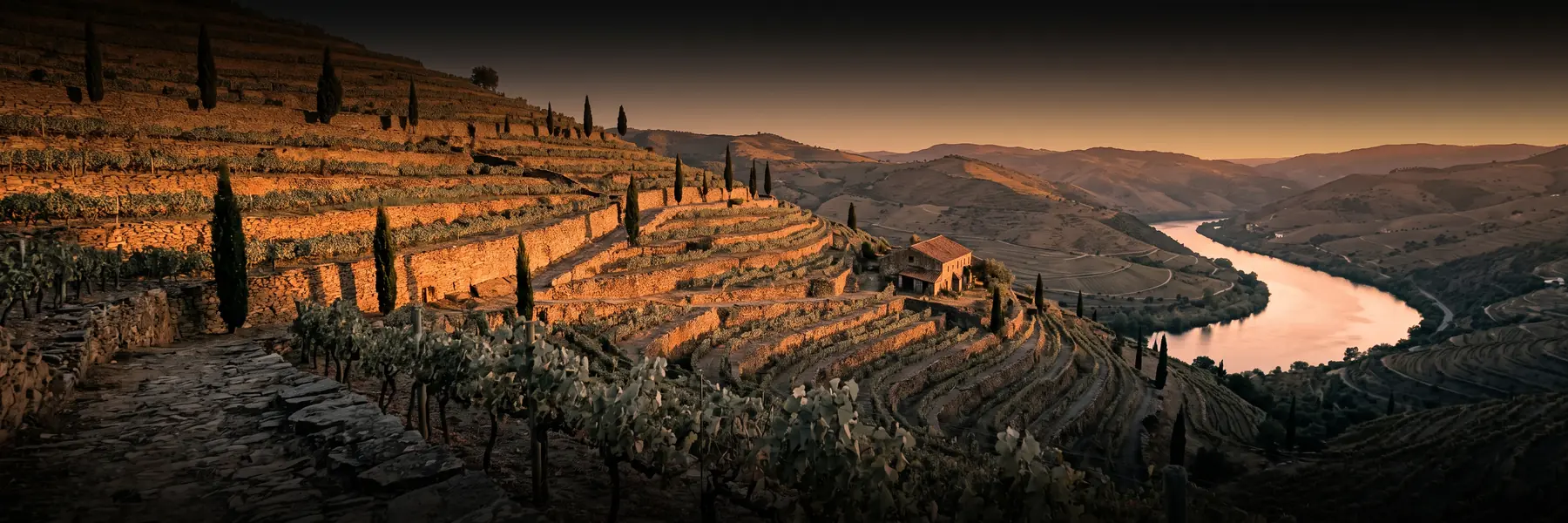
Coonawarra — Terra Rossa, Limestone, and Australia's Cabernet Benchmark
Coonawarra — Terra Rossa, Limestone, and Australia's Cabernet Benchmark
Almost every famous wine region is a valley, a hillside, or a river bend. Coonawarra is a strip of red dirt on a flat plain in the far south-east of South Australia — and the boundary of that dirt matters more than almost any other soil line in the New World. Vines planted on the red soil make structured, long-lived Cabernet Sauvignon. Vines planted a short distance off it, on the surrounding black and grey soils, do not. Few regions make the case for terroir so bluntly.
Terra Rossa Over Limestone
The famous soil is terra rossa: a shallow, iron-rich red clay loam sitting directly on a bed of soft, porous limestone. The combination does two useful things at once. The topsoil is thin and low in vigour, so vines are naturally restrained rather than leafy. The limestone beneath is free-draining but holds moisture in its pores, and vine roots penetrate it, so the vines rarely suffer the sudden water stress that shuts photosynthesis down in a hot spell.
The result is slow, even ripening with retained acidity — the conditions that give Cabernet Sauvignon fine tannin rather than jammy fruit.
Climate
Coonawarra is a long way south, close to the Southern Ocean, and genuinely cool by Australian standards. Ripening is late; harvest can run well into autumn. Spring frost is a real risk on the flat land, and vintages vary more than in the warm inland regions — a cool year can leave Cabernet green if crop levels are not managed.
The flatness has one commercial consequence worth knowing: Coonawarra is highly mechanised. Mechanical harvesting and pruning are standard, which is part of why good Coonawarra Cabernet remains reasonable value compared with equivalent quality from Napa or Bordeaux.
Key Grapes
| Grape | Role |
|---|---|
| Cabernet Sauvignon | The region's identity; blackcurrant, cedar, fine dusty tannin |
| Shiraz | Cooler, more peppery and medium-bodied than Barossa Shiraz |
| Merlot / Cabernet Franc | Blending partners in Bordeaux-style reds |
| Chardonnay, Riesling, Sauvignon Blanc | Minor, but crisp and useful in cool vintages |
The Mint and Eucalypt Question
Coonawarra Cabernet is often described as minty, or as carrying a eucalypt or menthol note. This is one of the most-discussed characters in Australian wine. The prevailing explanation is that eucalyptus oil from nearby trees deposits on grape skins and finds its way into the ferment; some producers manage vegetation near vineyard edges for exactly this reason, and others regard the note as part of the regional signature.
Whether you want it is a style decision. If you are making Cabernet near eucalypts, know that the compound behaves like a taint at high concentrations and a complexity at low ones.
Producers Worth Knowing
- Wynns Coonawarra Estate — the historical anchor of the region; John Riddoch Cabernet is the long-lived flagship, Black Label the accessible benchmark
- Balnaves — precise, structured Cabernet; The Tally is the top wine
- Bowen Estate — family estate; traditional Coonawarra Cabernet and Shiraz
- Majella — The Malleea is a very good Cabernet–Shiraz blend
- Penley Estate — modern, polished style
- Katnook Estate — Odyssey Cabernet is a reliable regional reference
The Style
Classic Coonawarra Cabernet is medium to full bodied, not heavy. Blackcurrant and dark plum, cedar and pencil-shaving oak, bay leaf or mint, and a dry, fine, slightly dusty tannin structure that carries a long finish. Alcohol usually sits below the Napa or Barossa norm. Good examples are tight and unyielding at three years and much better at ten to fifteen.
Making Coonawarra-Style Cabernet
Harvest decisions
This is the crux. Cabernet Sauvignon in a cool climate has a narrow window between green and overripe, and sugar accumulates faster than tannin ripens in a warm spell.
- Aim for physiological ripeness in the seeds and skins, not just a sugar number: seeds brown and crunchy rather than green, skins that chew soft.
- A useful target range is 23–25 °Bx with pH 3.4–3.6 and TA around 6–7 g/L — a fresher profile than a warm-climate Cabernet.
- Taste the fruit repeatedly in the last fortnight. If pyrazine (green pepper, tomato leaf) still dominates, more hang time helps; if fruit is already turning to prune, pick.
Our harvest timing guide covers sampling method, and the ABV calculator will tell you quickly whether your Brix reading commits you to an alcohol you did not intend.
Fermentation
- Ferment at 24–28 °C. Cooler in the early days preserves aromatics; warmer at the peak extracts colour and tannin.
- Two pump-overs or punch-downs a day through the peak; ease off once the cap softens.
- 10–18 days on skins for a structured wine. Extended maceration past dryness rounds tannin, but Cabernet with green seed tannin only gets harsher — taste before committing.
- MLF is standard for red Cabernet; see MLF explained.
Oak
French oak, medium toast, 12–20 months, with new oak somewhere between 20% and 60% depending on fruit concentration. Coonawarra's cedar-and-graphite character comes from restrained French oak on structured fruit — heavy new-oak regimes bury the fruit rather than flattering it.
Acid and pH
Cool vintages here rarely need acidification; warm ones sometimes do. Check pH before fermentation, not after — a pre-ferment must at pH 3.7+ will ferment and age less securely, and a small tartaric addition is far more effective early. The acid adjustment calculator handles the arithmetic.
Food Pairing
Coonawarra Cabernet: roast lamb with rosemary, dry-aged sirloin, mushroom and beef pie, aged cheddar. Coonawarra Shiraz: peppered venison, lamb kofta, hard sheep's cheese.
Tip: If you are making Cabernet in a cool site and worried about greenness, resist the urge to fix it with oak and extraction. Longer, gentler maceration at lower temperature and a fraction less new oak gives a cleaner, more elegant wine than heavy pumping-over, which pulls green seed tannin straight into the wine.