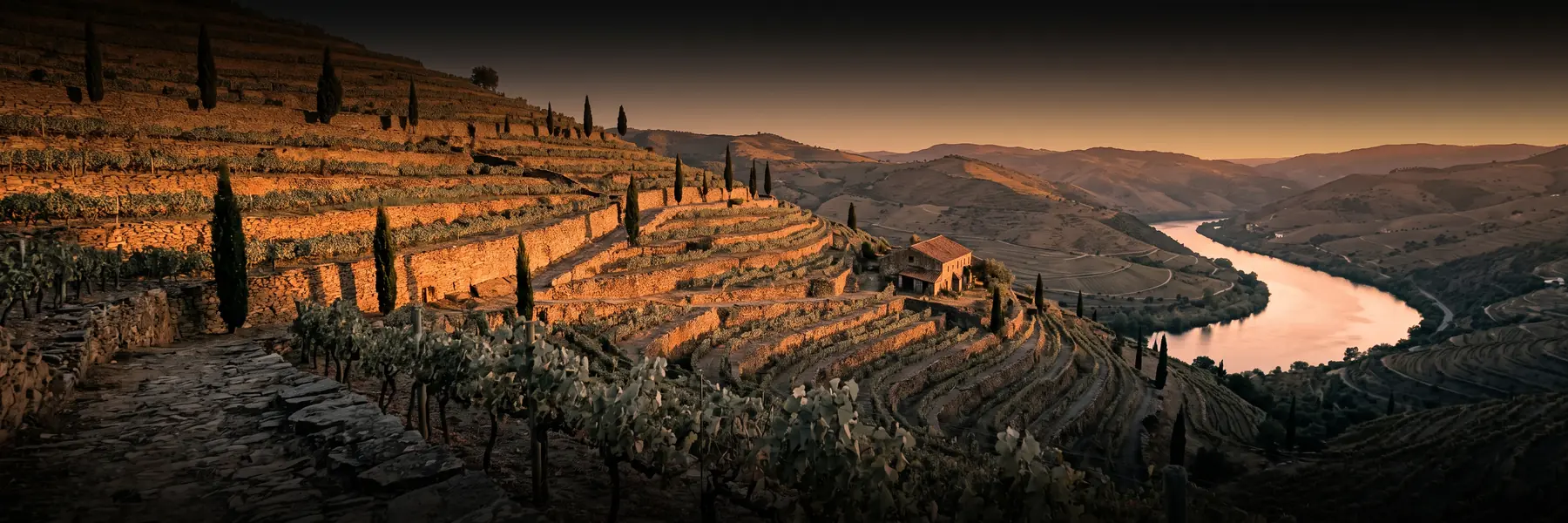
Constantia — Vin de Constance and the Cape's Oldest Vineyards
Constantia — Vin de Constance and the Cape's Oldest Vineyards
South African wine begins here, on the granite slopes behind Cape Town. The Constantia estate was established in the 1680s by Simon van der Stel, governor of the Dutch Cape colony, and within a century the sweet wine made on its slopes was among the most sought-after wines in Europe — shipped to the courts of Europe, cited in nineteenth-century literature, and famously requested by Napoleon in exile on St Helena.
Then it vanished. Phylloxera, the collapse of the Cape wine trade and a century of neglect ended the tradition entirely, and what remained of the historic estate was subdivided. The wine was only recreated in the 1980s. Constantia is therefore two stories at once: the Cape's oldest vineyard land, and one of the wine world's most successful acts of resurrection.
Terroir
Constantia sits on the eastern and southern slopes below the Constantiaberg, the tail of the Table Mountain range, only a few kilometres from the cold water of False Bay.
- Soils: deep, weathered, decomposed granite — acidic, well drained, low in nutrients, and unusually good at holding just enough moisture
- Cooling: the south-easterly wind the locals call the Cape Doctor blows hard off the bay through summer, dropping temperatures and drying the canopy
- Rainfall: high by Cape standards, mostly in winter, which means many blocks can be dry-farmed
- Aspect: slopes and altitude give real variation in ripening within a small area
For a district this close to a major city, it is a remarkably good place to grow cool-climate white grapes.
The Wines
Sauvignon Blanc is the modern signature: pungent and precise, with grapefruit, green fig, blackcurrant leaf and a wet-stone finish. Constantia and Elgin are South Africa's two reference points for the variety.
Vin de Constance (Klein Constantia) is the historic wine, remade from Muscat de Frontignan — Muscat Blanc à Petits Grains. It is intensely sweet but not cloying, with orange marmalade, honey, barley sugar, apricot and a lifted floral Muscat aromatic, and it ages for decades.
Sémillon, Chardonnay and traditional-method sparkling all do well, and the warmer, higher blocks make credible Cabernet Sauvignon and Bordeaux blends.
Producers: Klein Constantia, Groot Constantia, Buitenverwachting, Steenberg, Constantia Glen, Eagles' Nest.
Making a Sweet Wine Without Botrytis
Most of the world's great sweet wines rely on noble rot. Vin de Constance does not — the grapes are left on the vine to overripen and shrivel, concentrating sugar by dehydration rather than by fungal infection. The technical term is passerillage, and it is the most accessible route to a serious sweet wine for a small producer, because it needs patience rather than a specific autumn microclimate.
The vineyard part
- Leave the fruit hanging well past normal ripeness and let the berries dehydrate on the vine. Expect to lose a large fraction of your crop weight — that loss is the concentration.
- Sort mercilessly. You want raisined berries, not mouldy ones. Any grey rot that is not clean noble rot brings laccase and off-flavours.
- Birds and wasps are the practical enemy. Netting is usually essential.
The fermentation part
A high-sugar must is a hostile environment for yeast, and this is where home and small-scale attempts most often fail.
- Osmotic stress. At very high sugar, water is drawn out of yeast cells. Use a strain rated for high-sugar or sweet-wine ferments, and rehydrate carefully with a protectant.
- Pitch a strong, large population and keep the temperature moderate (15–18 °C). Cool is good for aromatics, but too cool plus high sugar equals a stuck ferment.
- Nitrogen is usually inadequate relative to the sugar load. Stage nutrient additions rather than dumping them at the start; the YAN / nutrients calculator will size them.
- Expect a slow ferment — weeks, sometimes months — and expect it to stop of its own accord, leaving substantial residual sugar. That natural arrest is the traditional method.
Stopping and stabilising
If the ferment does not stop where you want it:
- Chill, rack off the yeast, and add SO₂ to arrest it — then verify stability before bottling.
- A sweet wine with viable yeast in it will referment in the bottle. This is the single most important rule in sweet winemaking. Sterile filtration, or SO₂ plus potassium sorbate, plus cold storage and time, are the tools. Read back-sweetening for the same problem approached from the other direction, and use the SO₂ calculator — remember that a sweet wine needs more molecular SO₂ protection than a dry one, not less.
- Élevage in older, neutral barrels for a year or more builds complexity without imposing oak on a wine that already has plenty to say.
Cool-Climate Sauvignon Blanc, Briefly
For the district's other speciality: pick early for aromatic tension (20–22 °Bx, pH 3.0–3.3), press whole bunches gently, protect the juice from oxygen with SO₂ and cold settling, ferment cool at 13–16 °C, and skip MLF entirely. The thiol aromatics that give Sauvignon its passion fruit and grapefruit character are fragile and oxygen-sensitive — reductive handling from press to bottle is the whole game.
Food Pairing
Constantia Sauvignon Blanc: oysters, ceviche, goat's cheese, asparagus. Vin de Constance: blue cheese, tarte Tatin, crème brûlée, or on its own after dinner. Constantia Bordeaux blends: roast lamb, venison, aged Gouda.
Tip: If you try a passerillage sweet wine, weigh your fruit at picking and again after dehydration. That ratio tells you what you are actually working with — and it is the number that explains why great sweet wine is expensive. Losing half your crop weight to make a better wine is a business decision as much as a winemaking one.