Bandol — Mourvèdre, Long Élevage, and Provence's Serious Red
Bandol — Mourvèdre, Long Élevage, and Provence's Serious Red
Provence is known for pale, cold, easy rosé. Bandol is the appellation that ruins that generalisation. It makes a rosé with actual structure — arguably France's best — and a red that is one of the most characterful and long-lived wines in the country. Both are built on Mourvèdre, a grape so demanding that Bandol is one of very few places in the world where it succeeds as the dominant variety.
Geography
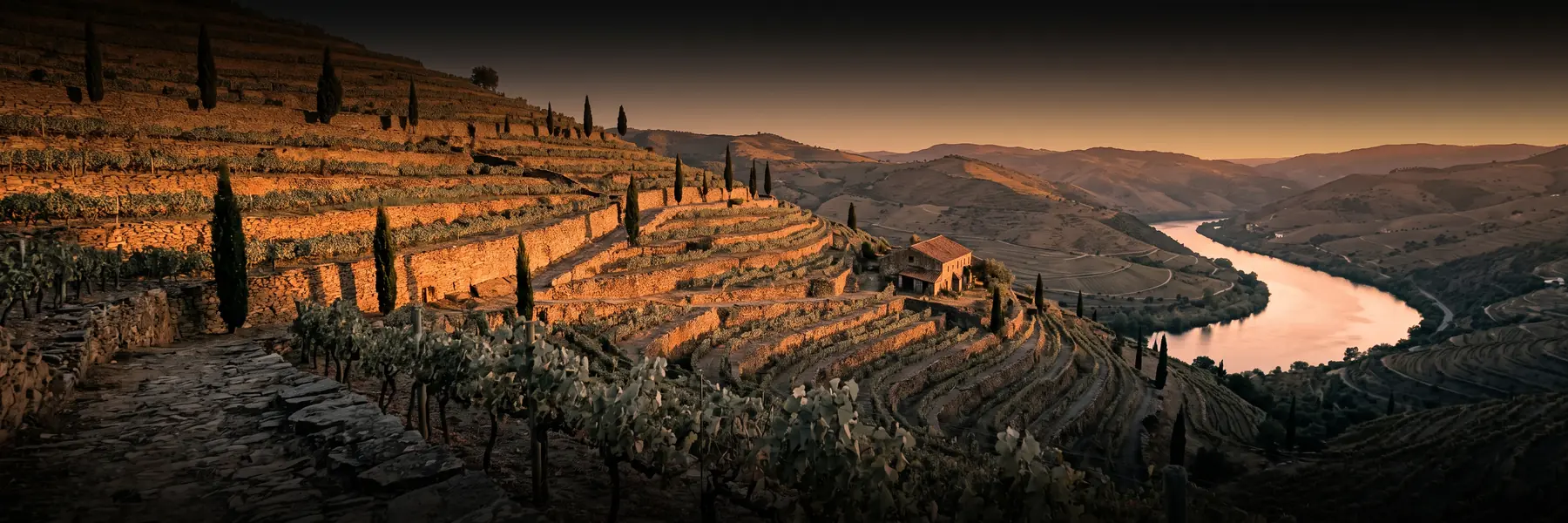
Bandol sits on the Mediterranean coast between Marseille and Toulon. The vineyards occupy a natural amphitheatre of hills that opens south to the sea, and they are planted on terraces — restanques — cut into slopes of limestone, sandstone and marl.
The geography is doing two jobs at once. The amphitheatre catches and holds the sun, giving the long, hot growing season that Mourvèdre needs. The hills behind shelter the vineyards from the Mistral, and the sea moderates night temperatures so the wines keep a measure of freshness despite the heat.
The rules that shape the wine
Two requirements define Bandol red, and both are famous and stable:
- A minimum of 50% Mourvèdre, though the leading estates typically go far higher — 70%, 80%, sometimes more. Grenache and Cinsault make up most of the balance, with small amounts of Syrah and Carignan permitted.
- A minimum of 18 months' ageing in wood before release. In practice that means large old oak foudres, not new barriques.
That second rule is unusual and it is not arbitrary. Mourvèdre needs exactly this treatment, for reasons worth understanding.
Climate
Mediterranean, hot and dry, with the sea and the amphitheatre providing moderation. Drought is a real constraint. Mourvèdre is one of the last varieties to ripen anywhere it is grown, and Bandol's long, hot autumn is what allows it to get there — in a cooler site it simply does not finish, which is why Mourvèdre appears only as a blending component across most of the southern Rhône.
Producers
- Domaine Tempier — the historic reference; the Cuvée Tourtine and Cuvée Cabassaou (very high Mourvèdre) are the appellation's landmark wines, and the domaine did more than anyone to establish Bandol's modern reputation
- Château Pibarnon — high-altitude limestone vineyards; elegant and mineral
- Domaine de la Bégude — the highest vineyards in the appellation
- Domaine Ray-Jane, Château Pradeaux, Domaine du Gros' Noré — traditional, structured, excellent
Style
Red: garrigue, black olive, leather, roasted meat, dried herb, black plum and a distinct iron or gunpowder note. Substantial tannin, medium-high alcohol, and a savoury, dry finish. Young Bandol is tight and reductive; it needs five to ten years minimum and good bottles run twenty-five or more.
Rosé: deeper-coloured and fuller than the Côtes de Provence style, with real palate weight, red-fruit and herb character, and enough structure to serve with a main course rather than as an aperitif. It also ages — two to four years suits it, which is heresy for most rosé.
What Bandol teaches your winemaking
Mourvèdre is a difficult grape and Bandol has solved its two central problems. Both solutions are directly transferable.
Problem one: Mourvèdre ripens very late
It needs heat and a long season, and picked before it is ready it gives hard, green, hollow wine with a bitter finish. There is no cellar fix. If you are choosing what to plant or buy, treat Mourvèdre (also called Monastrell or Mataro) as a warm-site variety only, and be prepared to pick in late October. See harvest timing.
Problem two: Mourvèdre reduces badly
This is the important one. Mourvèdre is strongly prone to reduction — hydrogen sulphide and related off-aromas ranging from struck match to rotten egg to burnt rubber. Left in a sealed glass vessel it can develop reductive faults that harden into mercaptans and become very difficult to remove.
Bandol's 18-month wood requirement is, in effect, a legally mandated oxygen regime. A large old foudre provides slow, continuous, gentle oxygen ingress across the whole élevage — exactly what Mourvèdre needs to resolve its sulphides and polymerise its tannin.
If you are working in glass carboys, you must supply that oxygen deliberately:
- Splash-rack rather than racking gently, at least once or twice during élevage. See racking guide.
- Feed the yeast properly during fermentation. Nitrogen-deficient ferments are the leading cause of sulphide production, because starved yeast scavenge nitrogen from sulphur-containing amino acids. Stage your nutrient additions. See choosing your yeast.
- Diagnose before treating. If a wine smells reduced, splash a sample into a jug, swirl hard, wait ten minutes and smell again. If it clears, the wine wants air, not copper. Copper fining strips fruit and should be a last resort.
Long élevage is not the same as long bottle age
Eighteen months in a neutral vessel with controlled oxygen does something a bottle cannot: it softens tannin by polymerisation and integrates the wine. A tannic red rushed into bottle stays tannic. See barrel ageing basics.
Rosé can be built, not just made pale
Bandol rosé is made with more skin contact and more structure than the Provençal norm, and it is the better model if you want a rosé that eats well. Short maceration, some press fraction, a genuine ferment rather than a chilled bleed — and no attempt to make it look like water.
For the wider region see the Provence guide; for Mourvèdre as a blending component, Châteauneuf-du-Pape.
Food pairing
Red: lamb with rosemary, daube, wild boar, grilled red meat, aged sheep's cheese. Rosé: bouillabaisse, grilled fish, aioli, and — genuinely — roast chicken.
Tip: If you have any Mourvèdre (or Monastrell), do not age it in a full, sealed glass carboy and leave it alone for a year. That is the single most reliable way to produce a reduced, rubbery wine. Rack it with a splash at six months and again at twelve, and taste each time.